Overview
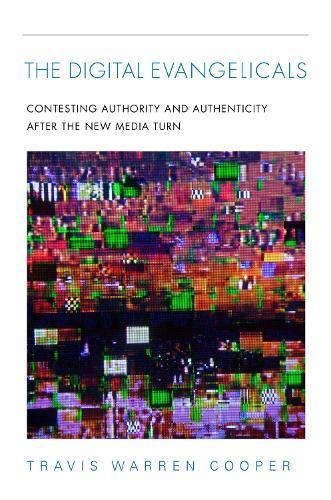
When it comes to evangelical Christianity, the internet is both a refuge and a threat. It hosts Zoom prayer groups and pornographic videos, religious revolutions and silly cat videos. Platforms such as social media, podcasts, blogs, and digital Bibles all constitute new arenas for debate about social and religious boundaries, theological and ecclesial orthodoxy, and the internet's inherent danger and value. In The Digital Evangelicals, Travis Warren Cooper locates evangelicalism as a media event rather than as a coherent religious tradition by focusing on the intertwined narratives of evangelical Christianity and emerging digital culture in the United States. He focuses on two dominant media traditions: media sincerity, immediate and direct interpersonal communication, and media promiscuity, communication with the primary goal of extending the Christian community regardless of physical distance. Cooper, whose work is informed by ethnographic fieldwork, traces these conflicting paradigms from the Protestant Reformation through the rise of the digital and argues that the tension is culminating in a crisis of evangelical authority. What counts as authentic interaction? Who has authority over the circulation of information? While many studies claim that technology influences religion, The Digital Evangelicals reveals how Protestant metaphors and discourses shaped the emergence of the internet and explores what this relationship with global new media means for evangelicalism.
Full Product Details
Author: Travis Warren Cooper
Publisher: Indiana University Press
Imprint: Indiana University Press
Weight: 0.581kg
ISBN: 9780253062260
ISBN 10: 0253062268
Pages: 378
Publication Date: 02 August 2022
Audience:
Professional and scholarly
,
Professional & Vocational
Format: Paperback
Publisher's Status: Active
Availability: Manufactured on demand

We will order this item for you from a manufactured on demand supplier.
Reviews
Shedding light on the profound phenomenon of digital evangelicalism, this book sparkles with illuminating insights on the contemporary tensions and paradoxes of religious authority, as well as the vital role of new media for religious organizing in a datafied world. The Digital Evangelicals assembles a range of multimodal data across platforms to help us think more deeply about the communicative constitution of religious authority, authenticity and community. -- Pauline Hope Cheong, co-editor of Digital Religion, Social Media and Culture: Perspectives, Practices and Futures The Digital Evangelicals is much-needed intervention in a field chock full of books telling you what so-called evangelicals really are or really should be. Cooper's attention to the discourses that define the boundaries of evangelical identity and community offer an important corrective to the search for the best definition of evangelicalism. Drawing on a unique archive of digital sources, The Digital Evangelicals shows how claims about authentic evangelicalism are really battles over authority and power. -- Michael J. Altman, Associate Professor of Religious Studies, University of Alabama The Digital Evangelicals is an ambitious, impressive, unprecedented work. Part cultural history, part critical textual analysis, part ethnography, it is more than the sum of these parts. Cooper's book demands a fundamental reconsideration of what it means to analyze evangelicalism as a hybrid online-offline cultural form. -- James Bielo, author of Emerging Evangelicals: Faith, Modernity, and the Desire for Authenticity The Digital Evangelicals is an impressive text. In addition to detailing how today's emerging evangelicals engage new media, Cooper also provides a framework for rethinking what, exactly, this thing called 'evangelicalism' even is. Through richly detailed ethnographies of Twitter debates, Instagram rituals, and Zoom church services, the book charts how communities constitute evangelicalism through media-and how social media might play a role in evangelicalism's undoing. The book is impressive both for its breadth of its analysis and the depth of its theoretical critique. -- Christopher Cantwell, co-editor of Introduction to Digital Humanities: Research Methods in the Study of Religion
Shedding light on the profound phenomenon of digital evangelicalism, this book sparkles with illuminating insights on the contemporary tensions and paradoxes of religious authority, as well as the vital role of new media for religious organizing in a datafied world. The Digital Evangelicals assembles a range of multimodal data across platforms to help us think more deeply about the communicative constitution of religious authority, authenticity and community. - Pauline Hope Cheong, co-editor of Digital Religion, Social Media and Culture: Perspectives, Practices and Futures The Digital Evangelicals is an ambitious, impressive, unprecedented work. Part cultural history, part critical textual analysis, part ethnography, it is more than the sum of these parts. Cooper's book demands a fundamental reconsideration of what it means to analyze evangelicalism as a hybrid online-offline cultural form. - James Bielo, author of Emerging Evangelicals: Faith, Modernity, and the Desire for Authenticity The Digital Evangelicals is an impressive text. In addition to detailing how today's emerging evangelicals engage new media, Cooper also provides a framework for rethinking what, exactly, this thing called 'evangelicalism' even is. Through richly detailed ethnographies of Twitter debates, Instagram rituals, and Zoom church services, the book charts how communities constitute evangelicalism through media—and how social media might play a role in evangelicalism's undoing. The book is impressive both for its breadth of its analysis and the depth of its theoretical critique. - Christopher Cantwell, co-editor of Introduction to Digital Humanities: Research Methods in the Study of Religion The Digital Evangelicals is much-needed intervention in a field chock full of books telling you what so-called evangelicals ""really are"" or ""really should be."" Cooper's attention to the discourses that define the boundaries of evangelical identity and community offer an important corrective to the search for the best definition of evangelicalism. Drawing on a unique archive of digital sources, The Digital Evangelicals shows how claims about ""authentic"" evangelicalism are really battles over authority and power. - Michael J. Altman, Associate Professor of Religious Studies, University of Alabama If one were to define Evangelicals, one might do so in terms of their shared beliefs or religious practices. Cooper (anthropology, Indiana Univ., Bloomington) instead considers this group in terms of its media presence and how Evangelicals are present and influential in the current digital environment. He argues that historically and presently, Evangelical Christians have been at the forefront of technology: Luther using the printing press, Charles Fuller presenting worship services over the radio, and Billy Graham evangelizing through television. In the digital age, Evangelicals continue in this pattern and, in fact, help shape the broader digital culture. Cooper addresses the challenges Evangelicals face in maintaining authenticity while also using online tools to disseminate their message. The internet and social media have been a mixed blessing, offering new and innovative opportunities and avenues for conflict and corruption. Cooper's particular interest is in the progressive wing of Evangelicalism and how these Christians push back against the restrictive and antifeminist elements of their religious tradition. Using ethnographic research of a particular church in the Midwest, Cooper offers a skillful, nuanced analysis of digital Evangelicalism. (Reprinted with permission from Choice Reviews. All rights reserved. Copyright by the American Library Association.) - J. Jaeger (Choice) Existing works on digital religion . . . cannot possibly account for the sheer ubiquity of contemporary networked technologies. Nor can this scholarship appreciate recent transformations in how communities take shape, how information is circulated, and how religious authority is established. Cooper wades enthusiastically into this substantial gap, unsettling prevalent assumptions about white evangelicals and technological mediation and laying useful groundwork for future studies of religion and digital media. - Travis Warren Cooper (Journal of the American Academy of Religion)
"Shedding light on the profound phenomenon of digital evangelicalism, this book sparkles with illuminating insights on the contemporary tensions and paradoxes of religious authority, as well as the vital role of new media for religious organizing in a datafied world. The Digital Evangelicals assembles a range of multimodal data across platforms to help us think more deeply about the communicative constitution of religious authority, authenticity and community. -- Pauline Hope Cheong, co-editor of Digital Religion, Social Media and Culture: Perspectives, Practices and Futures The Digital Evangelicals is much-needed intervention in a field chock full of books telling you what so-called evangelicals ""really are"" or ""really should be."" Cooper's attention to the discourses that define the boundaries of evangelical identity and community offer an important corrective to the search for the best definition of evangelicalism. Drawing on a unique archive of digital sources, The Digital Evangelicals shows how claims about ""authentic"" evangelicalism are really battles over authority and power. -- Michael J. Altman, Associate Professor of Religious Studies, University of Alabama The Digital Evangelicals is an ambitious, impressive, unprecedented work. Part cultural history, part critical textual analysis, part ethnography, it is more than the sum of these parts. Cooper's book demands a fundamental reconsideration of what it means to analyze evangelicalism as a hybrid online-offline cultural form. -- James Bielo, author of Emerging Evangelicals: Faith, Modernity, and the Desire for Authenticity The Digital Evangelicals is an impressive text. In addition to detailing how today's emerging evangelicals engage new media, Cooper also provides a framework for rethinking what, exactly, this thing called 'evangelicalism' even is. Through richly detailed ethnographies of Twitter debates, Instagram rituals, and Zoom church services, the book charts how communities constitute evangelicalism through media—and how social media might play a role in evangelicalism's undoing. The book is impressive both for its breadth of its analysis and the depth of its theoretical critique. -- Christopher Cantwell, co-editor of Introduction to Digital Humanities: Research Methods in the Study of Religion"
Shedding light onto the profound phenomenon of digital evangelicalism, this book sparkles with illuminating insights on the contemporary tensions and paradoxes of religious authority, as well as the vital role of new media for religious organizing in a datafied world. The Digital Evangelicals assembles a range of multimodal data across platforms to help us think more deeply about the communicative constitution of religious authority, authenticity and community. -- Pauline Hope Cheong, co-editor of Digital Religion, Social Media and Culture: Perspectives, Practices and Futures The Digital Evangelicals is an ambitious, impressive, unprecedented work. Part cultural history, part critical textual analysis, part ethnography, it is more than the sum of these parts. Cooper's book demands a fundamental reconsideration of what it means to analyze evangelicalism as a hybrid online-offline cultural form. -- James Bielo, author of Emerging Evangelicals: Faith, Modernity, and the Desire for Authenticity The Digital Evangelicals is an impressive text. In addition to detailing how today's emerging evangelicals engage new media, Cooper also provides a framework for rethinking what, exactly, this thing called 'evangelicalism' even is. Through richly detailed ethnographies of Twitter debates, Instagram rituals, and Zoom church services, the book charts how communities constitute evangelicalism through media-and how social media might play a role in evangelicalism's undoing. The book is impressive both for its breadth of its analysis and the depth of its theoretical critique. -- Christopher Cantwell, co-editor of Introduction to Digital Humanities: Research Methods in the Study of Religion
Author Information
Travis Warren Cooper is Research Associate in the Department of Anthropology at Indiana University Bloomington.