Overview
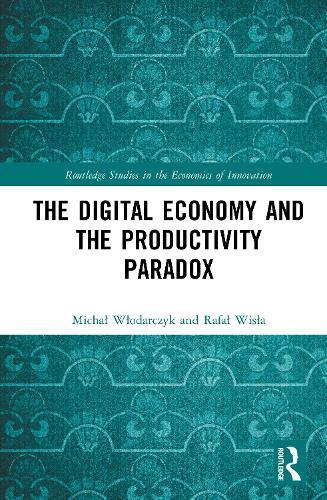
Despite the billions of dollars invested in digitalization, productivity growth in developed economies remains sluggish and the promised technological revolution has yet to deliver its full potential. This concise book questions why digitalization is not translating into higher productivity and economic expansion, exploring this paradox through the lens of Schumpeter's creative destruction hypothesis. The book diagnoses and analyses the digital economy as the next stage of socio-economic evolution, with a particular focus on the penetration of digital technologies in the industrial economy. It is geographically limited to the countries of the European Union and the United Kingdom, forming a set of 28 highly developed economies. These countries, characterized by a homogeneous institutional order and varying levels of economic development provide excellent material for testing and verifying economic hypotheses, including Schumpeter's theory of creative destruction. In relation to Schumpeter's theory, there is indeed an observed development of a new sector around a technology that is a radical innovation - the Internet - and the development of technologies based on it, AI, blockchain, cloud computing, etc. However, the rate of technical progress is reaching values close to zero, despite the fact that creative destruction should manifest itself in leaps in productivity. The second point of contention with Schumpeter's theory is the question of oligopolies, which should be the environment most conducive to innovation. However, in the case of the digital economy, productivity growth is most strongly influenced by small and micro-enterprises, which may point to different factors of production than in previous industrial revolutions. This is a practical guide for researchers and advanced students of economics. The Open Access version of this book, available at www.taylorfrancis.com, has been made available under a Creative Commons Attribution-Non Commercial-No Derivatives (CC-BY-NC-ND) 4.0 International license.
Full Product Details
Author: Michał Włodarczyk ,
Rafał Wisła
Publisher: Taylor & Francis Ltd
Imprint: Routledge
Weight: 0.550kg
ISBN: 9781041119067
ISBN 10: 1041119062
Pages: 200
Publication Date: 28 October 2025
Audience:
College/higher education
,
Postgraduate, Research & Scholarly
,
Undergraduate
Format: Hardback
Publisher's Status: Active
Availability: Manufactured on demand

We will order this item for you from a manufactured on demand supplier.
Author Information
Michał Włodarczyk is Assistant Professor at the Department of Risk Management and Insurance at Cracow University of Economics, Krakow, Poland. Rafał Wisła is Associate Professor in Economics at the Department of Economics and Innovation of the Jagiellonian University, Krakow, Poland.