Overview
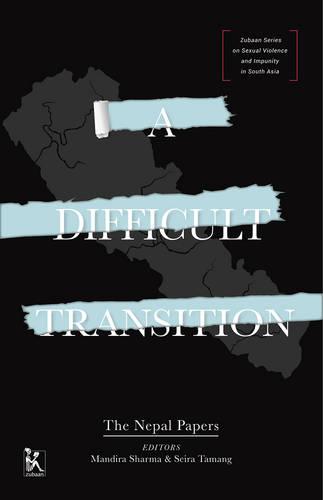
Nepal, because it was never directly colonized, is seen as something of an outlier on the subcontinent, but the country could not remain totally immune to the influence of colonialism in its neighborhood. A Difficult Transition shows that, in addition to home-grown feudal patriarchal structures, it is the larger colonial and postcolonial context of the subcontinent that has enabled the structuring of inequalities and power relations in Nepal, which today allow for widespread sexual violence and impunity. Recent years have seen an increase in public discussion about sexual violence in Nepal, and the state has created legislation and action plans to address the problem. And yet, impunity for perpetrators remains intact and justice elusive. What are the structures that enable such impunity? And what can be done to change and radically transform these structures? How must states understand the search for justice for victims of sexual violence? Part of the Zubaan Series on Sexual Violence and Impunity in South Asia, the essays in this volume attempt to trace a history of sexual violence in Nepal, look at the responses of women’s groups and society at large, and suggest how this serious and wide-ranging problem may be addressed.
Full Product Details
Author: Mandira Sharma ,
Seira Tamang ,
Seira Tamang
Publisher: Zubaan
Imprint: Zubaan
Dimensions:
Width: 14.50cm
, Height: 3.20cm
, Length: 22.70cm
Weight: 0.568kg
ISBN: 9789385932052
ISBN 10: 9385932055
Pages: 320
Publication Date: December 2016
Audience:
Professional and scholarly
,
Professional & Vocational
Format: Hardback
Publisher's Status: Active
Availability: In Print

This item will be ordered in for you from one of our suppliers. Upon receipt, we will promptly dispatch it out to you. For in store availability, please contact us.
Reviews
"""Addresses the importance of understanding the deep structural roots of sexual violence and impunity in Nepal, in the interstices of Nepal's colonial and postcolonial past, highlighting the dynamics of activism as well as the structural, institutional, and political forces that resist change.""-- ""Journal of Economic Literature"" ""This collection of essays is part of a series of books on a subject that some believe is too often overlooked: sexual violence in South Asia. Focusing on Nepal, the authors argue that the country's own 'feudal patriarchal structures', in addition to post-colonial influences from the wider subcontinent, have enabled widespread sexual violence.""-- ""Survival"""
Addresses the importance of understanding the deep structural roots of sexual violence and impunity in Nepal, in the interstices of Nepal's colonial and postcolonial past, highlighting the dynamics of activism as well as the structural, institutional, and political forces that resist change. --Journal of Economic Literature This collection of essays is part of a series of books on a subject that some believe is too often overlooked: sexual violence in South Asia. Focusing on Nepal, the authors argue that the country's own 'feudal patriarchal structures', in addition to post-colonial influences from the wider subcontinent, have enabled widespread sexual violence. --Survival
Author Information
Mandira Sharma is a lawyer, activist, and cofounder of Advocacy Forum, an organization of Nepali human rights lawyers. She was awarded the Human Rights Watch prestigious Human Rights Defender Award in 2006. Seira Tamang is an activist and researcher working with the Research and Policy Institute, Kathmandu.