Overview
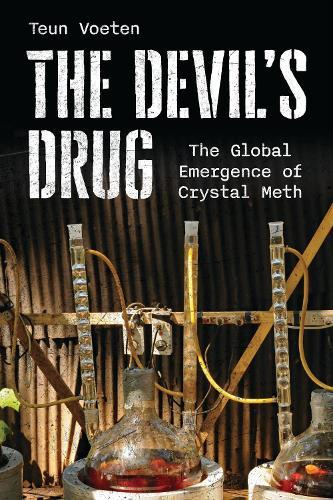
With a combination of thorough investigative journalism, daring fieldwork, and colorful atmospheric sketches, Teun Voeten draws a very detailed and disturbing picture of a drug that is on a rapid international rise. Methamphetamine, commonly referred to as crystal meth, is one of the most addictive drugs in the world. Heavy users can destroy themselves in just a few months. Originally given by the Nazis to their troops to fight the blitzkrieg, it has now conquered the whole world and is used at sex parties in Amsterdam and Antwerp, by former hippies in Prague, by the underclass in the slums of Harare, Cape Town, and Peshawar, by truck drivers in Thailand, and by workers in the sweatshops in Bangladesh. Researcher Teun Voeten traveled the globe for two years to investigate all sides of this diabolic drug, exploring the bizarre history and pharmacological effects. He talked to homeless addicts in Tijuana and Los Angeles, cartels in Mexico, international drug experts in Bangkok and Kabul, and more. Voeten also interviewed numerous authorities, judges, and social workers who are trying to stop the meth epidemic.
Full Product Details
Author: Teun Voeten
Publisher: Bloomsbury Publishing Plc
Imprint: Rowman & Littlefield
Dimensions:
Width: 15.20cm
, Height: 2.50cm
, Length: 22.90cm
Weight: 0.590kg
ISBN: 9781538198612
ISBN 10: 1538198614
Pages: 296
Publication Date: 18 February 2025
Audience:
General/trade
,
General
Format: Hardback
Publisher's Status: Active
Availability: In Print

This item will be ordered in for you from one of our suppliers. Upon receipt, we will promptly dispatch it out to you. For in store availability, please contact us.
Reviews
I've worked with Voeten most of my life and his book on crystal meth is superb, a culmination of skills honed during many years in war zones and unstable countries. -- Sebastian Junger, #1 <i>New York Times</i> bestselling author of <i>Perfect Storm</i>; award-winning journalist The Devil's Drug is a scholarly, illuminating, lucid account of the world of Crystal Meth. This book is of urgent importance and should be immediately read. Voeten offers a brilliant, dynamic contribution that examines the mythology and the startling reality of Methamphetamine use and misuse. -- Terry Williams, The New School for Social Research
A stimulant existing naturally in Ephedra sinica, methamphetamine was first developed in a lab for its benefits in easing congestion. In the wrong hands, of course, any drug can be misused. During WWII, Nazi high command gave soldiers Pervitin (manufactured methamphetamine) to keep them alert on crucial missions and long marches. Methamphetamine would ebb and flow in popularity in the ensuing decades, and in the 1970s, methamphetamine use spread to Eastern Europe, particularly in the current Czech Republic, where crystal meth remains the “most popular drug.” As criminal syndicates in Mexico, the Netherlands, and Southeast Asia undertook production of methamphetamine, human misery inflicted by addiction and deadly gangland wars followed. The Devil’s Drug is a fascinating investigation into the background of methamphetamine, along with a portrait of both those who profit from the drug's sale and those who are held captive by its effects. Voeten travels the world and gains insights from people involved with methamphetamine at all levels for an unflinching view of a continuing epidemic. * Booklist * The Devil’s Drug is particularly interesting to those studying organized crime, drug addiction, and journalism…. It is a one-of-a-kind exploration that grips the reader throughout while unraveling a complex subject riddled with misconceptions and stereotypes. Voeten is a masterful researcher that can provide historical context whilst seamlessly detailing the complex chemistry behind meth, its production, and its consequences to the human body. * Small Wars Journal * I've worked with Voeten most of my life and his book on crystal meth is superb, a culmination of skills honed during many years in war zones and unstable countries. -- Sebastian Junger, #1 New York Times bestselling author of The Perfect Storm; award-winning journalist The Devil's Drug is a scholarly, illuminating, lucid account of the world of crystal meth. This book is of urgent importance and should be immediately read. Voeten offers a brilliant, dynamic contribution that examines the mythology and the startling reality of methamphetamine use and misuse. -- Terry Williams, The New School for Social Research The Devil’s Drug provides a compelling global survey of the methamphetamine epidemic. Across Mexico, the Netherlands, the Golden Triangle, and LA's Skid Row, Teun Voeten examines addiction, criminal enclaves, and the rise of 'narcostates' as transnational gangsters pursue power and profit at the expense of the vulnerable. -- John P. Sullivan, PhD, member, Scientific Advisory Board, Global Observatory on Transnational Criminal Networks; senior fellow, Small Wars Journal–El Centro
A stimulant existing naturally in Ephedra sinica, methamphetamine was first developed in a lab for its benefits in easing congestion. In the wrong hands, of course, any drug can be misused. During WWII, Nazi high command gave soldiers Pervitin (manufactured methamphetamine) to keep them alert on crucial missions and long marches. Methamphetamine would ebb and flow in popularity in the ensuing decades, and in the 1970s, methamphetamine use spread to Eastern Europe, particularly in the current Czech Republic, where crystal meth remains the “most popular drug.” As criminal syndicates in Mexico, the Netherlands, and Southeast Asia undertook production of methamphetamine, human misery inflicted by addiction and deadly gangland wars followed. The Devil’s Drug is a fascinating investigation into the background of methamphetamine, along with a portrait of both those who profit from the drug's sale and those who are held captive by its effects. Voeten travels the world and gains insights from people involved with methamphetamine at all levels for an unflinching view of a continuing epidemic. * Booklist * I've worked with Voeten most of my life and his book on crystal meth is superb, a culmination of skills honed during many years in war zones and unstable countries. -- Sebastian Junger, #1 New York Times bestselling author of The Perfect Storm; award-winning journalist The Devil's Drug is a scholarly, illuminating, lucid account of the world of crystal meth. This book is of urgent importance and should be immediately read. Voeten offers a brilliant, dynamic contribution that examines the mythology and the startling reality of methamphetamine use and misuse. -- Terry Williams, The New School for Social Research The Devil’s Drug provides a compelling global survey of the methamphetamine epidemic. Across Mexico, the Netherlands, the Golden Triangle, and LA's Skid Row, Teun Voeten examines addiction, criminal enclaves, and the rise of 'narcostates' as transnational gangsters pursue power and profit at the expense of the vulnerable. -- John P. Sullivan, PhD, member, Scientific Advisory Board, Global Observatory on Transnational Criminal Networks; senior fellow, Small Wars Journal–El Centro
Author Information
Teun Voeten is a war photographer, anthropologist, researcher, and writer. He studied cultural anthropology and philosophy at Leiden university. As a war photographer he covered conflicts such as former Yugoslavia, Rwanda, Colombia, Liberia, Afghanistan, Iraq, Israël, and Syria. Voeten wrote books on the underground homeless in New York, the civil war in Sierra Leone and wrote a PhD thesis on the drug violence in Mexico. For the city of Antwerp, he researched drug related crime and the link with the Dutch narco trade. Voeten is currently researching the fentanyl crisis on the West Coast. Learn more here: https://www.teunvoeten.com/