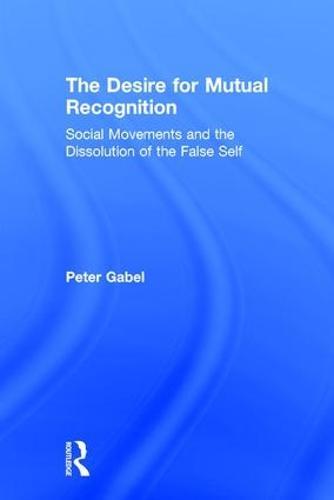
Full Product Details
Author: Peter Gabel
Publisher: Taylor & Francis Ltd
Imprint: Routledge
Weight: 1.150kg
ISBN: 9781138095274
ISBN 10: 1138095273
Pages: 272
Publication Date: 07 February 2018
Audience:
General/trade
,
College/higher education
,
General
,
Tertiary & Higher Education
Format: Hardback
Publisher's Status: Active
Availability: In Print

This item will be ordered in for you from one of our suppliers. Upon receipt, we will promptly dispatch it out to you. For in store availability, please contact us.
Reviews
Peter Gabel is one of the grand prophetic voices in our day. He also is a long-distance runner in the struggle for justice. -Cornel West, Professor of the Practice of Public Philosophy, Harvard University This book is a major contribution to critical social theory and to the ongoing project of respiritualizing our lives in the family, the market, and the state. It is broad and deep at the same time, with grace and pleasure to be had on every page. -Duncan Kennedy, Carter Professor of General Jurisprudence Emeritus, Harvard Law School Karl Marx considered the class struggle the engine of human history. In The Desire for Mutual Recognition, however, Peter Gabel boldly asserts the existence of a deeper underlying motive factor: ã the dynamic of our human yearning, whether towards frustration or fulfillment, to co-create and inhabit a universe of authentic, loving connection, and mutual recognition. Human liberation requires us to intentionally embed social-spiritual strategies within socio-political movements to radically challenge social fear while generating powerful experiences of mutual recognition that support the evolution of humanity toward its full realization. To read this entrancing work is itself to gain entrance into a re-sacralized dimension, evocative of a new future. - Fania E. Davis, long-time activist, civil rights lawyer, and restorative justice scholar and practitioner Peter Gabel's The Desire for Mutual Recognition may soon reshape the landscape of contemporary social theory. With great sophistication and yet accessibility for those with no previous background, Gabel reveals the key to healing and transforming our world. Demonstrating why those who seek liberation must move past liberalism, Marxism, and deconstruction, Gabel shows how a respiritualization of every aspect of our world can move us beyond the alienation that characterizes so much of human interactions and the institutions in which we are continually imagining ourselves to be stuck. Far from utopian, liberation is in our own hands and could be achieved very quickly once we break through the false vision of reality that can be overcome if we follow Gabel's sage advice. - Rabbi Michael Lerner, editor of Tikkun; author of The Left Hand of God and Jewish Renewal Peter Gabel is a God-wrestler and has been one for years and decades. In this important and needed book he brings his passion for justice and healing of our world along with his well honed analytical skills to bear on the pressing issue of our time: How to let go of the false self and the false we that poisons our political discourse and stifles our social imaginations. A deep contribution to a needed movement of sacred activism and the return of conscience to our civic life. Dr Martin Luther King Jr. reminded us that true peace is the presence of justice. In this regard, this is a book about true peace-making. - Matthew Fox, author of Original Blessing, The Reinvention of Work, A Way to God, and Order of the Sacred Earth (with Skylar Wilson and Jennifer Listug) In The Desire for Mutual Recognition, Peter Gabel unfurls a nuanced phenomenology of the social world, a theory of human interbeing as experienced from within its often confounding relational depths. Gabel's ability to think and reflect with his whole organism (with his heart as well as his head) illumines both the uncanny inertia of a destructive civilization seemingly unable to change course, and the erotic energy-flows that provide the ever-present wellspring for such transformation. -David Abram, author of The Spell of the Sensuous and Becoming Animal Now more than ever, progressives need a transformed way to understand ourselves, our world, and the future we imagine. Peter Gabel's extraordinary book demonstrates the revolutionary truth that meaningful social change depends on ordinary people overcoming the alienation from the social world and from each other that frames each of our lives in liberal societies. Contemporary radical theory has been adept at identifying the myriad forms in which social power is manifest, but it has paid little attention to how power works at the level of consciousness and everyday experience to provide a (false) substitute for the mutual recognition and connection that we all desire. The Desire for Mutual Recognition reveals the spiritual and psychological dynamics that form the existential ground for social alienation and that must be addressed for redemptive social change to take hold. It is a beautifully written and evocative work of social theory, and a prophetic and practical call for social change. -Gary Peller, author of Critical Race Consciousness: Reconsidering American Ideologies of Racial Justice Peter Gabel's synthesis of political and spiritual activism is exactly what we need for the future. Gabel offers insights into how we can overcome our fear of the other and expand authentic social connections into peaceful and loving communities. This book's fresh perspective on movement building should be widely read and discussed. -George Katsciaficas, author of The Eros Effect and The Global Imagination of 1968 (2018) Modern social movements by embracing a solely materialist perspective have followed the path of the liberal enlightenment in throwing the baby - spirituality - out with the bathwater -tyrannical religion. This has been self-limiting at best, leading down one blind alley or another, setting in motion endless cycles of revolution/counter-revolution. Peter Gabel' s The Desire for Mutual Recognition: Social Movements and the Dissolution of the False Self is a work that evokes Marcuse's Eros and Civilization, Sartre's Search for a Method/Critique of Dialectical Reason and Huxley's novel Island in providing the philosophical foundation for a social-spiritual activism in which solidarity and love are combined towards creating the just, sacred and sustainable world we all actually desire. - Michael McAvoy, Director, Center for Social-Spiritual Activism. Western Institute of Social Research
'Peter Gabel is one of the grand prophetic voices in our day. He also is a long-distance runner in the struggle for justice.' -Cornel West, Professor of the Practice of Public Philosophy, Harvard University 'Peter Gabel's synthesis of political and spiritual activism is exactly what we need for the future. Gabel offers insights into how we can overcome our fear of the other and expand authentic social connections into peaceful and loving communities. This book's fresh perspective on movement building should be widely read and discussed.' -George Katsciaficas, author of The Eros Effect and The Global Imagination of 1968 (2018) 'In The Desire for Mutual Recognition, Peter Gabel unfurls a nuanced phenomenology of the social world, a theory of human interbeing as experienced from within its often confounding relational depths. Gabel's ability to think and reflect with his whole organism (with his heart as well as his head) illumines both the uncanny inertia of a destructive civilization seemingly unable to change course, and the erotic energy-flows that provide the ever-present wellspring for such transformation.' -David Abram, author of The Spell of the Sensuous and Becoming Animal 'This book is a major contribution to critical social theory and to the ongoing project of respiritualizing our lives in the family the market and the state. It is broad and deep at the same time, with grace and pleasure to be had on every page.' -Duncan Kennedy, Carter Professor of General Jurisprudence Emeritus, Harvard Law School 'Now more than ever, progressives need a transformed way to understand ourselves, our world, and the future we imagine. Peter Gabel's extraordinary book demonstrates the revolutionary truth that meaningful social change depends on ordinary people overcoming the alienation from the social world and from each other that frames each of our lives in liberal societies. Contemporary radical theory has been adept at identifying the myriad forms in which social power is manifest, but it has paid little attention to how power works at the level of consciousness and everyday experience to provide a (false) substitute for the mutual recognition and connection that we all desire. The Desire for Mutual Recognition reveals the spiritual and psychological dynamics that form the existential ground for social alienation and that must be addressed for redemptive social change to take hold. It is a beautifully written and evocative work of social theory, and a prophetic and practical call for social change.' -Gary Peller, author of Critical Race Consciousness: Reconsidering American Ideologies of Racial Justice 'Peter Gabel's The Desire for Mutual Recognitionã may soon reshape the landscape of contemporary social theory. With great sophistication and yet accessibility for those with no previous background, Gabel reveals the key to healing and transforming our world. Demonstrating why those who seek liberation must move past liberalism, Marxism, and deconstruction, Gabel shows how a respiritualization of every aspect of our world can move us beyond the alienation that characterizes so much of human interactions and the institutions in which we are continually imagining ourselves to be stuck. Far from utopian, liberation is in our own hands and could be achieved very quickly once we break through the false vision of reality that can be overcome if we follow Gabel's sage advice.' - Rabbi Michael Lerner 'Karl Marx considered the class struggle the engine of human history. In The Desire for Mutual Recognition, however, Peter Gabel boldly asserts the existence of a deeper underlying motive factor: ã the dynamic of our human yearning, whether towards frustration or fulfillment, to co-create and inhabit a universe of authentic, loving connection and mutual recognition. Human liberation requires us to intentionally embed social-spiritual strategies within socio-political movements to radically challenge social fear while generating powerful experiences of mutual recognition that support the evolution of humanity toward its full realization. To read this entrancing work is itself to gain entrance into a re-sacralized dimension, evocative of a new future.' - Fania E. Davis, Long-time activist, civil rights lawyer, and restorative justice scholar and practitioner
Peter Gabel is one of the grand prophetic voices in our day. He also is a long-distance runner in the struggle for justice. -Cornel West, Professor of the Practice of Public Philosophy, Harvard University This book is a major contribution to critical social theory and to the ongoing project of respiritualizing our lives in the family, the market, and the state. It is broad and deep at the same time, with grace and pleasure to be had on every page. -Duncan Kennedy, Carter Professor of General Jurisprudence Emeritus, Harvard Law School Karl Marx considered the class struggle the engine of human history. In The Desire for Mutual Recognition, however, Peter Gabel boldly asserts the existence of a deeper underlying motive factor: ã the dynamic of our human yearning, whether towards frustration or fulfillment, to co-create and inhabit a universe of authentic, loving connection, and mutual recognition. Human liberation requires us to intentionally embed social-spiritual strategies within socio-political movements to radically challenge social fear while generating powerful experiences of mutual recognition that support the evolution of humanity toward its full realization. To read this entrancing work is itself to gain entrance into a re-sacralized dimension, evocative of a new future. - Fania E. Davis, long-time activist, civil rights lawyer, and restorative justice scholar and practitioner Peter Gabel's The Desire for Mutual Recognition may soon reshape the landscape of contemporary social theory. With great sophistication and yet accessibility for those with no previous background, Gabel reveals the key to healing and transforming our world. Demonstrating why those who seek liberation must move past liberalism, Marxism, and deconstruction, Gabel shows how a respiritualization of every aspect of our world can move us beyond the alienation that characterizes so much of human interactions and the institutions in which we are continually imagining ourselves to be stuck. Far from utopian, liberation is in our own hands and could be achieved very quickly once we break through the false vision of reality that can be overcome if we follow Gabel's sage advice. - Rabbi Michael Lerner, editor of Tikkun; author of The Left Hand of God and Jewish Renewal Peter Gabel is a God-wrestler and has been one for years and decades. In this important and needed book he brings his passion for justice and healing of our world along with his well honed analytical skills to bear on the pressing issue of our time: How to let go of the false self and the false we that poisons our political discourse and stifles our social imaginations. A deep contribution to a needed movement of sacred activism and the return of conscience to our civic life. Dr Martin Luther King Jr. reminded us that true peace is the presence of justice. In this regard, this is a book about true peace-making. - Matthew Fox, author of Original Blessing, The Reinvention of Work, A Way to God, and Order of the Sacred Earth (with Skylar Wilson and Jennifer Listug) In The Desire for Mutual Recognition, Peter Gabel unfurls a nuanced phenomenology of the social world, a theory of human interbeing as experienced from within its often confounding relational depths. Gabel's ability to think and reflect with his whole organism (with his heart as well as his head) illumines both the uncanny inertia of a destructive civilization seemingly unable to change course, and the erotic energy-flows that provide the ever-present wellspring for such transformation. -David Abram, author of The Spell of the Sensuous and Becoming Animal Now more than ever, progressives need a transformed way to understand ourselves, our world, and the future we imagine. Peter Gabel's extraordinary book demonstrates the revolutionary truth that meaningful social change depends on ordinary people overcoming the alienation from the social world and from each other that frames each of our lives in liberal societies. Contemporary radical theory has been adept at identifying the myriad forms in which social power is manifest, but it has paid little attention to how power works at the level of consciousness and everyday experience to provide a (false) substitute for the mutual recognition and connection that we all desire. The Desire for Mutual Recognition reveals the spiritual and psychological dynamics that form the existential ground for social alienation and that must be addressed for redemptive social change to take hold. It is a beautifully written and evocative work of social theory, and a prophetic and practical call for social change. -Gary Peller, author of Critical Race Consciousness: Reconsidering American Ideologies of Racial Justice Peter Gabel's synthesis of political and spiritual activism is exactly what we need for the future. Gabel offers insights into how we can overcome our fear of the other and expand authentic social connections into peaceful and loving communities. This book's fresh perspective on movement building should be widely read and discussed. -George Katsciaficas, author of The Eros Effect and The Global Imagination of 1968 (2018) Modern social movements by embracing a solely materialist perspective have followed the path of the liberal enlightenment in throwing the baby - spirituality - out with the bathwater -tyrannical religion. This has been self-limiting at best, leading down one blind alley or another, setting in motion endless cycles of revolution/counter-revolution. Peter Gabel' s The Desire for Mutual Recognition: Social Movements and the Dissolution of the False Self is a work that evokes Marcuse's Eros and Civilization, Sartre's Search for a Method/Critique of Dialectical Reason and Huxley's novel Island in providing the philosophical foundation for a social-spiritual activism in which solidarity and love are combined towards creating the just, sacred and sustainable world we all actually desire. - Michael McAvoy, Director, Center for Social-Spiritual Activism. Western Institute of Social Research Peter Gabel's brilliant new book, The Desire for Mutual Recognition: Social Movements and the Dissolution of the False Self, seeks to understand both the source of our collective suffering and the prospects for a radical social change movement through a lens that draws from psychoanalysis, critical social theory, and his own sophisticated brand of phenomenology-what Gabel calls a phenomenology of social being. He uses the high-brow language of philosophy, but his aim is a down-to-earth plea for a dramatic shift in how we understand human alienation and the conditions necessary to effect social change through what he calls a spiritualization of politics. Through illuminating the drawbacks of liberalism, Marxism, psychoanalysis, existentialism, and deconstruction, Gabel urges us to create a social movement that expresses and honors our deepest longings for love, understanding and recognition. ... In my reading, it is a call for us to find a way to become our best selves and create a better world in the process. - Michael Bader, AlterNet
'Peter Gabel's synthesis of political and spiritual activism is exactly what we need for the future. Gabel offers insights into how we can overcome our fear of the other and expand authentic social connections into peaceful and loving communities. This book's fresh perspective on movement building should be widely read and discussed.' - George Katsiaficas, author of The Global Imagination of 1968 (2018)
Author Information
Peter Gabel is the former president of New College of California and was for over thirty years a professor at its public-interest law school. He is a founder of the critical legal studies movement and the Project for Integrating Spirituality, Law, and Politics. Editor-at-Large of the progressive Jewish magazine Tikkun, he is the author of numerous books and articles on law, politics, and social change. He lives in San Francisco with his partner Lisa Jaicks, a union organizer for the hospitality workers union, and they have one son, Sam, 22, a hip-hop artist and emcee.