Overview
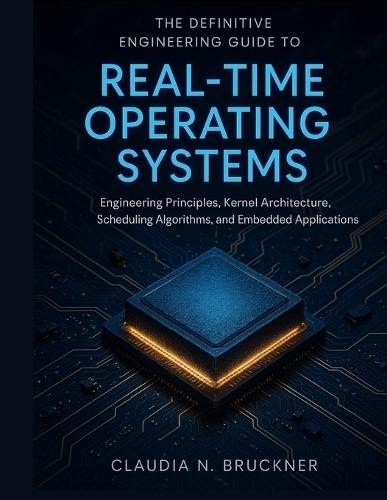
Are you trying to understand how real-time systems actually work beyond surface-level explanations? Have you ever wondered how embedded devices respond instantly to sensor inputs, control signals, or time-critical events without missing a deadline? This book was written for readers who want a clear, practical understanding of how real-time operating systems are designed, implemented, tested, and optimized in modern engineering environments. The Definitive Engineering Guide to Real-Time Operating Systems presents a structured exploration of the concepts that make time-critical computing possible. Instead of offering abstract theory alone, the book explains how engineering principles translate directly into working system architectures used in embedded devices, industrial automation, robotics, and connected hardware platforms. The material begins with the fundamental principles of deterministic computing and kernel architecture. You will learn how real-time kernels manage tasks, handle interrupts, coordinate concurrent operations, and maintain strict timing guarantees. The discussion then moves into scheduling algorithms, task prioritization, synchronization mechanisms, and resource management strategies that allow multiple processes to execute safely within predictable time constraints. Are you interested in how engineers design systems that remain reliable under heavy workloads? The book examines debugging methods, performance analysis techniques, and timing verification strategies used to evaluate real-time applications. Topics such as worst-case execution time analysis, tracing and instrumentation, and stress testing are explained in clear engineering terms so readers can understand how reliability is achieved in practice. You will also encounter discussions on multicore processing, real-time networking, device driver architecture, and hardware abstraction. These areas reveal how modern systems coordinate communication between processors, peripherals, and distributed components while preserving deterministic behavior. Energy-aware design is another essential subject addressed throughout the book. Embedded systems often operate under strict power constraints, and the text explains how engineers balance power management with real-time performance through scheduling strategies, low-power states, and efficient resource usage. Security, safety, and fault tolerance are also explored in detail. Readers will learn how system designers anticipate failures, isolate critical tasks, and build software architectures capable of maintaining dependable operation in demanding environments. Whether you are an engineering student, a software developer working with embedded hardware, or a professional interested in advanced system architecture, this book provides the technical insight needed to understand real-time computing from a practical engineering perspective. It is designed to guide readers step by step through the foundations, challenges, and real-world applications of real-time operating systems while maintaining clarity, precision, and depth throughout the discussion.
Full Product Details
Author: Claudia N Bruckner
Publisher: Independently Published
Imprint: Independently Published
Volume: 10
Dimensions:
Width: 21.60cm
, Height: 0.80cm
, Length: 27.90cm
Weight: 0.340kg
ISBN: 9798251580471
Pages: 140
Publication Date: 10 March 2026
Audience:
General/trade
,
General
Format: Paperback
Publisher's Status: Active
Availability: Available To Order

We have confirmation that this item is in stock with the supplier. It will be ordered in for you and dispatched immediately.