|
|
|||
|
||||
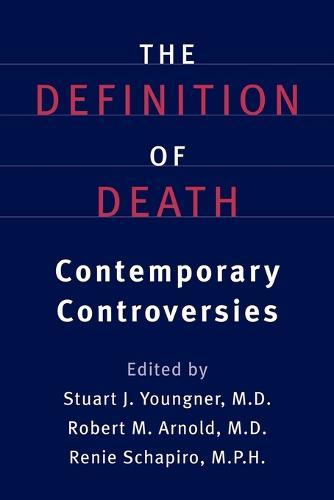
OverviewA comprehensive review of the clinical, philosophical, and public policy implications of our effort to redefine the change in status from living person to corpse. It is the result of a collaboration among scholars from the fields of medicine, philosophy, social science, law and religious studies. Throughout, the contributors struggle to reconcile inconsistencies and gaps in our traditional understanding of death and to respond to the public's concern that, in the determination of death under current policies, patients' interests may be compromised by the demand for organ retrieval. Full Product DetailsAuthor: Stuart J. Youngner, MD (Professor and Chair, Case Western Reserve University) , Robert M. Arnold (UPMC Montefiore Hospital, Suite W-932) , Renie Schapiro, MPH , Renie ShapiroPublisher: Johns Hopkins University Press Imprint: Johns Hopkins University Press Edition: New edition Dimensions: Width: 15.20cm , Height: 2.20cm , Length: 22.90cm Weight: 0.522kg ISBN: 9780801872297ISBN 10: 0801872294 Pages: 368 Publication Date: 10 December 2002 Recommended Age: From 17 Audience: Professional and scholarly , Professional and scholarly , Professional & Vocational , Postgraduate, Research & Scholarly Format: Paperback Publisher's Status: Active Availability: Manufactured on demand We will order this item for you from a manufactured on demand supplier. Table of ContentsAcknowledgments Introduction List of Contributors Part I: The Historical and Clinical Framework Chapter 1. Brain Death in a Cultural Context: The Reconstruction of Death, 1967–1981 Chapter 2. Clinical Standards and Technological Confirmatory Tests in Diagnosing Brain Death Part II: The Interface Between Philosophy and the Clinic Chapter 3. How Much of the Brain Must Be Dead? Chapter 4. Refinements in the Definition and Criterion of Death Chapter 5. Of the Brainstem Criterion of Death Chapter 6. The Persisting Perplexities in the Determination of Death Part III: Revisiting Statues on Brain Death Chapter 7. The Bifurcated Legal Standard for Determining Death: Does It Work? Chapter 8. The Conscience Clause: How Much Individual Choice in Defining Death Can Our Society Tolerate? Chapter 9. The Unimportance of Death Part IV: Public Attitudes About Brain Death in the United States Chapter 10. American Attitudes and Beliefs About Brain Death: The Empirical Literature Chapter 11. Fundamentals of Life and Death: Christian Fundamentalism and Medical Science Chapter 12. The Definition of Death in Jewish Law Part V: International Perspectives Chapter 13. Brain Death, Ethics, and Politics in Denmark Chapter 14. The Problem of Brain Death: Japanese Disputes About Bodies and Modernity Chapter 15. Defining Death in Germany: Brain Death and Its Discontents Part VI: Public Policy Considerations Chapter 16. Dusk, Dawn, and Defining Death: Legal Classifications and Biological Categories Chapter 17. The Role of the Public in Public Policy on the Definition of Death Part VII: The Future of Death Chapter 18. Death in a Technological and Pluralistic Culture Chapter 19. Redefining Death: The Mirage of Consensus Chapter 20. Where Do We Go From Here? IndexReviews<p> This book is an excellent compilation of articles stating the present position in relation to brain death and clearly demonstrates the ethical dilemmas surrounding the concept of death and its determination in practice. It can be wholeheartedly recommended to those interested in brain death from almost any perspective. -- Journal of Medical Ethics Author InformationStuart J. Youngner, M.D., is the Susan E. Watson Professor of Bioethics and chairman of the Department of Bioethics at Case Western Reserve University. Robert M. Arnold, M.D., is a professor of medicine, the director of the Section of Palliative Care and Medical Ethics, and the Dr. Leo H. Criep Chair in Patient Care at the University of Pittsburgh. Renie Schapiro, M.P.H., is a consultant to the Robert Wood Johnson Foundation and a freelance writer and editor in Madison, Wisconsin. Tab Content 6Author Website:Countries AvailableAll regions |
||||