Overview
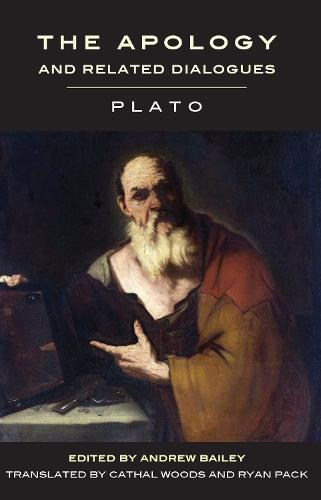
Socrates, one of the first of the great philosophers, left no written works. What survives of his thought are second-hand descriptions of his teachings and conversations—including, most famously, the accounts of his trial and execution composed by his friend, student, and philosophical successor, Plato. In Euthyphro, Socrates examines the concept of piety and displays his propensity for questioning Athenian authorities. Such audacity is not without consequence, and in the Apology we find Socrates defending himself in court against charges of impiety and corruption of the youth. Crito depicts Socrates choosing to accept the resulting death sentence rather than escape Athens and avoid execution. All three dialogues are included here, as is the final scene of Phaedo, in which the sentence is carried out.
Full Product Details
Author: Plato ,
Cathal Woods ,
Ryan Pack ,
Andrew Bailey
Publisher: Broadview Press Ltd
Imprint: Broadview Press Ltd
Dimensions:
Width: 14.00cm
, Height: 0.60cm
, Length: 21.60cm
Weight: 0.192kg
ISBN: 9781554812585
ISBN 10: 1554812585
Pages: 112
Publication Date: 25 April 2016
Audience:
Professional and scholarly
,
Professional & Vocational
Format: Paperback
Publisher's Status: Active
Availability: Available To Order

We have confirmation that this item is in stock with the supplier. It will be ordered in for you and dispatched immediately.
Reviews
The early Socratic dialogues (Euthyphro, Apology, Crito) form a cornerstone in Western philosophical thought. This new edition of the dialogues offers an updated, lively translation with footnotes for students and excellent features for teaching, such as an introduction covering the political, legal, and religious contexts of the dialogues and their philosophical importance, relevant timelines, a list of Platonic characters, current suggestions for further reading and areas for reflection, and a helpful general index. -- Julie Ward, Loyola University Chicago The Apology and Related Dialogues offers a new translation and fresh reappraisal of the dialogues that comprise the last days of Socrates. The book's accessible analysis and critical suggestions make it a must-read for anyone interested in ancient Greek philosophy and, more importantly, basic philosophical questions. -- Andre Archie, Colorado State University This new translation of three Platonic dialogues and the death scene in the Phaedo is a lively and accessible account of the end of Socrates' life. The text animates the paramount questions of piety, wisdom, justice, and the soul as they are addressed in the dialogues. Included is an introduction that provides an excellent and concise analysis of Socrates' substantive philosophical positions. -- Ann Ward, University of Regina
The early Socratic dialogues (Euthyphro, Apology, Crito) form a cornerstone in Western philosophical thought. This new edition of the dialogues offers an updated, lively translation with footnotes for students and excellent features for teaching, such as an introduction covering the political, legal, and religious contexts of the dialogues and their philosophical importance, relevant timelines, a list of Platonic characters, current suggestions for further reading and areas for reflection, and a helpful general index. -- Julie Ward, Loyola University Chicago The Apology and Related Dialogues offers a new translation and fresh reappraisal of the dialogues that comprise the last days of Socrates. The book's accessible analysis and critical suggestions make it a must-read for anyone interested in ancient Greek philosophy and, more importantly, basic philosophical questions. -- Andre Archie, Colorado State University This new translation of three Platonic dialogues and the death scene in the Phaedo is a lively and accessible account of the end of Socrates' life. The text animates the paramount questions of piety, wisdom, justice, and the soul as they are addressed in the dialogues. Included is an introduction that provides an excellent and concise analysis of Socrates' substantive philosophical positions. -- Ann Ward, University of Regina
The early Socratic dialogues (Euthyphro, Apology, Crito) form a cornerstone in Western philosophical thought. This new edition of the dialogues offers an updated, lively translation with footnotes for students and excellent features for teaching, such as an introduction covering the political, legal, and religious contexts of the dialogues and their philosophical importance, relevant timelines, a list of Platonic characters, current suggestions for further reading and areas for reflection, and a helpful general index. -- Julie Ward, Loyola University Chicago The Apology and Related Dialogues offers a new translation and fresh reappraisal of the dialogues that comprise the last days of Socrates. The book's accessible analysis and critical suggestions make it a must-read for anyone interested in ancient Greek philosophy and, more importantly, basic philosophical questions. -- Andre Archie, Colorado State University This new translation of three Platonic dialogues and the death scene in the Phaedo is a lively and accessible account of the end of Socrates' life. The text animates the paramount questions of piety, wisdom, justice, and the soul as they are addressed in the dialogues. Included is an introduction that provides an excellent and concise analysis of Socrates' substantive philosophical positions. -- Ann Ward, University of Regina The early Socratic dialogues (Euthyphro, Apology, Crito) form a cornerstone in Western philosophical thought. This new edition of the dialogues offers an updated, lively translation with footnotes for students and excellent features for teaching, such as an introduction covering the political, legal, and religious contexts of the dialogues and their philosophical importance, relevant timelines, a list of Platonic characters, current suggestions for further reading and areas for reflection, and a helpful general index. -- Julie Ward, Loyola University Chicago The Apology and Related Dialogues offers a new translation and fresh reappraisal of the dialogues that comprise the last days of Socrates. The book's accessible analysis and critical suggestions make it a must-read for anyone interested in ancient Greek philosophy and, more importantly, basic philosophical questions. -- Andre Archie, Colorado State University This new translation of three Platonic dialogues and the death scene in the Phaedo is a lively and accessible account of the end of Socrates' life. The text animates the paramount questions of piety, wisdom, justice, and the soul as they are addressed in the dialogues. Included is an introduction that provides an excellent and concise analysis of Socrates' substantive philosophical positions. -- Ann Ward, University of Regina
Author Information
Andrew Bailey is Professor of Philosophy and Associate Dean of Arts at the University of Guelph. He is editor of The Broadview Introduction to Philosophy. Cathal Woods is Associate Professor of Philosophy at Virginia Wesleyan College. Ryan Pack studied philosophy and religion at Virginia Wesleyan College.