|
|
|||
|
||||
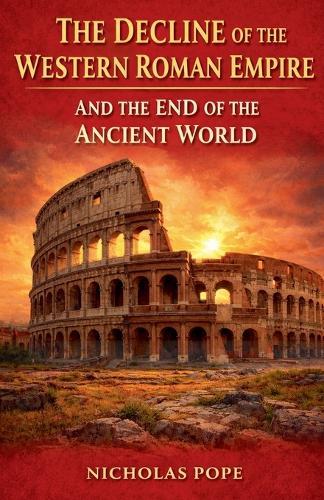
OverviewThe fall of Rome matters not merely as a historical problem but as a perennial human concern. How do great powers decline? What makes civilizations resilient or fragile? Can reforms reverse trajectories of decay, or do they sometimes hasten collapse? Why do some societies adapt to changing circumstances while others rigidify and break? These questions resonated in Gibbon's eighteenth-century Britain, in twentieth-century America at the height of its power, and in our own age of anxiety about Western civilization's future. Rome's fall cannot provide simple lessons or predictions-history does not repeat itself so neatly-but it can illuminate the complex processes by which established orders unravel and new worlds emerge from their ruins. What follows is an attempt to understand one of history's greatest transformations: how the Roman Empire, which had seemed eternal to its inhabitants, proved mortal after all, and how its fall marked not merely the end of an empire but the end of the ancient world itself and the beginning of something entirely new. The story is one of both catastrophe and continuity, of endings and beginnings, of a civilization that fell yet never entirely died. It is a story that remains, fifteen centuries later, endlessly fascinating and perpetually relevant. Full Product DetailsAuthor: Nicholas PopePublisher: Colloquium Verlag Imprint: Colloquium Verlag Dimensions: Width: 14.00cm , Height: 1.10cm , Length: 21.60cm Weight: 0.245kg ISBN: 9798233545757Pages: 206 Publication Date: 09 January 2026 Audience: General/trade , General Format: Paperback Publisher's Status: Active Availability: Available To Order We have confirmation that this item is in stock with the supplier. It will be ordered in for you and dispatched immediately. Table of ContentsReviewsAuthor InformationTab Content 6Author Website:Countries AvailableAll regions |
||||