Overview
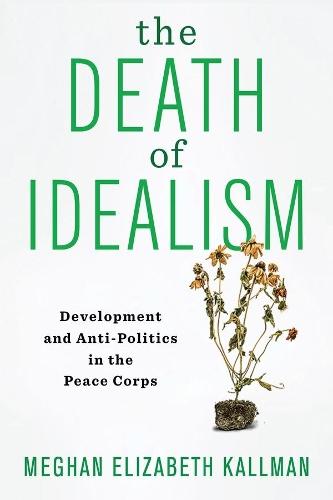
Peace Corps volunteers seem to exemplify the desire to make the world a better place. Yet despite being one of history's clearest cases of organized idealism, the Peace Corps has, in practice, ended up cultivating very different outcomes among its volunteers. By the time they return from the Peace Corps, volunteers exhibit surprising shifts in their political and professional consciousness. Rather than developing a systemic perspective on development and poverty, they tend instead to focus on individual behavior; they see professions as the only legitimate source of political and social power. They have lost their idealism, and their convictions and beliefs have been reshaped along the way. The Death of Idealism uses the case of the Peace Corps to explain why and how participation in a bureaucratic organization changes people's ideals and politics. Meghan Elizabeth Kallman offers an innovative institutional analysis of the role of idealism in development organizations. She details the combination of social forces and organizational pressures that depoliticizes Peace Corps volunteers, channels their idealism toward professionalization, and leads to cynicism or disengagement. Kallman sheds light on the structural reasons for the persistent failure of development organizations and the consequences for the people involved. Based on interviews with over 140 current and returned Peace Corps volunteers, field observations, and a large-scale survey, this deeply researched, theoretically rigorous book offers a novel perspective on how people lose their idealism, and why that matters.
Full Product Details
Author: Meghan Elizabeth Kallman
Publisher: Columbia University Press
Imprint: Columbia University Press
ISBN: 9780231189682
ISBN 10: 0231189680
Pages: 320
Publication Date: 21 April 2020
Audience:
Professional and scholarly
,
Professional & Vocational
Format: Hardback
Publisher's Status: Active
Availability: Manufactured on demand

We will order this item for you from a manufactured on demand supplier.
Reviews
With no places to discuss their potentially life-changing experiences with fellow volunteers, and with many rules to follow and forms to fill out, volunteers in the Peace Corps often encounter an organizational void where their political imaginations and hopes might have bloomed. The Death of Idealism confronts the consequences of this void, and makes important contributions to theories of organizations, the history of American volunteering, and the history of the Peace Corps in particular. -- Nina Eliasoph, author of <i>Making Volunteers: Civic Life After Welfare's End</i> Professionalization is typically seen as universally good in the worlds of government, nonprofit, and development organizations. Meghan Elizabeth Kallman shows in her insightful study of the U.S. Peace Corps how it can kill idealism and lead to the failure of development. This is a must-read for anyone interested in public service and civic engagement. -- Angela M. Eikenberry, coeditor of <i>Reframing Nonprofit Organizations: Democracy, Inclusion, and Social Change</i> A fascinating account of the conflict between professionalization and idealism in the Peace Corps. Kallman presents an important lesson in how organizational practices affect people's ideas and values in ways that have long lasting consequences for their lives, professional careers, and, in this case, the trajectory of international development practice in the United States. -- Jennifer E. Mosley, coeditor of <i>Human Service Organizations and the Question of Impact</i> Is a must-read for all those who have a keen interest in international development and fighting poverty since the two are interdisciplinary in the contemporary world. * Voluntas *
A fascinating account of the conflict between professionalization and idealism in the Peace Corps. Kallman presents an important lesson in how organizational practices affect people's ideas and values in ways that have long lasting consequences for their lives, professional careers, and, in this case, the trajectory of international development practice in the United States. -- Jennifer E. Mosley, coeditor of <i>Human Service Organizations and the Question of Impact</i> Professionalization is typically seen as universally good in the worlds of government, nonprofit, and development organizations. Meghan Elizabeth Kallman shows in her insightful study of the U.S. Peace Corps how it can kill idealism and lead to the failure of development. This is a must-read for anyone interested in public service and civic engagement. -- Angela M. Eikenberry, coeditor of <i>Reframing Nonprofit Organizations: Democracy, Inclusion, and Social Change</i> With no places to discuss their potentially life-changing experiences with fellow volunteers, and with many rules to follow and forms to fill out, volunteers in the Peace Corps often encounter an organizational void where their political imaginations and hopes might have bloomed. The Death of Idealism confronts the consequences of this void, and makes important contributions to theories of organizations, the history of American volunteering, and the history of the Peace Corps in particular. -- Nina Eliasoph, author of <i>Making Volunteers: Civic Life After Welfare's End</i>
With no places to discuss their potentially life-changing experiences with fellow volunteers, and with many rules to follow and forms to fill out, volunteers in the Peace Corps often encounter an organizational void where their political imaginations and hopes might have bloomed. The Death of Idealism confronts the consequences of this void, and makes important contributions to theories of organizations, the history of American volunteering, and the history of the Peace Corps in particular. -- Nina Eliasoph, author of <i>Making Volunteers: Civic Life After Welfare's End</i> Professionalization is typically seen as universally good in the worlds of government, nonprofit, and development organizations. Meghan Elizabeth Kallman shows in her insightful study of the U.S. Peace Corps how it can kill idealism and lead to the failure of development. This is a must-read for anyone interested in public service and civic engagement. -- Angela M. Eikenberry, coeditor of <i>Reframing Nonprofit Organizations: Democracy, Inclusion, and Social Change</i> A fascinating account of the conflict between professionalization and idealism in the Peace Corps. Kallman presents an important lesson in how organizational practices affect people’s ideas and values in ways that have long lasting consequences for their lives, professional careers, and, in this case, the trajectory of international development practice in the United States. -- Jennifer E. Mosley, coeditor of <i>Human Service Organizations and the Question of Impact</i> Is a must-read for all those who have a keen interest in international development and fighting poverty since the two are interdisciplinary in the contemporary world. * Voluntas * This strong critique of the program is also a powerful endorsement of the critical ways that volunteering, in this program and more generally, can shape individuals and their lives. * American Journal of Sociology *
With no places to discuss their potentially life-changing experiences with fellow volunteers, and with many rules to follow and forms to fill out, volunteers in the Peace Corps often encounter an organizational void where their political imaginations and hopes might have bloomed. The Death of Idealism confronts the consequences of this void, and makes important contributions to theories of organizations, the history of American volunteering, and the history of the Peace Corps in particular. -- Nina Eliasoph, author of <i>Making Volunteers: Civic Life After Welfare's End</i>
Author Information
Meghan Elizabeth Kallman is an assistant professor at the School for Global Inclusion and Social Development at the University of Massachusetts Boston. She is coauthor of The Third Sector: Community Organizations, NGOs, and Nonprofits (2016) and an elected official in Pawtucket, Rhode Island.