Overview
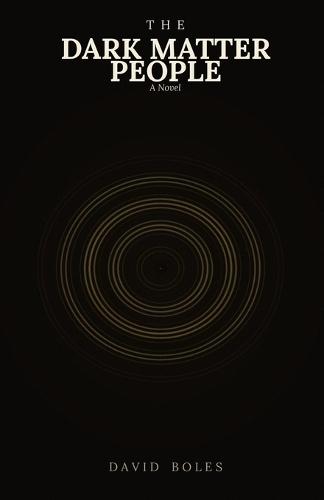
Lena Vasquez is an observational astrophysicist at a Pacific Northwest university, the kind of scientist who trusts her data more than her instincts and her instincts more than her colleagues' reassurances. When she detects periodic oscillations in the dark matter density profiles of four galaxy clusters in Perseus, a signal with a combined false-alarm probability of eight in one billion, she knows she has found something that should not exist. The oscillations suggest that dark matter is not the cold, collisionless substance that forty years of standard cosmology has assumed. They suggest internal forces. Thermodynamic processes. A dark sector with its own physics, its own coupling constant, its own thirteen-billion-year history of evolution that has been running alongside visible matter since the beginning of the universe. In Tokyo, a young theorist named Yuki Togashi published a paper eight months ago predicting exactly this kind of signal. His model of two-component self-interacting dark matter produces gravothermal oscillation modes that match Lena's observations to three decimal places. Together, they design three independent tests (flexion anomalies, subhalo mass deficits, shape-concentration correlations) and every prediction confirms. But confirmation creates its own dangers. Lena's department wants her to separate her observations from Yuki's theory to protect her tenure case. The institutional machinery that rewards individual credit cannot accommodate a discovery that is fundamentally collaborative. And the discovery itself carries an implication that Lena has been circling for months, the one her husband Daniel finally names: if the dark sector has internal forces and thermodynamic complexity, if ninety-five percent of reality has been evolving through its own processes for thirteen billion years, then the question is not whether dark matter has structure. The question is how much structure. The question is whether we are not alone in the way we have always feared: not across the distances of space, but in the spaces between atoms, separated not by light-years but by coupling constants. The science in this novel is real. The discoveries are not. The question the novel asks, whether a sector of reality containing six times more mass than everything visible, operating through its own internal forces since the origin of the universe, might produce organized complexity, is not answered by current science. It is, however, permitted by current science. The distinction between ""not proven"" and ""not possible"" is the territory in which this novel operates.
Full Product Details
Author: David Boles
Publisher: Independently Published
Imprint: Independently Published
Dimensions:
Width: 14.00cm
, Height: 1.30cm
, Length: 21.60cm
Weight: 0.259kg
ISBN: 9798249980757
Pages: 218
Publication Date: 26 February 2026
Audience:
General/trade
,
General
Format: Paperback
Publisher's Status: Active
Availability: Available To Order

We have confirmation that this item is in stock with the supplier. It will be ordered in for you and dispatched immediately.