Overview
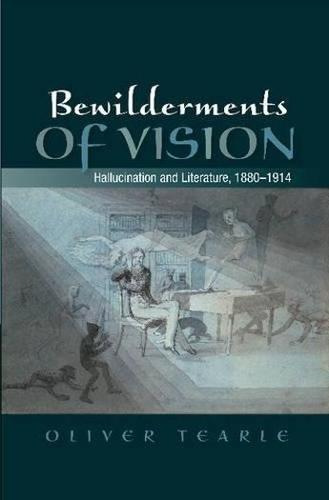
According to Oscar Wilde, the primary aim of the critic is to see the object as in itself it really is not'. Through a series of close and often unusual readings, this book endeavours to develop Wilde's remark into a detailed and creative theory of reading. Or perhaps that should be misreading: for, as this experimental work of criticism negotiates its way among the works of a number of late-nineteenth-century writers, particularly Robert Louis Stevenson and Wilde himself, Tearle uncovers some of the ways in which we as readers are prone to hallucinations while reading about, of all things, the experience of hallucination. Focusing in detail on a series of neologisms from writing of the period, such as 'handconscience', 'figmentary', and 'aftersense', and moving between a number of disciplines including literature, criticism, science, psychoanalysis, and even linguistics, Bewilderments of Vision endeavours to answer a number of questions, ranging from the urgent to the downright bizarre: What is the link between hallucination and social conscience in writing of the late-nineteenth century? Is there such a thing as textual hallucination? Why does the author of this book see a 'snake' that is not there when he 'reads' Jekyll and Hyde?
Full Product Details
Author: Oliver Tearle
Publisher: Liverpool University Press
Imprint: Liverpool University Press
Dimensions:
Width: 15.20cm
, Height: 2.30cm
, Length: 22.90cm
Weight: 0.450kg
ISBN: 9781845192945
ISBN 10: 184519294
Pages: 256
Publication Date: 04 December 2012
Audience:
General/trade
,
General
Format: Hardback
Publisher's Status: Active
Availability: Out of stock

The supplier is temporarily out of stock of this item. It will be ordered for you on backorder and shipped when it becomes available.
Reviews
Spectral fiction has long known the blurred line between dream and waking, the subjective and the objective. In this book Tearle offers an exploration of these themes and shows how psychical research had an impact on the writers of the era. It may well be the final word on the topic that should be included in classrooms as essential reading. --Gary William Crawford, editor, Le Fanu Studies and the Gothic Press
Oliver Tearles book is based on close readings of the texts, and makes abundant references to contemporary thinkers and novelists, and to the criticism on Gothic fiction. It gives a good idea of what Gothic writing strategies are. - Nathalie Saudo-Welby, Universite de Picardie-Jules-Verne (Amiens), Cercles: Revue Pluridisciplinaire Du Monde Anglophone
Author Information
Oliver Tearle is a research student at Loughborough University. He has been published in such journals as Notes and Queries and the Modern Language Review, and has contributed to the online Literary Encyclopedia. Future projects include the co-editing (with John Schad) of a volume of creative-critical essays as part of the Critical Inventions series published by Sussex Academic Press (full details of the series available on the Press website).