Overview
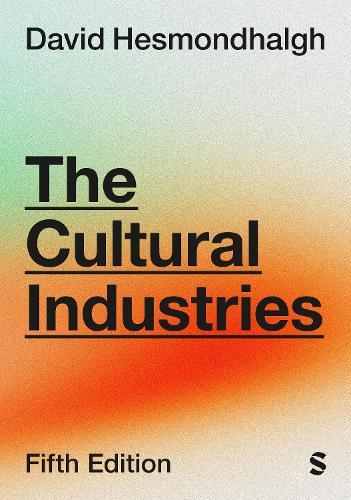
Written by leading scholar David Hesmondhalgh, The Cultural Industries remains the definitive text for understanding the ever-evolving world of culture, creativity, and commerce. This textbook provides a coherent and accessible analysis of cultural industries, combining clarity with comprehensive coverage on an international scale. In this new edition, David provides incisive updates to reflect today’s pressing issues, including: The emerging impact of generative Artificial Intelligence on cultural production and consumption; Problems surrounding the use of automated, AI-based systems and human curation to recommend cultural products to users; The increasing importance of social media creators and influencers; Refreshed and internationalised case studies, offering a more inclusive and diverse perspective. Packed with real-world examples, The Cultural Industries equips readers with practical insights and critical frameworks to navigate this complex field. From students and educators to industry professionals, this text is an essential resource for anyone seeking to understand the forces shaping cultural production in the modern era.
Full Product Details
Author: David Hesmondhalgh
Publisher: SAGE Publications Ltd
Imprint: SAGE Publications Ltd
Edition: 5th Revised edition
Weight: 1.100kg
ISBN: 9781529691351
ISBN 10: 1529691354
Pages: 576
Publication Date: 30 January 2026
Audience:
College/higher education
,
Tertiary & Higher Education
Format: Hardback
Publisher's Status: Forthcoming
Availability: Not yet available

This item is yet to be released. You can pre-order this item and we will dispatch it to you upon its release.
Reviews
The Cultural Industries is justly celebrated for many reasons, but what I find most compelling is the civic and moral passion that infuses every page. While never polemical, Hesmondhalgh makes clear why the making of culture matters and what’s at stake. With each new much-awaited edition, it is this quality that ensures the book’s timeless relevance. -- Rodney Benson This new edition is both a classic - guiding research on the cultural industries over the past decades - and the most comprehensive, up-to-date study of these industries today. Written in an intelligent, personal voice, the book not only provides sharp definitions and insightful discussions, but also offers a deep and sustained reflection on the continuities and changes in power, technologies, culture, and production. -- Thomas Poell The Cultural Industries is a monumental achievement. A mighty work of intellectual synthesis and field leadership, it brilliantly lays out what the cultural industries are, how they work, how they’re changing, and why they matter. Hesmondhalgh has done us all a great service by writing it in the first place, and by taking the time to make meaningful and substantial revisions, including this latest edition, with its incorporation of newly important issues such as AI. -- Jean Burgess Critical, cosmopolitan, and timely, the fifth edition of Hesmondhalgh’s magnum opus offers the most coherent and comprehensive introduction to cultural industries to date. It systematically identifies the pitfalls and pathways for socio-cultural change. Drawing on and advancing cultural studies as well as political economy frameworks, this volume is theoretically innovative, self-reflexive, and rich in case studies. This indispensable resource is essential for all students and scholars examining cultural industries, whether traditional or emergent, problematic or progressive. -- Jack Linchuan Qiu In this far-reaching and comprehensive new edition of Cultural Industries, David Hesmondhalgh has done it again: he has expertly traced the rapidly changing cultural industries landscape through a variety of elements, from government to big tech to ordinary people and beyond. Unlike many other books on the cultural industries, this volume is not solely focused on the ever-changing present; rather, it crucially asks readers to consider the past as a way to understand what is happening now. Against the naïve optimism of so much commentary on the digital landscape and what it offers, Hesmondhalgh gives us a thoughtful, historical understanding of the cultural industries so many of us attempt to comprehend in our everyday lives, from generative AI to the increasing power of ""influencers"" to the various ways the cultural industries continue to be a powerful platform for activism. In so doing, he offers readers not only a brilliant analysis of why cultural industries matter, but for whom they matter. -- Sarah Banet-Weiser
The Cultural Industries is justly celebrated for many reasons, but what I find most compelling is the civic and moral passion that infuses every page. While never polemical, Hesmondhalgh makes clear why the making of culture matters and what’s at stake. With each new much-awaited edition, it is this quality that ensures the book’s timeless relevance. -- Rodney Benson This new edition is both a classic - guiding research on the cultural industries over the past decades - and the most comprehensive, up-to-date study of these industries today. Written in an intelligent, personal voice, the book not only provides sharp definitions and insightful discussions, but also offers a deep and sustained reflection on the continuities and changes in power, technologies, culture, and production. -- Thomas Poell The Cultural Industries is a monumental achievement. A mighty work of intellectual synthesis and field leadership, it brilliantly lays out what the cultural industries are, how they work, how they’re changing, and why they matter. Hesmondhalgh has done us all a great service by writing it in the first place, and by taking the time to make meaningful and substantial revisions, including this latest edition, with its incorporation of newly important issues such as AI. -- Jean Burgess
Author Information
David Hesmondhalgh is Professor of Media, Music and Culture in the School of Media and Communication at the University of Leeds. He is the author of The Cultural Industries (SAGE, 2019); Culture, Economy and Politics: The Case of New Labour (Palgrave, 2015, co-written with Kate Oakley, David Lee and Melissa Nisbett); Why Music Matters (Wiley-Blackwell, 2013); and Creative Labour: Media Work in Three Cultural Industries (Routledge, 2011, co-written with Sarah Baker). He is also editor or co-editor of eight other books or special journal issues on media, music and culture, including a special issue of Popular Communication (co-edited with Anamik Saha) on Race and Cultural Production; The Media and Social Theory (Routledge, co-edited with Jason Toynbee, 2008) and Media and Society, 6th edition (Bloomsbury, co-edited with James Curran, 2019). He was born and raised in Accrington, Lancashire, did his first degree in English Language and Literature at the University of Oxford, and received his PhD from Goldsmiths University of London in 1996. He lives in Yorkshire with his partner, the philosopher Helen Steward, and they have two adult children, Rosa and Joe.