Overview
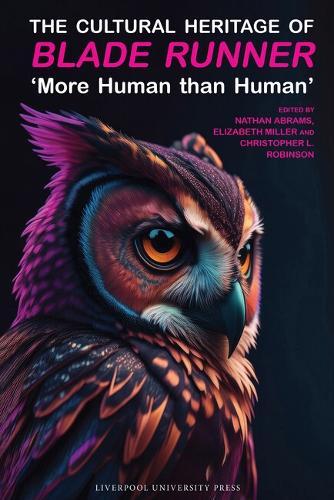
Blade Runner has left an indelible mark on popular culture. Adapted from Philip K. Dick’s novel Do Androids Dream of Electric Sheep?, it anticipated with remarkable prescience the world in which we have lived for the past four decades. Ridley Scott’s breathtaking vision of a futuristic and cosmopolitan metropolis created an aesthetic and cognitive shock that continues to resonate to this day, not only in cinema but in multiple artistic and even scientific domains. The film is often cited in debates related to robotics, biopolitics, posthumanism, urban planning and critical theory. Denis Villeneuve's sequel, Blade Runner 2049, continues to explore these themes while introducing issues related to artificial intelligence, transhumanism and climate change. Blade Runner is often credited with having spawned several aesthetic trends, such as retrofuturism, techno-noir or future-noir and, most significantly, cyberpunk. To explore the origins and legacies of this monumental work, this essay collection brings together specialists from fields as diverse as film and media studies, comparative literature and mythology, photography, architecture, fashion studies, psychology, sociology and biopolitics.
Full Product Details
Author: Nathan Abrams ,
Elizabeth Miller ,
Christopher L. Robinson
Publisher: Liverpool University Press
Imprint: Liverpool University Press
ISBN: 9781836244936
ISBN 10: 1836244932
Pages: 264
Publication Date: 14 October 2025
Audience:
Professional and scholarly
,
Professional & Vocational
Format: Hardback
Publisher's Status: Active
Availability: In Print

This item will be ordered in for you from one of our suppliers. Upon receipt, we will promptly dispatch it out to you. For in store availability, please contact us.
Author Information
Nathan Abrams has written widely and extensively on Kubrick (as well as film in general). Abrams’ 2018 book, Stanley Kubrick: Jewish Intellectual, examines the contentious issue of Kubrick's ethnicity and how it both shaped and is reflected in his films. Based on a detailed working knowledge of the Kubrick Archive and other archives. He collaborated with Robert Kolker on Eyes Wide Shut: Stanley Kubrick and the Making of His Final Film (2019), the most comprehensive history of that film to date, based on extensive research, archival material, and interviews with the leading participants. It was chosen as one of the ten best film books of 2019 by the British Film Institute’s journal, Sight and Sound. He edited the Bloomsbury Companion to Stanley Kubrick (2021) with IQ Hunter and is currently writing a biography of Kubrick to be published by Faber & Faber in 2024. He has also been responsible for organising various Kubrick events, bringing together scholars, fans, as well as those who worked on the films and/or with Kubrick, including '2001: Beyond 50' (2018), 'Stanley Kubrick, Life and Legacy' (2019), and 'Behind Eyes Wide Shut' (2019). He is also a founding member of the Kubrick Studies Network, which has some 70 subscribers worldwide and is growing. Elizabeth Miller received her PhD in Film Studies from King’s College London and teaches film and media studies, with her most recent post as Lecturer in Media Studies and Digital Ethics at Bangor University. Her research is broadly related to feminist and sociocultural approaches to French cinema and popular science fiction. She has published in French Screen Studies, Studies in European Cinema, Modern and Contemporary France and Foundation: The International Review of Science Fiction, where she also serves as an Editorial Advisor. She also co-organised the 'Women in the Wake of May 68' (King’s College London, 2018), 'Blade Runner @40: Origins and Legacies' (Bangor University, 2022), 'Paul Verhoeven @85' (Bangor University, 2023) and 'Terminator @40: Origins and Legacies' (Bangor University, 2024) conferences. Christopher L. Robinson is Assistant Professor of English at École Polytechnique, IP-Paris, where he teaches literature and film. His research explores the intersections of the sciences and the arts, posthumanism, and biopolitics in Anglo-American literature and cinema, with particular attention to speculative fiction. He has co-edited several volumes, including Ursula K. Le Guin: Science, Fiction, Ethics (2021, with Sarah Bouttier and Pierre-Louis Patoine) and 2001, l’odyssée de l’espace de Stanley Kubrick: Au carrefour des arts et des sciences (2021, with Sam Azulys). With researchers in physics, zoology, and computer science, he co-authored L’art et la science dans Alien (2019, with Frédéric Landragin, Roland Lehoucq, and Jean-Sébastien Steyer).