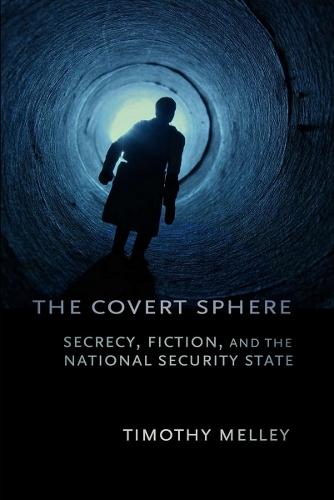
Full Product Details
Author: Timothy Melley
Publisher: Cornell University Press
Imprint: Cornell University Press
Dimensions:
Width: 15.20cm
, Height: 2.10cm
, Length: 22.90cm
Weight: 0.454kg
ISBN: 9780801478536
ISBN 10: 0801478537
Pages: 304
Publication Date: 15 November 2012
Audience:
Professional and scholarly
,
Professional & Vocational
Format: Paperback
Publisher's Status: Active
Availability: Manufactured on demand

We will order this item for you from a manufactured on demand supplier.
Reviews
<p> Timothy Melley shows why a term like 'postmodernism' won't go away-not so long as the National Security State itself is grounded in irrationalism, the unreal, and the necessary lie. Melley's historicist argument is that over time and without central planning, in response to the (partly imagined) covert activity of the Soviets in the Cold War, the United States developed an elaborate 'covert sphere' through the CIA and many other government organizations. Through novels, films, television serials, and electronic games, knowledge circulates mostly as fictions and narratives, and this is the great advantage held by the covert sphere over the rational-critical public sphere: once knowledge is narrativized, it becomes not exactly deniable, but flexible, capable of endless construction so that no one narrative can ever hold the national stage for very long. Melley's understanding of the fictionality of contemporary knowledge, a key contribution to American cultural studies, also produces subtle and original readings of some of our most important postmodern fictions. -Joseph Tabbi, University of Illinois at Chicago
Timothy Melley shows why a term like 'postmodernism' won t go away not so long as the National Security State itself is grounded in irrationalism, the unreal, and the necessary lie. Melley s historicist argument is that over time and without central planning, in response to the (partly imagined) covert activity of the Soviets in the Cold War, the United States developed an elaborate covert sphere through the CIA and many other government organizations. Through novels, films, television serials, and electronic games, knowledge circulates mostly as fictions and narratives, and this is the great advantage held by the covert sphere over the rational-critical public sphere: once knowledge is narrativized, it becomes not exactly deniable, but flexible, capable of endless construction so that no one narrative can ever hold the national stage for very long. Melley s understanding of the fictionality of contemporary knowledge, a key contribution to American cultural studies, also produces subtle and original readings of some of our most important postmodern fictions. Joseph Tabbi, University of Illinois at Chicago
The Covert Sphere brilliantly demonstrates how the covert activities undertaken by the Cold War state generated postmodern fantasies that the 'covert sphere' instructed citizens to enjoy. Timothy Melley's benchmark text will utterly transform received understandings of the Cold War and postmodern fiction alike. -Donald E. Pease, Founding Director of the Futures of American Studies Institute Timothy Melley develops a rich, fruitful, and original engagement with the notion of the 'public sphere' that establishes it not as a discursive space purified of hidden agendae, disinformation, and secrecy, but rather as an overt acknowledgment of the covert. The Covert Sphere thus provides an astute taxonomy of the ways that the covert and the public relentlessly modify each other. This is a provocative and important book, one particularly relevant in this Age of Terror, when covert actions have become our boldest public obsessions. -Alan Nadel, University of Kentucky Timothy Melley shows why a term like 'postmodernism' won't go away-not so long as the National Security State itself is grounded in irrationalism, the unreal, and the necessary lie. Melley's historicist argument is that over time and without central planning, in response to the (partly imagined) covert activity of the Soviets in the Cold War, the United States developed an elaborate 'covert sphere' through the CIA and many other government organizations. Through novels, films, television serials, and electronic games, knowledge circulates mostly as fictions and narratives, and this is the great advantage held by the covert sphere over the rational-critical public sphere: once knowledge is narrativized, it becomes not exactly deniable, but flexible, capable of endless construction so that no one narrative can ever hold the national stage for very long. Melley's understanding of the fictionality of contemporary knowledge, a key contribution to American cultural studies, also produces subtle and original readings of some of our most important postmodern fictions. -Joseph Tabbi, University of Illinois at Chicago
Author Information
Timothy Melley is Professor of English, Affiliate of American Studies,and Director of the Humanities Center at Miami University in Oxford, Ohio. He is the author of Empire of Conspiracy: The Culture of Paranoia in Postwar America and The Covert Sphere: Secrecy, Fiction, and the National Security State, both from Cornell.