|
|
|||
|
||||
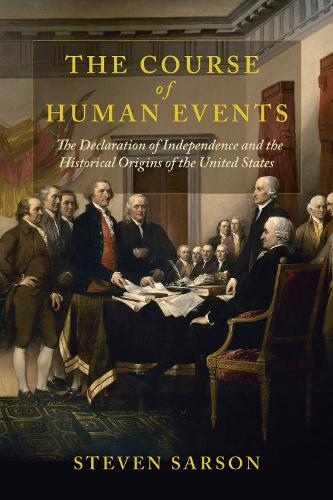
OverviewHow reading the Declaration of Independence as a document of history explains its intended meaning Thomas Jefferson chose his words carefully. Few could have been more deliberate than 'When in the Course of human events,' the phrase with which he opened the Declaration of Independence. As Steven Sarson shows, the original Declaration moved through the ages of human history from Creation to American independence, assessing it according to 'the Laws of Nature and of Nature's God.' The Declaration's history and historical consciousness therefore help answer one of American history's great questions: How did the founders reconcile their lofty views on equality and liberty with the inequities and iniquities that they maintained in their time? The contingencies of history and the complexities of natural law, Sarson demonstrates, meant that the Declaration's eloquent promises of equality and liberty only applied partially to women and poor men, and not at all to Loyalists, Indigenous Americans, and enslaved people. The Declaration's assertion that 'all men are created equal' has since become a promise of universal equality and liberty. As we reach its 250th anniversary, it is important to understand its original context as well as to continue the mission of making its promises a lived reality for all. Full Product DetailsAuthor: Steven SarsonPublisher: University of Virginia Press Imprint: University of Virginia Press Dimensions: Width: 15.20cm , Height: 2.50cm , Length: 22.90cm ISBN: 9780813953960ISBN 10: 0813953960 Pages: 276 Publication Date: 28 November 2025 Audience: Professional and scholarly , Professional & Vocational Format: Hardback Publisher's Status: Active Availability: Out of stock The supplier is temporarily out of stock of this item. It will be ordered for you on backorder and shipped when it becomes available. Table of ContentsReviewsSarson seeks to reorient our understanding of the Declaration of Independence away from modern readings and back to the Founders' own intentions. Although the document justified separation from Britain, Sarson explains that the Continental Congress sought to do so on the basis of well-established principles in British law and political philosophy. He outlines those ideas in a serious but readable fashion. --Journal of the American Revolution Author InformationSteven Sarson is Professor of American Civilization at Jean Moulin University Lyon 3. Tab Content 6Author Website:Countries AvailableAll regions |
||||