Overview
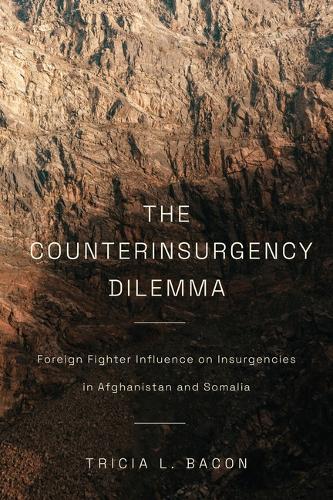
In the wake of the Taliban's military defeat in 2001, foreign fighters played a critical role in assisting the Taliban to launch an insurgency against Coalition forces. Ten years later, by al-Qaida's own admission, the Taliban ""almost didn't need"" al-Qaida's non-Afghan fighters. Over time the Taliban grew sufficiently in strength that its need for foreign fighters—and foreign fighters' influence—virtually disappeared. Somalia shows a similar pattern. Foreign fighters initially played a prominent role in al-Shabaab, helping the group to launch an insurgency against Ethiopian forces, but their influence also declined as al-Shabaab became the dominant insurgent organization and built ties within Somali society. This is the first book to examine how foreign fighters gain and lose influence during insurgencies. Understanding foreign fighters' impact on conflicts is of increasing importance as the number of foreign fighters who have mobilized has grown in recent years, both in absolute numbers and in terms of the proportion of conflicts in which they are involved. In examining the conditions that contribute to the changes in their effect over time, Bacon explains how and why foreign fighter influence evolves within a conflict and which factors enable and constrain foreign fighter influence throughout an insurgency. Knowing how foreign fighters are situated vis-à-vis local insurgents, specifically the type of relationships they forge, should shape every aspect of counterinsurgency strategies to avoid counterproductive tactics, more effectively counter insurgent movements, and better protect civilians.
Full Product Details
Author: Tricia L. Bacon
Publisher: Stanford University Press
Imprint: Stanford University Press
ISBN: 9781503611870
ISBN 10: 1503611876
Pages: 392
Publication Date: 13 February 2026
Audience:
Professional and scholarly
,
Professional & Vocational
Format: Hardback
Publisher's Status: Active
Availability: Not yet available

This item is yet to be released. You can pre-order this item and we will dispatch it to you upon its release.
Reviews
""The Counterinsurgency Dilemma is an important contribution to understanding the dynamics and relationships between foreign fighters and their local insurgent hosts. Tricia Bacon's meticulous research, extensive field work, and incisive analysis casts new light on this critical dimension of contemporary conflict and will be of great interest for scholars, students, and counterinsurgency practitioners and policymakers alike.""--Bruce Hoffman, author of Inside Terrorism ""Foreign fighters aggravate international conflicts, but through what mechanisms? Tricia L. Bacon sheds new light on this question by highlighting foreign fighter-local insurgent relations as a critical, and underexplored, variable. Meticulously researched and cogently argued, The Counterinsurgency Dilemmais a major contribution to our understanding of contemporary conflict dynamics.""--Assaf Moghadam, author of Nexus of Global Jihad: Understanding Cooperation Among Terrorist Actors ""Tricia L. Bacon's deeply researched book traces the long-term impact that foreign fighters have had on insurgencies, delving into the most important factors behind what motivates these militants as well as how they shape the nature of the conflicts they are fighting in. It is essential reading for scholars, practitioners, and analysts of terrorism, insurgency, and irregular warfare."" --Colin P. Clarke, author of After the Caliphate: The Islamic State & the Future Terrorist Diaspora
Author Information
Tricia L. Bacon is a Professor at American University's School of Public Affairs and School of International Service.