|
|
|||
|
||||
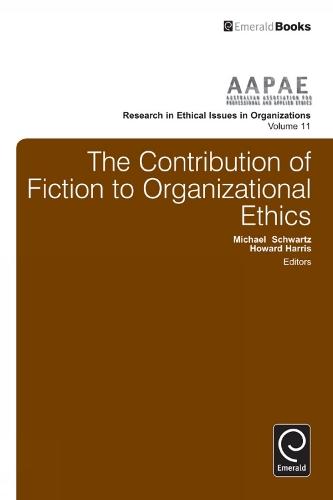
OverviewAlasdair MacIntyre described humans as storytelling animals. Stories are essential to any organization. They help organizations define who they are, what they do, and how they do it. Tom Peters and Robert Waterman, in explaining their well-known search for excellence in leading organizations, wrote how they ""were struck by the dominant use of story, slogan, and legend as people tried to explain the characteristics of their own great institutions"" and how those ""convey(ed) the organization's shared values, or culture"". Indeed there is the distinct possibility of those inherited stories, slogans and legends creating ethical organizations. Fiction incorporates not only literature but movies, television, poetry and plays. Friedrich Nietzsche who has been described, perhaps unfairly, as not a philosopher but a writer described fiction as a lie which enabled us to see the truth. Nina Rosenstand argued that such fiction can ""be used to question moral rules and to examine morally ambiguous situations"". In this issue we consider how fiction has questioned the moral rules, and examined such situations, and in doing so how it has contributed to our understanding of organizational ethics. Full Product DetailsAuthor: Dr Howard Harris , Michael SchwartzPublisher: Emerald Publishing Limited Imprint: Emerald Group Publishing Limited Volume: 11 Dimensions: Width: 15.20cm , Height: 1.60cm , Length: 22.90cm Weight: 0.478kg ISBN: 9781783509492ISBN 10: 178350949 Pages: 224 Publication Date: 05 September 2014 Audience: Professional and scholarly , Professional & Vocational Format: Hardback Publisher's Status: Active Availability: In Print This item will be ordered in for you from one of our suppliers. Upon receipt, we will promptly dispatch it out to you. For in store availability, please contact us. Table of ContentsReviewsAuthor InformationTab Content 6Author Website:Countries AvailableAll regions |
||||