Overview
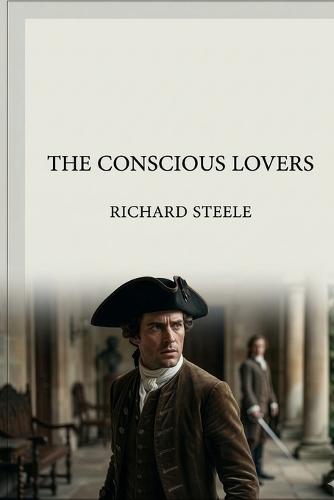
The Conscious Lovers by Richard Steele was first performed in 1722 at Drury Lane and is generally acknowledged as the first ""sentimental comedy."" Borrowing heavily from Roman playwright Terence's Andria, Richard Steele veers away from the traditional lewdness of Restoration comedy by deliberately focusing on restrained passion and patience over bawdy or salacious behavior. Laughter is replaced with a more sentiment-based set of comedic values. Steele's model proved so influential that not until 1773 with Goldsmith's She Stoops to Conquer does the ""laughing comedy"" return to the English stage.The plot revolves around Bevil Junior who, though promised to a young women by his father, has fallen in love with another. On his wedding day he discovers his friend Myrtle loves the young woman he is to marry, and he becomes consumed with jealousy.Steele states in his Preface that he very intentionally wrote the play around a crucial ""dueling"" scene, attempting to nudge his audience towards more restrained and refined behavior, hoping that ""it may have some effect upon the Goths and Vandals that frequent the theaters."" Whether it did or not is debated, but it certainly affected the nature of English comedy for decades to follow.The Conscious Lovers by Richard Steele was first performed in 1722 at Drury Lane and is generally acknowledged as the first ""sentimental comedy."" Borrowing heavily from Roman playwright Terence's Andria, Richard Steele veers away from the traditional lewdness of Restoration comedy by deliberately focusing on restrained passion and patience over bawdy or salacious behavior. Laughter is replaced with a more sentiment-based set of comedic values. Steele's model proved so influential that not until 1773 with Goldsmith's She Stoops to Conquer does the ""laughing comedy"" return to the English stage.The plot revolves around Bevil Junior who, though promised to a young women by his father, has fallen in love with another. On his wedding day he discovers his friend Myrtle loves the young woman he is to marry, and he becomes consumed with jealousy.Steele states in his Preface that he very intentionally wrote the play around a crucial ""dueling"" scene, attempting to nudge his audience towards more restrained and refined behavior, hoping that ""it may have some effect upon the Goths and Vandals that frequent the theaters."" Whether it did or not is debated, but it certainly affected the nature of English comedy for decades to follow.
Full Product Details
Author: Richard Steele
Publisher: Les Prairies Numeriques
Imprint: Les Prairies Numeriques
Dimensions:
Width: 15.20cm
, Height: 0.80cm
, Length: 22.90cm
Weight: 0.191kg
ISBN: 9791043137051
Pages: 134
Publication Date: 01 March 2026
Audience:
General/trade
,
General
Format: Paperback
Publisher's Status: Active
Availability: Available To Order

We have confirmation that this item is in stock with the supplier. It will be ordered in for you and dispatched immediately.
Reviews
The Conscious Lovers was first performed in 1722 at Drury Lane and is generally acknowledged as the first ""sentimental comedy."" Borrowing heavily from Roman playwright Terence's Andria, Richard Steele veers away from the traditional lewdness of Restoration comedy by deliberately focusing on restrained passion and patience over bawdy or salacious behavior. Laughter is replaced with a more sentiment-based set of comedic values. Steele's model proved so influential that not until 1773 with Goldsmith's She Stoops to Conquer does the ""laughing comedy"" return to the English stage.The plot revolves around Bevil Junior who, though promised to a young women by his father, has fallen in love with another. On his wedding day he discovers his friend Myrtle loves the young woman he is to marry, and he becomes consumed with jealousy.Steele states in his Preface that he very intentionally wrote the play around a crucial ""dueling"" scene, attempting to nudge his audience towards more restrained and refined behavior, hoping that ""it may have some effect upon the Goths and Vandals that frequent the theaters."" Whether it did or not is debated, but it certainly affected the nature of English comedy for decades to follow.