Overview
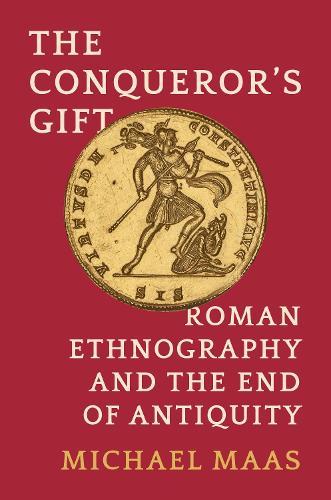
The essential role of ethnographic thought in the Roman empire and how it evolved in Late Antiquity Ethnography is indispensable for every empire, as important as armies, tax collectors, or ambassadors. It helps rulers articulate cultural differences, and it lets the inhabitants of the empire, especially those who guide its course, understand themselves in the midst of enemies, allies, and friends. In The Conqueror's Gift, Michael Maas examines the ethnographic infrastructure of the Roman Empire and the transformation of Rome's ethnographic vision during Late Antiquity. Drawing on a wide range of texts, Maas shows how the Romans' ethnographic thought evolved as they attended to the business of ruling an empire on three continents. Ethnography, the 'conqueror's gift', gave Romans structured ways of finding a place for foreigners in the imperial worldview and helped justify imperial action affecting them. In Late Antiquity, Christianity revolutionised the imperial ethnographic infrastructure by altering old concepts and introducing credal models of community. The Bible became a source for organising the Roman world. At the same time, many previously unseen collective identities emerged across Western Eurasia in reaction to the diminution of Roman power. These changes deeply affected the Empire's ethnographic infrastructure and vision of the world. Maas argues that a major consequence of these developments was the beginning of a sectarian age, as individuals and political communities came to identify themselves primarily in terms of religion as well as ethnicity. As they adjusted to changing ethnographic realities, Romans understood their place among the peoples of the world in new ways. Willingly or not, we continue to be recipients of the conqueror's gift today.
Full Product Details
Author: Michael Maas
Publisher: Princeton University Press
Imprint: Princeton University Press
ISBN: 9780691259024
ISBN 10: 069125902
Pages: 456
Publication Date: 25 February 2025
Audience:
College/higher education
,
Professional and scholarly
,
General/trade
,
Postgraduate, Research & Scholarly
,
Professional & Vocational
Format: Hardback
Publisher's Status: Active
Availability: Available To Order

We have confirmation that this item is in stock with the supplier. It will be ordered in for you and dispatched immediately.
Reviews
""A landmark study that synthesizes a vast array of data, this study reveals clearly for the first time details of how the Roman Empire (both East and West) engaged with foreign peoples. The processes of assimilation, exclusion, war and peace, astral and environmental determinism all have resonance with how our world of the 21century is being shaped. This is a book for their time, for our time, for all time.""---Cliff Cunningham, Sun News Austin
Author Information
Michael Maas is the William Gaines Twyman Professor of History at Rice University. His most recent book, Empires and Exchanges in Eurasian Late Antiquity: Rome, China, Iran, and the Steppe, ca. 250750, edited with Nicola Di Cosmo, won a CHOICE Academic Book of the Year Award.