Overview
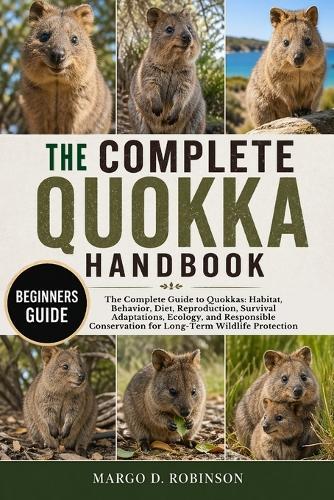
Introduction to QuokkasA Small Marsupial With a Remarkable IdentityThe quokka is one of the most recognizable yet widely misunderstood animals in the natural world. Known scientifically as the Setonix brachyurus, this small marsupial has captured global attention not through size or power, but through its distinctive appearance and behavior. At first glance, the quokka seems almost unreal-its rounded face, compact body, and relaxed posture create an impression that feels unusually approachable for a wild animal. Despite its growing popularity, the quokka is not a creature defined by novelty or internet fame. It is a species shaped by evolution, adapted to specific environments, and guided by instincts that reflect a long history of survival in challenging conditions. Its identity is rooted in these adaptations, not in the way it is perceived by people. Understanding the quokka requires moving beyond surface impressions and exploring the biological, ecological, and behavioral traits that define it. Only then does its uniqueness become clear, revealing an animal that is both specialized and resilient. The Origin of the ""Happiest Animal"" Label Quokkas are often referred to as the ""world's happiest animal,"" a label that has spread widely through photographs and social media. This reputation comes largely from the structure of their face. The natural curve of their mouth, combined with their bright, forward-facing eyes, gives the appearance of a constant smile. However, this expression is not an indication of emotion in the human sense. It is a result of anatomy rather than mood. The quokka's facial structure evolved for practical purposes, including feeding and sensory awareness, rather than communication of emotional states as people interpret them. The perception of happiness is therefore a projection. While the animal may appear cheerful, its behavior is guided by survival needs-finding food, avoiding predators, and navigating its environment. Recognizing this distinction is important, as it prevents misunderstanding and encourages a more respectful view of the species. A Marsupial With Distinctive Traits Quokkas belong to the group of marsupials, animals that are characterized by the way they reproduce and develop their young. Unlike placental mammals, marsupials give birth to relatively undeveloped offspring, which continue to grow within a pouch. This reproductive strategy is one of the defining features of the quokka's identity. Within the broader group of marsupials, quokkas are closely related to animals such as kangaroos and wallabies. However, they differ significantly in size, behavior, and habitat. Their compact form and ground-oriented lifestyle distinguish them from their larger relatives, reflecting adaptations to specific environmental conditions.
Full Product Details
Author: Margo D Robinson
Publisher: Independently Published
Imprint: Independently Published
Dimensions:
Width: 15.20cm
, Height: 0.80cm
, Length: 22.90cm
Weight: 0.213kg
ISBN: 9798258939555
Pages: 154
Publication Date: 26 April 2026
Audience:
General/trade
,
General
Format: Paperback
Publisher's Status: Active
Availability: Available To Order

We have confirmation that this item is in stock with the supplier. It will be ordered in for you and dispatched immediately.