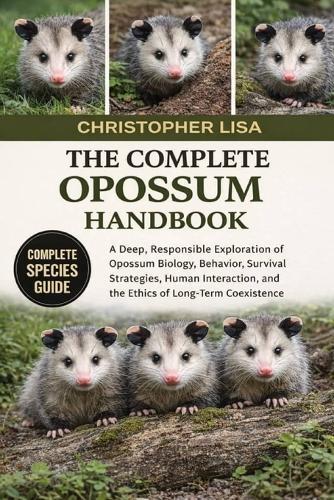
Overview
Introduction to the OpossumA misunderstood survivor of ancient lineagesOpossums are among the most misunderstood mammals in the modern world, often judged by appearance or behavior without recognition of their ecological importance or evolutionary history. Far from being pests or simple scavengers, opossums represent one of the oldest surviving mammalian lineages on Earth. Their presence in modern ecosystems is the result of millions of years of adaptation, resilience, and biological flexibility that has allowed them to persist while many other species disappeared. People often encounter opossums at the edges of forests, near farms, or within urban spaces, and these encounters shape perception. Because opossums are nocturnal, quiet, and elusive, they are more often noticed when something goes wrong-when one is startled, injured, or feeding in visible areas. This limited window into their lives has led to misunderstanding. In reality, most of an opossum's existence unfolds quietly, invisibly, and in service of ecological balance. Understanding the opossum begins with moving past surface impressions and recognizing it as a highly specialized wild animal with a critical role in the environments it occupies. An ancient mammal adapted to change Opossums belong to a lineage that predates many modern mammals. While countless species have come and gone through periods of climate change, habitat shifts, and mass extinction, opossums have endured by remaining adaptable rather than specialized. This adaptability is one of their greatest strengths. Unlike animals that rely on narrow diets or specific habitats, opossums can survive in a wide range of environments. Forests, wetlands, grasslands, agricultural edges, and even urban areas can support opossum populations if basic needs are met. This does not mean opossums thrive equally everywhere, but it does mean they are capable of adjusting behavior, diet, and movement patterns in response to environmental change. This flexibility has allowed opossums to persist alongside people, often unnoticed, fulfilling ecological roles that are easily overlooked but deeply important. The opossum's place in natural ecosystems Opossums function as quiet stabilizers within ecosystems. Their omnivorous diet allows them to consume a wide variety of food sources, including insects, carrion, fruits, seeds, and small animals. By doing so, they help regulate populations of organisms that might otherwise grow unchecked.
Full Product Details
Author: Christopher Lisa
Publisher: Independently Published
Imprint: Independently Published
Dimensions:
Width: 15.20cm
, Height: 0.80cm
, Length: 22.90cm
Weight: 0.195kg
ISBN: 9798248869718
Pages: 140
Publication Date: 18 February 2026
Audience:
General/trade
,
General
Format: Paperback
Publisher's Status: Active
Availability: Available To Order

We have confirmation that this item is in stock with the supplier. It will be ordered in for you and dispatched immediately.