Overview
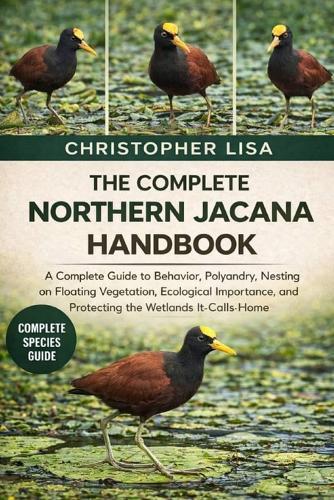
Introduction to the Northern JacanaA Bird That Walks on WaterThe Northern Jacana is one of the most visually arresting and behaviorally intriguing wetland birds in the Americas. At first glance, it appears almost delicate-long-legged, light-bodied, and balanced atop floating vegetation as though stepping across the surface of water itself. Yet beneath that elegance lies a species shaped by complex evolutionary pressures, intricate breeding systems, and a deep connection to tropical freshwater ecosystems. Often called the ""lily-trotter,"" the Northern Jacana has earned its reputation through its extraordinary ability to walk across floating plants without sinking. This illusion of walking on water is not magic, but engineering-long toes and elongated claws distribute weight across a wide surface area, allowing the bird to move with remarkable precision across lily pads and aquatic vegetation. The result is a species that appears almost weightless in motion, gliding across marshes and ponds with quiet control. This first impression-graceful, unique, and slightly surreal-is what draws birdwatchers and naturalists to the Northern Jacana. But its fascination runs much deeper than its physical appearance. Identity and Classification The Northern Jacana belongs to a small group of tropical wading birds within the family Jacanidae. Its scientific name, Jacana spinosa, refers to the small spur located on the wing, a feature used during territorial disputes. Although it resembles rails or other marsh birds at a distance, it is taxonomically distinct and occupies its own specialized ecological niche. This species is native to tropical and subtropical regions of Central America, parts of Mexico, and extends into some areas of northern South America. It thrives in freshwater wetlands-marshes, ponds, slow-moving rivers, and flooded fields-where floating vegetation provides both feeding grounds and nesting platforms. The Northern Jacana's identity is inseparable from these aquatic environments. Remove the floating plants, and you remove the foundation of its lifestyle. A Study in Adaptation To understand why the Northern Jacana fascinates conservationists, one must appreciate how precisely adapted it is to its habitat. Every aspect of its body reflects life among floating leaves and shallow water. Its toes are exceptionally long-far longer relative to body size than those of most birds. These elongated digits spread the bird's weight evenly, preventing it from breaking through delicate vegetation. This adaptation allows it to forage efficiently in areas inaccessible to heavier or shorter-toed species.
Full Product Details
Author: Christopher Lisa
Publisher: Independently Published
Imprint: Independently Published
Dimensions:
Width: 15.20cm
, Height: 0.90cm
, Length: 22.90cm
Weight: 0.222kg
ISBN: 9798248867318
Pages: 160
Publication Date: 18 February 2026
Audience:
General/trade
,
General
Format: Paperback
Publisher's Status: Active
Availability: Available To Order

We have confirmation that this item is in stock with the supplier. It will be ordered in for you and dispatched immediately.