Overview
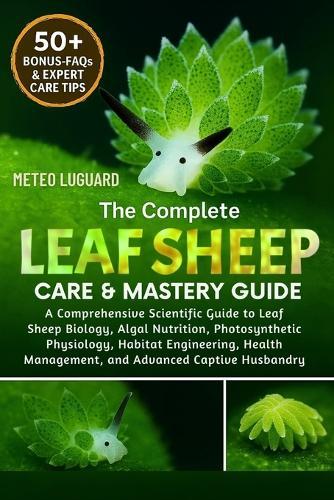
Introduction Understanding Leaf Sheep The Leaf Sheep (Costasiella kuroshimae) is one of the most visually striking and biologically fascinating creatures in the marine world-an animal so unusual that many people first assume it is fictional. Its bright green coloration, leaf-shaped cerata, and gentle grazing behavior create the impression of a miniature underwater sheep peacefully nibbling on algae blades. Yet behind this charming appearance lies complex physiology, evolutionary adaptations, and a natural history that pushes the boundaries of what many believe animals can do. Understanding Leaf Sheep requires looking beyond the cute appearance and diving into the mechanisms that define their survival, diet, ecology, and delicate relationship with their environment. This introduction presents a foundational understanding of their identity, anatomy, ecological role, and the scientific reasons they stand apart from typical marine gastropods. Leaf Sheep belong to a small, intricate group of sea slugs called sacoglossans-specialists in feeding on algae in a way that is unique among mollusks. Unlike nudibranchs, which often consume sponges or corals, sacoglossans have evolved a highly specialized feeding apparatus capable of piercing algal cell walls like a needle. This adaptation allows Leaf Sheep to extract chloroplast-rich cell contents. What makes them extraordinary is that our Leaf Sheep does not simply digest all the chloroplasts-it saves them. Through a rare process called kleptoplasty, these slugs store chloroplasts inside their cerata and keep them functional. As sunlight passes through the shallow waters of their natural habitat, these stolen chloroplasts perform photosynthesis inside the slug's tissues, supplementing their nutrition. In practical terms, the Leaf Sheep becomes part animal, part plant-a biological hybrid capable of harvesting energy from light. To truly appreciate their uniqueness, it helps to understand where they come from. Leaf Sheep were first identified near Kuroshima Island in Japan, a region defined by warm, clear, algae-rich waters. They inhabit shallow coastal zones where sunlight penetrates easily, creating dense patches of Avrainvillea and other green algae. These ecosystems provide food, shelter, and breeding sites. Their range is not restricted to Japan alone; populations have been recorded across the Indo-Pacific, including the Philippines, Malaysia, Indonesia, and even small pockets of the Indian Ocean. Still, they remain uncommon and often overlooked due to their tiny size-typically around 5 millimeters long. Despite their miniature stature, they play a meaningful ecological role by influencing algae distribution, acting as prey for micro-predators, and contributing to the complex nutrient cycles of shallow reefs. Anatomically, Leaf Sheep are masterpieces of efficient design. Their most iconic features-the leaf-like cerata-are not simply decorative structures. These finger-shaped projections maximize surface area for photosynthesis, gas exchange, and defense. Their coloration is not arbitrary either. Instead, each slug's green tone reflects the density and freshness of the chloroplasts it retains, providing a natural indicator of health and feeding success. The tips of the cerata often appear white or transparent, giving the impression of leaves dusted with snow. Their face, decorated with two black beady eyes and a pair of rhinophores resembling sheep ears, enhances their familiar charm but also serves vital sensory roles. These rhinophores detect chemical cues in water, allowing the slug to locate food patches and avoid harmful conditions. Their body plan is optimized for algae feeding. Leaf Sheep possess a radula-a tiny, serrated ribbon of teeth-designed specifically to pierce algal cells.
Full Product Details
Author: Meteo Luguard
Publisher: Independently Published
Imprint: Independently Published
Dimensions:
Width: 15.20cm
, Height: 0.80cm
, Length: 22.90cm
Weight: 0.195kg
ISBN: 9798276706528
Pages: 138
Publication Date: 29 November 2025
Audience:
General/trade
,
General
Format: Paperback
Publisher's Status: Active
Availability: Available To Order

We have confirmation that this item is in stock with the supplier. It will be ordered in for you and dispatched immediately.