Overview
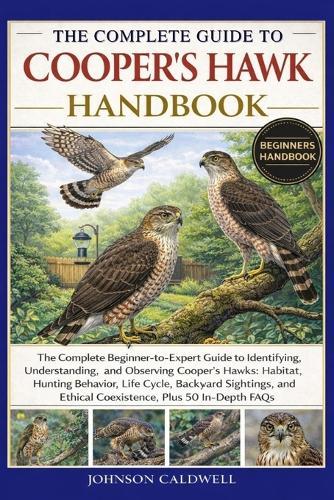
Introduction to the Cooper's Hawk There is a particular kind of thrill that comes from spotting a Cooper's hawk. It is not the broad, soaring drama of a vulture high on warm air, and it is not the steady, patient stillness of a heron at the water's edge. A Cooper's hawk is something different-more sudden, more secretive, and more intimate. It appears as a quick shadow sliding through trees, as a sharp wingbeat that seems too fast for such a solid-bodied bird, or as a silent shape perched in a place you didn't notice until you felt watched. People often describe the moment in the same way: surprise first, then awe, and finally a kind of curiosity that won't leave. What did I just see? Where did it come from? What is it doing here? This chapter begins by grounding that curiosity in clear understanding. You will learn what a Cooper's hawk is, where it fits in the larger raptor family, what makes it recognizable beyond a brief glimpse, and why-despite living in many places where people live-it still carries the feeling of wildness. More than anything, you will come to understand that the Cooper's hawk is not only a predator of birds and small animals. It is also a symbol of adaptability, precision, and the hidden life of woodlands and neighborhoods that most people walk through without realizing what is happening above their heads. Meeting the Bird Behind the Name The Cooper's hawk is a medium-sized hawk built for speed and control in tight spaces. Even before you learn the scientific language, you can understand its ""design"" by imagining the environments it prefers: wooded edges, patches of forest, tall hedgerows, groves of trees lining neighborhoods, and any place where cover creates corridors of movement. A bird that hunts in open sky can afford wide wings and long glides. A bird that hunts among branches must do something else. It must accelerate quickly, turn fast, and brake without crashing. The Cooper's hawk is shaped for that job. It does not rely on dramatic diving from a high perch the way some raptors do, and it does not hover or float while searching. Instead, it often uses a mixture of stealth and sudden bursts. It may slip from tree to tree with a low profile, then explode forward with purposeful wingbeats, sometimes weaving so closely through branches that you wonder how it avoids impact. When people first witness this style of flight up close, they don't forget it. It feels like watching a living missile-except one guided by judgment, not just force. The name ""Cooper's hawk"" often makes people assume it is tied to a place or a lifestyle, but it is actually a historical name given in honor of a naturalist (a common tradition in older bird naming). That little detail matters because it reminds you of something important: this bird has been noticed and described for a long time. Long before modern birding apps and backyard feeders, people recognized that this hawk was distinct-different from other hawks in its shape, behavior, and the way it moved through wooded habitats. Its presence has always carried a certain intensity.
Full Product Details
Author: Johnson Caldwell
Publisher: Independently Published
Imprint: Independently Published
Dimensions:
Width: 15.20cm
, Height: 0.80cm
, Length: 22.90cm
Weight: 0.209kg
ISBN: 9798244983555
Pages: 150
Publication Date: 26 January 2026
Audience:
General/trade
,
General
Format: Paperback
Publisher's Status: Active
Availability: Available To Order

We have confirmation that this item is in stock with the supplier. It will be ordered in for you and dispatched immediately.