Overview
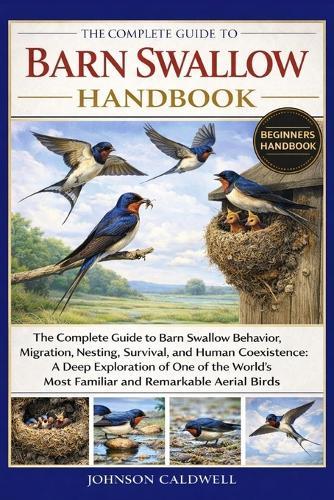
Introduction to the Barn Swallow The barn swallow is one of those birds that seems to live half in the sky and half in human memory. Even people who do not consider themselves birdwatchers often recognize the shape-those long, pointed wings cutting the air like blades, the deeply forked tail trailing behind like a signature, and the effortless way the bird turns, dives, and rises again as if the wind itself is an extension of its body. Barn swallows have a way of making the everyday landscape feel alive. A quiet farmyard becomes a hunting ground. A bridge becomes a nesting neighborhood. A morning walk becomes a small performance of speed and grace above your head. What makes the barn swallow especially meaningful is not just its beauty or its flight. It is the relationship it has built with people over centuries. This is a bird that does not merely tolerate human presence-it often depends on it. It has learned to place its home close to our structures and to raise its young in the spaces we create, while still remaining entirely wild. The barn swallow's story is therefore not only a natural history, but a shared history. Its origins, defining traits, and enduring connection with people reveal how wildlife and human life can become intertwined without becoming the same. Origins: A Bird Shaped by Open Space and Opportunity The barn swallow belongs to a group of swallows built for aerial life. Its ancestors evolved in environments where open air space, abundant flying insects, and safe nesting sites determined survival. Long before barns and bridges existed, swallows nested on cliffs, inside caves, and under overhangs-places that offered shelter from rain, protection from predators, and a strong surface to anchor a nest. These natural sites were often limited. They were valuable, competitive, and sometimes far from ideal feeding zones. As human settlements expanded, the landscape changed in ways that created new nesting opportunities. Farms, stables, barns, sheds, and later bridges and culverts provided exactly what swallows had always sought: sheltered ledges and overhead cover. Instead of relying only on cliffs or caves, barn swallows could now nest widely across landscapes shaped by people. This shift was not a sudden decision, but a slow, adaptive drift across generations. Birds that experimented with nesting in or near human structures often found that the shelter was reliable, the ledges were stable, and the surrounding open areas held abundant insects. In many parts of the world, this human association became so strong that the barn swallow came to be seen as a ""house bird,"" a neighbor of people, a seasonal guest that returns to the same places year after year. The barn swallow's origin story, in that sense, is not simply about where it came from but about what it learned to do: take advantage of new landscapes without losing its wild nature.
Full Product Details
Author: Johnson Caldwell
Publisher: Independently Published
Imprint: Independently Published
Dimensions:
Width: 15.20cm
, Height: 0.70cm
, Length: 22.90cm
Weight: 0.177kg
ISBN: 9798244972085
Pages: 124
Publication Date: 26 January 2026
Audience:
General/trade
,
General
Format: Paperback
Publisher's Status: Active
Availability: Available To Order

We have confirmation that this item is in stock with the supplier. It will be ordered in for you and dispatched immediately.