Overview
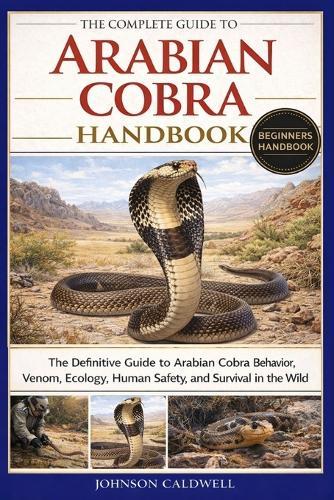
Meet the Arabian Cobra The Arabian cobra is one of the most commanding and misunderstood reptiles of the Middle East, a snake that embodies both danger and balance within its environment. Found primarily across the Arabian Peninsula, this cobra is not merely a venomous animal to be feared, but a highly specialized predator shaped by arid landscapes, shifting temperatures, and centuries of coexistence with people. To truly meet the Arabian cobra is to move beyond fear-driven impressions and understand the creature as it exists in nature-alert, restrained, adaptive, and essential. This cobra does not wander aimlessly through the desert. Every movement it makes reflects a long evolutionary history tied to rocky plains, scrublands, wadis, agricultural edges, and occasionally human settlements. It is an animal that thrives where survival demands precision. Water is scarce, prey is unpredictable, and exposure can mean death. In response, the Arabian cobra has evolved a calm but ready temperament, conserving energy during the day and becoming purposeful when conditions favor movement and hunting. At first glance, the Arabian cobra presents the classic cobra profile people recognize instantly: a long, smooth-bodied snake capable of raising the front portion of its body and spreading a hood when threatened. Yet this familiar posture hides nuance. The hood is not a constant display of aggression. It is a calculated signal used sparingly, meant to warn rather than provoke. Most Arabian cobras would rather retreat than confront, but they will not hesitate to stand their ground when escape is not possible. Identity and Presence The Arabian cobra carries itself with a quiet authority. Its coloration often blends seamlessly into the environment, ranging from sandy browns and olive tones to darker shades depending on location. This camouflage allows it to move through rocky terrain and dry vegetation without drawing attention. Unlike more flamboyantly patterned snakes, the Arabian cobra relies on subtlety. Its power lies not in visual spectacle but in readiness. What makes this cobra particularly notable is how well it balances caution and confidence. It is not reckless. It does not waste venom or energy. When disturbed, it assesses first. Only when a threat persists does it escalate its response, using posture, hood expansion, and controlled movement to communicate clearly. A strike, if it occurs, is not an act of chaos but the final step in a structured defensive sequence. This restraint is part of why many encounters end without harm. People often assume cobras are aggressive by nature, but the Arabian cobra contradicts this belief. Its behavior is shaped by survival efficiency, not hostility. Understanding this shifts the narrative from fear to respect. Life in a Demanding Landscape Living in the Arabian Peninsula means enduring extreme contrasts. Daytime heat can be punishing, while nights may cool rapidly. Rainfall is unpredictable, and food availability fluctuates. The Arabian cobra has adapted by becoming primarily crepuscular and nocturnal in many areas, avoiding peak heat while taking advantage of cooler conditions and active prey. Shelter is critical. The cobra uses rock crevices, abandoned burrows, dense vegetation, and man-made structures to escape temperature extremes. These hiding places are not random choices. They provide insulation, protection from predators, and strategic positions near prey routes. Once a suitable refuge is found, a cobra may return to it repeatedly, demonstrating a strong sense of spatial awareness.
Full Product Details
Author: Johnson Caldwell
Publisher: Independently Published
Imprint: Independently Published
Dimensions:
Width: 15.20cm
, Height: 0.70cm
, Length: 22.90cm
Weight: 0.177kg
ISBN: 9798244968392
Pages: 126
Publication Date: 26 January 2026
Audience:
General/trade
,
General
Format: Paperback
Publisher's Status: Active
Availability: Available To Order

We have confirmation that this item is in stock with the supplier. It will be ordered in for you and dispatched immediately.