Overview
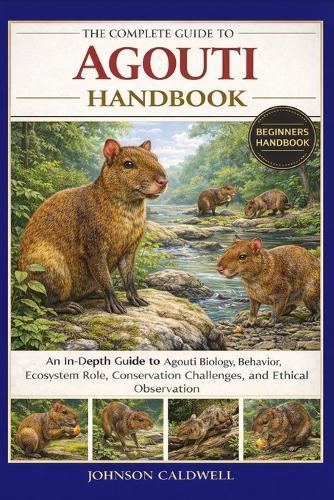
Introduction to the AgoutiThe Enigmatic Forest RodentIn the dense, shaded undergrowth of tropical forests from Central to South America, a shy yet remarkably agile rodent rustles through the leaf litter-the agouti. Often overlooked due to its quiet demeanor and elusive habits, the agouti plays an outsized role in the health of tropical ecosystems. Neither fully diurnal nor nocturnal, and often moving with bursts of speed rather than persistent activity, this animal blends seamlessly into its surroundings. But to those who know how to look, the agouti reveals a world of intelligence, adaptation, and ecological significance. Belonging to the family Dasyproctidae, agoutis are closely related to other caviomorph rodents like pacas and guinea pigs. With their lean, rabbit-sized bodies, glossy coats, and strong legs built for sprinting, they resemble miniature deer more than traditional rodents. Their physical and behavioral traits have been honed over millions of years, shaped by the pressures of dense forests, predatory threats, and competition for resources. The result is a mammal perfectly suited to survive, thrive, and influence the biological rhythms of the environments it inhabits. A Glimpse into Evolutionary Lineage Agoutis have a long evolutionary lineage that traces back to the migration of South American rodents from African ancestors, likely via natural rafts across the Atlantic millions of years ago. As part of the diverse infraorder Hystricognathi, they share a branch with porcupines and chinchillas, though their form is leaner and more athletic. The genus Dasyprocta contains most of the commonly recognized agouti species, including the red-rumped agouti (D. leporina), the Central American agouti (D. punctata), and the black agouti (D. fuliginosa). Their widespread distribution, from the southern reaches of Mexico to the northern forests of Argentina, demonstrates not just adaptability but ecological resilience. In terms of morphology, agoutis exhibit a fascinating mix of rodent and ungulate characteristics. Their long legs and upright posture when foraging resemble a small hoofed animal more than a ground-dwelling rodent. This evolutionary path may be a response to the niche they occupy-ground-level seed dispersers who must remain nimble, alert, and fast to evade predators. A Life of Purpose in the Forest Floor What makes the agouti particularly special is not merely its appearance, but its role in the ecosystem. Agoutis are among the very few mammals capable of cracking open the rock-hard seed pods of the Brazil nut tree-a tree so essential to rainforest biodiversity and economy that it's often referred to as a keystone species. With their chisel-like incisors, agoutis gnaw open these pods and either consume the nuts or, in a behavior that reveals high cognitive function, bury them for later consumption. This scatter-hoarding instinct often results in forgotten caches, allowing seeds to germinate and trees to propagate-making the agouti an unwitting yet vital gardener of the rainforest. Without agoutis, the Brazil nut tree and many other species might struggle to reproduce naturally, demonstrating how a single animal can influence the future of an entire forest.
Full Product Details
Author: Johnson Caldwell
Publisher: Independently Published
Imprint: Independently Published
Dimensions:
Width: 15.20cm
, Height: 0.70cm
, Length: 22.90cm
Weight: 0.181kg
ISBN: 9798244965155
Pages: 128
Publication Date: 26 January 2026
Audience:
General/trade
,
General
Format: Paperback
Publisher's Status: Active
Availability: Available To Order

We have confirmation that this item is in stock with the supplier. It will be ordered in for you and dispatched immediately.