Overview
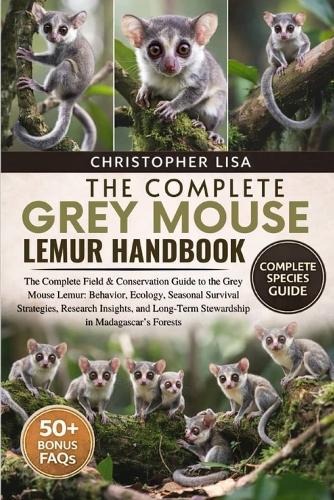
Introduction to the Grey Mouse LemurA Small Primate with a Remarkable PresenceAt first glance, the grey mouse lemur appears almost delicate-small enough to fit in a person's hand, wide-eyed, soft-furred, and quiet. Yet behind that modest appearance lies one of the most extraordinary survival stories in the primate world. The grey mouse lemur is not only among the smallest primates on Earth, but also among the most adaptable, resilient, and scientifically fascinating. Endemic to Madagascar, this tiny nocturnal primate has captured the attention of researchers, conservationists, and wildlife enthusiasts alike. Its appeal lies not merely in its size or expressive eyes, but in the rich complexity of its behavior, its evolutionary history, and its ability to survive in some of the island's most dynamic ecosystems. To understand the grey mouse lemur is to step into a world where subtlety reigns. It is not a loud or dominant creature. It does not command attention by sheer scale. Instead, it fascinates through quiet intelligence, remarkable adaptability, and the intricate strategies it uses to navigate a changing environment. The Meaning Behind the Name The term ""mouse lemur"" reflects its small body size and rodent-like proportions, but the name can be misleading. Despite its resemblance to a mouse in scale, it is unmistakably a primate. It belongs to the ancient lineage of lemurs that evolved in isolation on Madagascar after ancestors rafted across from mainland Africa millions of years ago. The grey mouse lemur, scientifically known as Microcebus murinus, is one of the most widely studied species within its genus. Its grey-brown coat blends seamlessly with tree bark and forest shadows, providing camouflage during nocturnal movements. Its large forward-facing eyes reflect available light, enhancing night vision and giving it the alert, almost luminous gaze that so captivates observers. This combination of small size and primate intelligence creates a striking contrast. It looks fragile, yet it survives drought, seasonal food scarcity, and predation through strategies refined over evolutionary time. An Evolutionary Survivor Madagascar's isolation allowed lemurs to evolve into diverse forms unmatched elsewhere in the world. The grey mouse lemur represents one of the smallest expressions of that radiation. While some lemurs developed into larger, diurnal species inhabiting open forests, mouse lemurs remained small, nocturnal, and highly adaptable. Their evolutionary path favored flexibility. Rather than specializing in a single food source or habitat type, the grey mouse lemur developed a broad dietary range and behavioral versatility. This flexibility is one reason it persists in environments where more specialized species decline. Studying the grey mouse lemur provides insight into early primate evolution. Its physical and behavioral traits offer clues about the ancestors of modern primates, including those that eventually gave rise to monkeys, apes, and humans. For scientists, it is not merely an animal of interest-it is a living window into deep evolutionary history.
Full Product Details
Author: Christopher Lisa
Publisher: Independently Published
Imprint: Independently Published
Dimensions:
Width: 15.20cm
, Height: 0.90cm
, Length: 22.90cm
Weight: 0.240kg
ISBN: 9798248813551
Pages: 174
Publication Date: 18 February 2026
Audience:
General/trade
,
General
Format: Paperback
Publisher's Status: Active
Availability: Available To Order

We have confirmation that this item is in stock with the supplier. It will be ordered in for you and dispatched immediately.