Overview
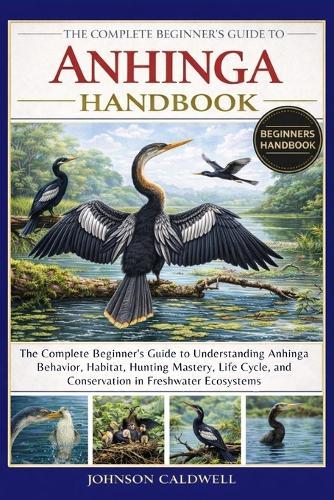
Introduction to the AnhingaMeeting a Bird Shaped by WaterThe anhinga is a bird that immediately challenges common ideas of what a waterbird should be. At first glance, it may resemble a cormorant or even a snake when only its head and neck are visible above the surface. This unusual appearance is not accidental. Every aspect of the anhinga's body, behavior, and lifestyle has been shaped by a deep evolutionary relationship with water, fish, and slow-moving freshwater environments. To understand the anhinga properly, it must be seen not simply as a bird that lives near water, but as a highly specialized aquatic hunter that moves between air, water, and land with remarkable efficiency. Often called the ""snakebird"" because of the way its long neck glides through water, the anhinga occupies a unique ecological niche. It is neither a casual swimmer nor a generalist feeder. Instead, it is a precision diver, relying on stealth, patience, and anatomical adaptations that set it apart from many other waterbirds. This specialization defines everything about the species, from how it hunts to how it rests, breeds, and survives. A Bird Defined by Adaptation Anhinga's identity is built on adaptation rather than versatility. Unlike ducks or geese, which rely on buoyancy and surface feeding, the anhinga sacrifices flotation for underwater control. Its feathers absorb water instead of repelling it, reducing buoyancy and allowing the bird to sink smoothly beneath the surface. This trait gives the anhinga a powerful advantage when stalking fish, but it also creates limitations that shape its daily routine. Because its feathers are not waterproof in the traditional sense, the anhinga must spend long periods drying its wings after diving. This behavior is one of the species' most iconic sights: the bird perched on a branch or log, wings spread wide, facing the sun. This posture is not decorative or symbolic. It is essential for survival, allowing the feathers to dry and regain insulation before the next dive or flight. First Impressions and Misunderstandings People encountering an anhinga for the first time often misinterpret its behavior. Seeing a bird swimming low in the water with only its head and neck visible can be startling, especially when the neck moves in slow, serpentine motions. This has contributed to myths and confusion, with some observers mistaking the bird for a snake or assuming it is injured or struggling. In reality, this low-floating posture is a sign of mastery, not weakness. The anhinga is fully in control, using its body position to remain nearly invisible to fish below the surface. The calm, deliberate movements reflect a hunting strategy built on patience rather than speed. Understanding this behavior is key to appreciating the species as a skilled predator rather than an awkward swimmer. Habitat as a Central Theme
Full Product Details
Author: Johnson Caldwell
Publisher: Independently Published
Imprint: Independently Published
Dimensions:
Width: 15.20cm
, Height: 0.80cm
, Length: 22.90cm
Weight: 0.195kg
ISBN: 9798244967173
Pages: 140
Publication Date: 26 January 2026
Audience:
General/trade
,
General
Format: Paperback
Publisher's Status: Active
Availability: Available To Order

We have confirmation that this item is in stock with the supplier. It will be ordered in for you and dispatched immediately.