Overview
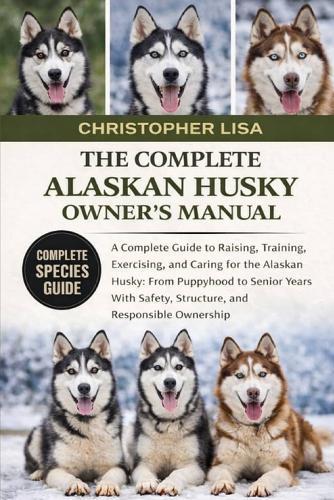
Introduction to Alaskan HuskyUnderstanding the Alaskan HuskyThe Alaskan Husky is often misunderstood before it is truly known. People hear the word ""husky"" and immediately picture a specific look-upright ears, thick coat, bold mask, and bright eyes that seem to belong on a postcard from the Arctic. The Alaskan Husky may sometimes resemble that image, but it is not defined by it. What defines the Alaskan Husky is not a single ""type"" of face or coat, not a particular color pattern, and not a rigid breed standard written to protect a consistent appearance. The Alaskan Husky is defined by purpose. It is a working sled dog first, a performance athlete shaped by function, and a living example of what happens when generations of people select dogs not for what photographs well, but for what survives, endures, and excels on the trail. To understand the Alaskan Husky properly, you have to set aside the idea that all dogs are primarily companions who happen to do activities. For this dog, the activity is the foundation. The companionship grows out of the work, the partnership, the daily rhythm, and the mutual trust that forms when a dog and a person share responsibility for movement, safety, and progress through demanding conditions. Even when an Alaskan Husky lives primarily as a family dog, its roots remain visible in the way it thinks, the way it responds to pressure, and the way it seeks meaning through motion. This is why owning an Alaskan Husky is not simply about admiration-it is about understanding what you're bringing into your home: an animal shaped by long miles, harsh weather, and practical decision-making. What an Alaskan Husky Really Is The Alaskan Husky is not a purebred dog in the way most people use that word. It is better described as a working type-an athletic sled dog developed through selective breeding aimed at performance traits. That distinction matters because it explains almost everything else. When a dog is shaped under a strict breed standard, the goal is consistency of appearance and predictable, standardized structure. When a dog is shaped as a working type, the goal is consistent performance, durability, and efficiency. Appearance becomes secondary and often varies widely from one dog to another, even within the same kennel. This is why you can meet two Alaskan Huskies that do not look like close relatives at all. One might be lean, long-legged, short-coated, and built like a distance runner. Another may be thicker-coated, slightly heavier, and built to hold power under load. Both can be ""true"" Alaskan Huskies if they are bred and proven for the trail. The defining feature is not a look-it is a working identity. That identity can be summarized in a simple but important truth: the Alaskan Husky is a dog designed to travel efficiently. That efficiency isn't just physical. It includes mental traits-problem-solving, resilience, tolerance for discomfort, and the ability to keep going when conditions are unpleasant. It includes social traits-pack compatibility, cooperative focus, and a willingness to work alongside other dogs without constant conflict. And it includes temperament traits-alertness, sensitivity to environment, and a steady drive that doesn't depend on novelty to stay engaged.
Full Product Details
Author: Christopher Lisa
Publisher: Independently Published
Imprint: Independently Published
Dimensions:
Width: 15.20cm
, Height: 0.90cm
, Length: 22.90cm
Weight: 0.240kg
ISBN: 9798248537389
Pages: 174
Publication Date: 18 February 2026
Audience:
General/trade
,
General
Format: Paperback
Publisher's Status: Active
Availability: Available To Order

We have confirmation that this item is in stock with the supplier. It will be ordered in for you and dispatched immediately.