Overview
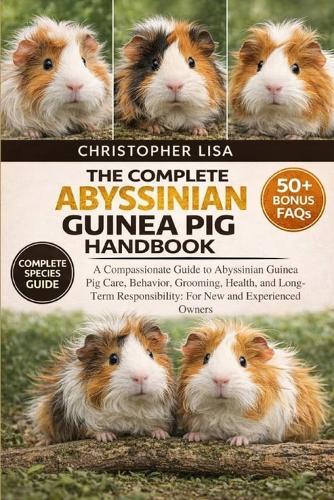
Introduction to the Abyssinian Guinea Pig The Abyssinian guinea pig is often described as ""the rosette guinea pig,"" but that label only hints at what makes this breed so memorable. At first glance, people notice the coat-alive with swirling patterns, raised ridges, and little whorls that seem to turn the fur into a soft, living map. Yet the real charm of the Abyssinian runs deeper than appearance. This is a guinea pig that tends to carry itself with a lively presence: alert, curious, expressive, and often very engaged with what's happening around it. For many households, the Abyssinian becomes not just a small pet in a cage, but a daily companion whose habits, preferences, and personality become familiar in a surprisingly meaningful way. Understanding the Abyssinian properly begins with understanding what a guinea pig truly is: a prey animal shaped by evolution to value safety, routine, and companionship above almost everything else. Abyssinians share that foundation with all guinea pigs, but the breed often stands out for its energetic social style and its distinctive coat-both of which influence how people experience daily care. When someone chooses an Abyssinian, they are not choosing a ""decorative"" animal. They are choosing a living creature that thrives on thoughtful handling, stable husbandry, and a calm environment where it can be brave at its own pace. Where the Abyssinian Comes From Guinea pigs originate from South America, where their wild relatives evolved in environments that required constant awareness and cautious movement. Over time, guinea pigs were domesticated and selectively bred, resulting in a range of coat types and body features. The Abyssinian is one of the classic fancy breeds recognized for its particular coat patterning-rosettes that create a textured, sometimes ""spiky"" look compared to the smoother-coated varieties. It helps to understand what selective breeding means here. The Abyssinian wasn't designed for survival in the wild; it was shaped for traits people found appealing and consistent. That shaping can make a breed more predictable in appearance, but it can also create care differences that owners must respect. The Abyssinian's coat, for example, is not simply ""longer"" or ""thicker."" It grows in multiple directions. That gives the breed its iconic look, but it also means grooming and health checks require a slightly different approach. You don't just stroke the fur and assume the skin beneath is fine-you learn to part the coat along those ridges, to check the base of the rosettes, and to notice subtle changes early.
Full Product Details
Author: Christopher Lisa
Publisher: Independently Published
Imprint: Independently Published
Dimensions:
Width: 15.20cm
, Height: 0.70cm
, Length: 22.90cm
Weight: 0.172kg
ISBN: 9798248531288
Pages: 122
Publication Date: 18 February 2026
Audience:
General/trade
,
General
Format: Paperback
Publisher's Status: Active
Availability: Available To Order

We have confirmation that this item is in stock with the supplier. It will be ordered in for you and dispatched immediately.