Overview
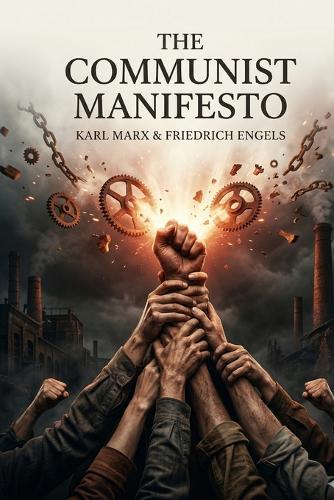
The Communist Manifesto (German: Das Kommunistische Manifest), originally the Manifesto of the Communist Party (Manifest der Kommunistischen Partei), is a political pamphlet written by Karl Marx and Friedrich Engels. It was commissioned by the Communist League and published in London in 1848. The text represents the first and most systematic attempt by the two founders of scientific socialism to codify for wide consumption the historical materialist idea, namely, that ""the history of all hitherto existing society is the history of class struggles"", in which social classes are defined by the relationship of people to the means of production. Published amid the Revolutions of 1848 in Europe, the manifesto has become one of the world's most influential political documents. In the Manifesto, Marx and Engels combine philosophical materialism with the Hegelian dialectical method in order to analyze the development of European society through its modes of production, including primitive communism, antiquity, feudalism, and capitalism, noting the emergence of a new, dominant class at each stage. The text outlines the relationship between the means of production, relations of production, forces of production, and mode of production, and posits that changes in society's economic ""base"" affect changes in its ""superstructure"". The authors assert that capitalism is marked by the exploitation of the proletariat (working class of wage labourers) by the ruling bourgeoisie, which is ""constantly revolutionising the instruments [and] relations of production, and with them the whole relations of society"".They argue that capital's need for a flexible labour force dissolves the old relations, and that its global expansion in search of new markets creates ""a world after its own image"". The Manifesto concludes that capitalism does not offer humanity the possibility of self-realization, instead ensuring that human beings are perpetually stunted and alienated. It theorizes that capitalism will bring about its own destruction by polarizing and unifying the proletariat, and predicts that a revolution will lead to the emergence of communism, a classless society in which ""the free development of each is the condition for the free development of all"".[3] Marx and Engels propose the following transitional policies: abolition of private property in land and inheritance; introduction of a progressive income tax; confiscation of emigrants' and rebels' property; nationalisation of credit, communication, and transport; expansion and integration of industry and agriculture; enforcement of universal obligation of labour; provision of universal education; and elimination of child labour.[4] The text ends with three rousing sentences, reworked and popularized into the famous slogan of working-class solidarity: ""Workers of the world, unite! You have nothing to lose but your chains"".
Full Product Details
Author: Karl Marx
Publisher: Les Prairies Numeriques
Imprint: Les Prairies Numeriques
Dimensions:
Width: 15.20cm
, Height: 0.40cm
, Length: 22.90cm
Weight: 0.095kg
ISBN: 9791043137013
Pages: 62
Publication Date: 01 March 2026
Audience:
General/trade
,
General
Format: Paperback
Publisher's Status: Active
Availability: Available To Order

We have confirmation that this item is in stock with the supplier. It will be ordered in for you and dispatched immediately.
Reviews
Perhaps the most influential and widely read political work of the 19th century, Karl Marx and Friedrich Engels' The Manifesto of the Communist Party succinctly lays out the political theory and history of class struggle.Following a short introduction, the Manifesto develops over four short chapters, discussing the historical background of class struggle, the relationship of Communists with other socialist and working class movements, a critical review of other contemporary socialist literature and thinking, and finally a brief summary of the Communist position related to the contemporary political situations in various European countries, concluding with the rousing call-to-arms, ""Workingmen of all countries unite!""This edition, translated by Samuel Moore, includes Engels' own Preface and footnote annotations written for the English edition of 1888.