|
|
|||
|
||||
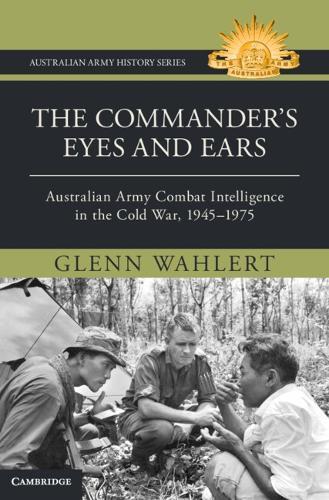
OverviewThe Commander's Eyes and Ears: Australian Army Combat Intelligence in the Cold War, 1945–75 explores the contribution made by the Australian Army's combat intelligence services to force commanders during the Cold War (1945–75), focusing primarily on the Australian Intelligence Corps. The book covers the support provided by intelligence resources to Australian and allied commanders on operations in Japan, Korea, Malaya, Borneo and Vietnam. Through the lens of the Australian Intelligence Corps and other intelligence resources, the book pays special attention to significant events during this period, including the Japanese war crimes trials, the British Commonwealth Occupation Force in Japan, the Korean War, the Malayan Emergency, the Indonesian Confrontation, and the Vietnam War. Criticisms of the Army's involvement, challenges faced by soldiers, mistakes made and lessons learned in these events are explored throughout. Full Product DetailsAuthor: Glenn Wahlert (University of New South Wales)Publisher: Cambridge University Press Imprint: Cambridge University Press Dimensions: Width: 16.00cm , Height: 3.00cm , Length: 23.50cm Weight: 0.710kg ISBN: 9781009603744ISBN 10: 1009603744 Pages: 384 Publication Date: 03 February 2026 Audience: College/higher education , Postgraduate, Research & Scholarly Format: Hardback Publisher's Status: Active Availability: Not yet available This item is yet to be released. You can pre-order this item and we will dispatch it to you upon its release. Table of ContentsIntroduction; 1. Repatriation and War Crimes; 2. Intelligence Support to the British Commonwealth Occupation Force, Japan; 3. Gonorrhoea, Diarrhoea and Korea: The Korean War (1950–53); 4. Intelligence in Counterinsurgency in Malaya; 5. Konfrontasi: Indonesian Confrontation in Borneo; 6. Establishing the 1st Australian Task Force Intelligence System; 7. Long Tan: A Failure of Intelligence?; 8. The Battles of Coral–Balmoral (12 May–6 June 1968) and Binh Ba (6–8 June 1969); 9. 'One of the lowest points in the war.' The Water Torture Incident; 10. Attacking the Viet Cong Infrastructure (or How to take a well-defined order and an effective operation plan and successfully botch both miserably); 11. Psychological Operations, Civil Affairs and Early Adoption of Innovative Technologies; 12. Working with Allies; 13. 'Vietnam fucked me up!' The Aftermath; Conclusion.ReviewsAuthor InformationGlenn Wahlert is a Visiting Fellow at the University of New South Wales (Australian Defence Force Academy campus) and writes on Australian military history and high-technology crime. He is a former Australian Army officer and senior executive with the Australian Public Service. This is his ninth book. Tab Content 6Author Website:Countries AvailableAll regions |
||||