Overview
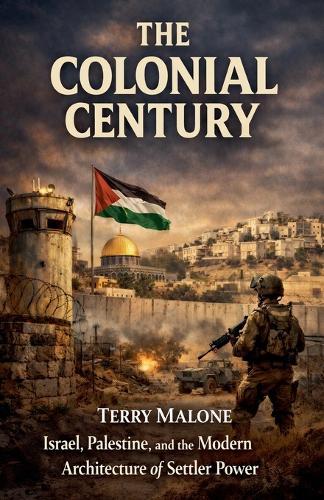
The Colonial Century is a work of historical and political analysis that examines Israel and Palestine not as an isolated conflict, but as a modern expression of settler colonial power adapted to the twentieth and twenty-first centuries. Rather than beginning in 1948 or treating the conflict as a tragic clash of identities, this book traces the deeper architecture of domination that shapes land, law, borders, and daily life in Palestine. The book situates Zionism within a longer colonial lineage, comparing its structures to earlier European settler projects while examining the specific historical conditions that allowed it to persist into the modern era. It shows how colonial governance evolved after the formal collapse of empire, shifting from overt conquest to bureaucratic control, legal fragmentation, surveillance, and permanent emergency. Occupation, settlement expansion, checkpoints, walls, and population management are examined not as temporary security measures, but as central mechanisms of rule. Drawing on history, political theory, international law, and contemporary evidence, The Colonial Century explores how land seizure is normalised through legal instruments, how demographic engineering is justified through security language, and how violence is rendered administrative rather than exceptional. Particular attention is given to the role of international actors, especially the United States and Western institutions, in sustaining this system through diplomatic protection, military aid, and selective enforcement of international law. Rather than framing Israel as an anomaly, the analysis places it within global patterns of power. The book argues that the endurance of settler rule in Palestine exposes a broader failure of the post-war international order to confront colonial violence when it remains politically or strategically useful. Human rights frameworks and peace processes are examined critically as mechanisms that often manage injustice rather than dismantle it. The Palestinian experience is presented as a lived reality shaped by restricted movement, fragmented sovereignty, economic dependency, and recurring military force. Resistance, accommodation, and survival are explored as complex responses to structural domination rather than symbolic gestures. Written for general readers and students of history and politics, The Colonial Century offers no easy solutions. It asks why settler colonial structures persist long after they have been discredited elsewhere, and what their persistence reveals about power, law, and accountability in the modern world.
Full Product Details
Author: Terry Malone
Publisher: Terry Malone
Imprint: Terry Malone
Dimensions:
Width: 14.00cm
, Height: 2.30cm
, Length: 21.60cm
Weight: 0.467kg
ISBN: 9798224483556
Pages: 404
Publication Date: 16 January 2026
Audience:
General/trade
,
General
Format: Paperback
Publisher's Status: Active
Availability: Available To Order

We have confirmation that this item is in stock with the supplier. It will be ordered in for you and dispatched immediately.
Author Information
Terry Malone is an Australian researcher and writer whose work examines empire, settler colonialism, and the institutional structures of modern power. Writing outside academic and political institutions, he draws on decades of reading, research, and observation to analyse how historical systems of domination persist in contemporary governance. His work focuses particularly on Israel-Palestine, not as an isolated conflict but as part of a wider global architecture of control shaped by colonial logic, military force, and economic power. The Colonial Century is his book-length work.