Overview
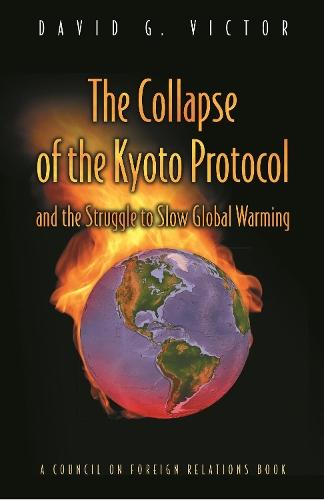
Even as the evidence of global warming mounts, the international response to this serious threat is coming unraveled. The United States has formally withdrawn from the 1997 Kyoto Protocol; other key nations are facing difficulty in meeting their Kyoto commitments; and developing countries face no limit on their emissions of the gases that cause global warming. In this clear and cogent book-reissued in paperback with an afterword that comments on recent events--David Victor explains why the Kyoto Protocol was never likely to become an effective legal instrument. He explores how its collapse offers opportunities to establish a more realistic alternative. Global warming continues to dominate environmental news as legislatures worldwide grapple with the process of ratification of the December 1997 Kyoto Protocol. The collapse of the November 2000 conference at the Hague showed clearly how difficult it will be to bring the Kyoto treaty into force. Yet most politicians, policymakers, and analysts hailed it as a vital first step in slowing greenhouse warming. David Victor was not among them. Kyoto's fatal flaw, Victor argues, is that it can work only if emissions trading works.The Protocol requires industrialized nations to reduce their emissions of greenhouse gases to specific targets.Crucially, the Protocol also provides for so-called ""emissions trading,"" whereby nations could offset the need for rapid cuts in their own emissions by buying emissions credits from other countries. But starting this trading system would require creating emission permits worth two trillion dollars--the largest single invention of assets by voluntary international treaty in world history. Even if it were politically possible to distribute such astronomical sums, the Protocol does not provide for adequate monitoring and enforcement of these new property rights. Nor does it offer an achievable plan for allocating new permits, which would be essential if the system were expanded to include developing countries. The collapse of the Kyoto Protocol--which Victor views as inevitable--will provide the political space to rethink strategy. Better alternatives would focus on policies that control emissions, such as emission taxes. Though economically sensible, however, a pure tax approach is impossible to monitor in practice.Thus, the author proposes a hybrid in which governments set targets for both emission quantities and tax levels.This offers the important advantages of both emission trading and taxes without the debilitating drawbacks of each. Individuals at all levels of environmental science, economics, public policy, and politics-from students to professionals--and anyone else hoping to participate in the debate over how to slow global warming will want to read this book.
Full Product Details
Author: David G. Victor
Publisher: Princeton University Press
Imprint: Princeton University Press
Edition: New edition
Dimensions:
Width: 14.00cm
, Height: 1.40cm
, Length: 21.60cm
Weight: 0.227kg
ISBN: 9780691120263
ISBN 10: 0691120269
Pages: 232
Publication Date: 15 August 2004
Audience:
Professional and scholarly
,
College/higher education
,
Professional & Vocational
,
Tertiary & Higher Education
Format: Paperback
Publisher's Status: Active
Availability: Manufactured on demand

We will order this item for you from a manufactured on demand supplier.
Language: English
Reviews
In [his] timely new book ... [David Victor] argues that ... the real cause of the treaty's collapse is the architecture of a pure 'cap and trade' system, which allows ambitious targets but puts no limits on compliance costs. -- Economist In 1997, 38 relatively rich nations agreed at Kyoto to reduce by 2012 their greenhouse gas emissions, mainly carbon dioxide from fossil fuels, to below 1990 levels. This short and closely reasoned book argues persuasively that this plan is deeply flawed... -- Foreign Affairs Victor is no Pollyanna. He thinks public awareness of the problem is widespread. The lack of a 'viable architecture' for international cooperation is the main impediment to action. --David Warsh, The Boston Globe Victor is not the enemy. He bears bad news, but one's reaction to bad news should not be directed against its bearer. Victor's painstaking analysis shows that the signers of the protocol left the really difficult questions to be worked out later, according to an unrealistic timetable. He carefully analyzes the alternative ways these difficult matters could succeed. --John B. Cobb, Christian Century David Victor 'thinks big' about the architecture of an international regime that would effectively regulate the primary cause of this climate change: emissions of greenhouse gases into the global atmosphere... Victor's analysis makes it clear that in order to design a policy framework that will allow active control of the rate of future climate change, the US will have to engage with the emerging new institutions of global environmental governance. --Mike Hulme,The Times Higher Education Supplement Victor's analysis is sharp and fresh... He offers a measured analysis of intelligent solutions... At heart, though, he argues that the protocol will fail because of its architecture and its inability to take modern economic truths into account. --Alanna Mitchell, The Globe and Mail Required reading [for] those interested in international relations and economics. -- Choice This book gives the reader a detailed and complete analysis of why the author anticipated the Kyoto Protocol to fail just as the failure is currently happening... [Victor] succeeds in showing that the global-warming problem touches different disciplines from natural sciences to economy and from national and international legislation to policy and diplomacy. --F. Pauli, Journal of Economics
In [his] timely new book ... [David Victor] argues that ... the real cause of the treaty's collapse is the architecture of a pure 'cap and trade' system, which allows ambitious targets but puts no limits on compliance costs. Economist In 1997, 38 relatively rich nations agreed at Kyoto to reduce by 2012 their greenhouse gas emissions, mainly carbon dioxide from fossil fuels, to below 1990 levels. This short and closely reasoned book argues persuasively that this plan is deeply flawed... Foreign Affairs Victor is no Pollyanna. He thinks public awareness of the problem is widespread. The lack of a 'viable architecture' for international cooperation is the main impediment to action. -- David Warsh The Boston Globe Victor is not the enemy. He bears bad news, but one's reaction to bad news should not be directed against its bearer. Victor's painstaking analysis shows that the signers of the protocol left the really difficult questions to be worked out later, according to an unrealistic timetable. He carefully analyzes the alternative ways these difficult matters could succeed. -- John B. Cobb Christian Century David Victor 'thinks big' about the architecture of an international regime that would effectively regulate the primary cause of this climate change: emissions of greenhouse gases into the global atmosphere... Victor's analysis makes it clear that in order to design a policy framework that will allow active control of the rate of future climate change, the US will have to engage with the emerging new institutions of global environmental governance. e Hulme, The Times Higher Education Supplement Victor's analysis is sharp and fresh... He offers a measured analysis of intelligent solutions... At heart, though, he argues that the protocol will fail because of its architecture and its inability to take modern economic truths into account. -- Alanna Mitchell The Globe and Mail Required reading [for] those interested in international relations and economics. Choice This book gives the reader a detailed and complete analysis of why the author anticipated the Kyoto Protocol to fail just as the failure is currently happening... [Victor] succeeds in showing that the global-warming problem touches different disciplines from natural sciences to economy and from national and international legislation to policy and diplomacy. -- F. Pauli Journal of Economics
Author Information
David G. Victor is Director of the Program on Energy and Sustainable Development at Stanford University and Adjunct Senior Fellow at the Council on Foreign Relations in New York.