Overview
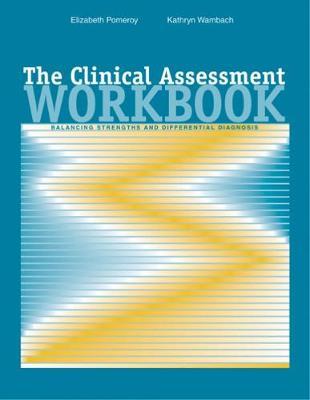
The purpose of this workbook is to facilitate student’s understanding of the DSM IV and other texts related to the diagnoses of mental disorders. It is designed to enhance the student’s ability to assess clients’ strengths and to diagnose any emotional difficulties the client may be experiencing. It will provide students with the opportunity to practice their assessment skills in a classroom environment prior to entering the field as a mental health professional. Students will not only learn the various diagnostic categories of the DSM IV but also how to apply these categories to clients they will be seeing in practice. It will aid students in understanding dual diagnoses, symptom formulation, and the overlap between diagnostic categories.
Full Product Details
Author: Elizabeth Pomeroy (University of Texas, Austin) ,
Kathryn Wambach (University of Texas, Austin)
Publisher: Cengage Learning, Inc
Imprint: Wadsworth Publishing Co Inc
Dimensions:
Width: 21.70cm
, Height: 2.00cm
, Length: 27.80cm
Weight: 0.680kg
ISBN: 9780534578435
ISBN 10: 0534578438
Pages: 400
Publication Date: 10 October 2002
Audience:
General/trade
,
College/higher education
,
General
,
Undergraduate
Replaced By: 9781285748887
Format: Paperback
Publisher's Status: Out of Print
Availability: Out of stock

Reviews
I would describe this workbook as a very comprehensive and straightforward coverage of the DSM diagnostic categories that would give students and new practitioners a very good review of the DSM and the opportunity to practice with some very clearly presented cases and case examples. <br> I would definitely adopt this in my advanced MSW mental health practice course. Why? Because it fill(s) a gap that both my students and I have identified: How to get more practice into this practice course.
I would describe this workbook as a very comprehensive and straightforward coverage of the DSM diagnostic categories that would give students and new practitioners a very good review of the DSM and the opportunity to practice with some very clearly presented cases and case examples. I would definitely adopt this in my advanced MSW mental health practice course. Why? Because it fill(s) a gap that both my students and I have identified: How to get more practice into this practice course.
Author Information
Elizabeth Pomeroy earned a B.A. at the University of North Carolina-Asheville, an M.S.W. at the University of North Carolina-Chapel Hill, and a Ph.D. at The University of Texas at Austin. With more than 20 years of experience, Pomeroy’s current teaching and research interests include clinical social work courses with a focus on mental health, health and children, and families; HIV/AIDS interventions; crime victims; interventions for offenders in the criminal justice system; and clinical social work group interventions for children, adults, and families. Kathryn G. Wambach, Ph.D., A.C.S.W., received her Master's degree in Social Work from Florida State University in 1980. She worked in publicly funded mental health and substance abuse treatment facilities for approximately 20 years focusing primarily on crisis and emergency services. She received her Ph.D. in Social Work in 1992 from Florida State University. After that time, she was on faculty at the University of Texas at Austin teaching primarily in the clinical concentration. She was the former Director of the BSW Program. Her research interests were focused on the effectiveness of mental health and substance abuse interventions with high-risk populations including juvenile offenders and persons with serious and persistent mental illnesses.