Overview
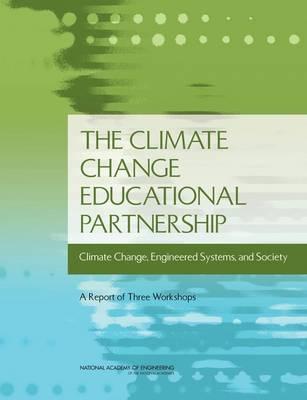
Societies develop engineered systems to address or mediate climate-related problems, such as drought, sea-level rise or wildfire control; the mediation involves public trust, public engagement, and governance. In these efforts, societies also decide - intentionally or implicitly - questions of justice and sustainability, such as what areas will receive mediation measures, what types of measures will be used, and what levels and kinds of local impacts are tolerated. In September 2010, the Center for Engineering, Ethics, and Society at the National Academy of Engineering began working with four other partners on a Climate Change Educational Partnership Phase I planning grant from the National Science Foundation. The project focused on defining and characterizing the societal and pedagogical challenges posed by the interactions of climate change, engineered systems and society, and identifying the educational efforts that a network could use to enable engineers, teachers, students, policymakers, and the public to meet the challenges. The project also aimed to build awareness of the complexities among a diverse set of communities affected by climate change and engineered systems and to engage the communities in addressing these challenges. The Climate Change Educational Partnership is the summary of three workshops convened over the course of the grant on the interactions of climate change with engineered systems in society and the educational efforts needed to address them. The first workshop provided the partners with an introduction to the varied social and technical dimensions found in the relationships among climate, engineered systems, and society. The second workshop built on the common language developed in the first. It allowed the partners to expand involvement in the project to include representatives from community and tribal colleges, professional societies and business. It examined the opportunities and challenges for formal and informal education, particularly in engineering classrooms and science museums, to prepare students and citizens to address these issues. The third workshop allowed the partners to broaden further the discussion and the audience. It solicited participation from government officials, Native American tribal representatives, professional society leaders, as well as educators, artists, scientists, and engineers who are developing programs that can manage change and educate students and citizens in ways that foster their leadership skills. The Climate Change Educational Partnership will be a useful resource to engineers, educators, corporate leaders, local and regional officials, members of professional societies, and others in their efforts to understand and address the challenges of climate change and its societal impacts.
Full Product Details
Author: Rachelle D. Hollander ,
Frazier F. Benya ,
Cameron H. Fletcher ,
National Academy of Engineering
Publisher: National Academies Press
Imprint: National Academies Press
Dimensions:
Width: 21.60cm
, Height: 0.80cm
, Length: 28.00cm
Weight: 0.272kg
ISBN: 9780309312752
ISBN 10: 0309312752
Pages: 103
Publication Date: 10 October 2014
Audience:
Professional and scholarly
,
Professional & Vocational
Format: Paperback
Publisher's Status: Active
Availability: Available To Order

We have confirmation that this item is in stock with the supplier. It will be ordered in for you and dispatched immediately.