Overview
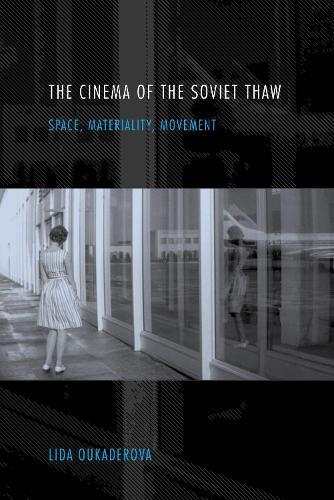
Following Joseph Stalin's death in 1953, the Soviet Union experienced a dramatic resurgence in cinematic production. The period of the Soviet Thaw became known for its relative political and cultural liberalization; its films, formally innovative and socially engaged, were swept to the center of international cinematic discourse. In The Cinema of the Soviet Thaw, Lida Oukaderova provides an in-depth analysis of several Soviet films made between 1958 and 1967 to argue for the centrality of space-as both filmic trope and social concern-to Thaw-era cinema. Opening with a discussion of the USSR's little-examined late-fifties embrace of panoramic cinema, the book pursues close readings of films by Mikhail Kalatozov, Georgii Danelia, Larisa Shepitko and Kira Muratova, among others. It demonstrates that these directors' works were motivated by an urge to interrogate and reanimate spatial experience, and through this project to probe critical issues of ideology, social progress, and subjectivity within post-Stalinist culture.
Full Product Details
Author: Lida Oukaderova
Publisher: Indiana University Press
Imprint: Indiana University Press
Dimensions:
Width: 15.20cm
, Height: 1.20cm
, Length: 22.90cm
Weight: 0.313kg
ISBN: 9780253026965
ISBN 10: 0253026962
Pages: 228
Publication Date: 15 May 2017
Audience:
Professional and scholarly
,
Professional & Vocational
Format: Paperback
Publisher's Status: Active
Availability: Manufactured on demand

We will order this item for you from a manufactured on demand supplier.
Reviews
...[a] sophisticated work that...[gives] us a new and much needed reading of Thaw cinema. -Lilya Kaganovsky, editor of Sounds, Speech, Music in Soviet and Post-Soviet Cinema ...superior and innovative scholarship. -Alexander Prokhorov, author of Inherited Discourse: Paradigms of Stalinist Culture in Literature and Cinema of the Thaw
This is a sophisticated and often fascinating look at five key films of the 1960s. . . . Lida Oukaderova brings a wealth of diverse theoretical perspectives to each of the chapters, from Metz to Irigaray, Benjamin to Lefebvre. But just as impressive are convincingly drawn links between these Soviet films and some of the most important West European works of the time. * Russian Review * Recommended. * Choice * The Cinema of the Soviet Thaw is an exciting contribution to the study of Soviet film, moving the field beyond institutional and historical questions. Likewise, those concerned with the aesthetic, ideological, and other facets of postwar cinemas, should greet it enthusiastically. * Film Quarterly * Overall, Oukaderova offers a fresh view on Thaw cinema, connecting the visualization-technical, architectural, and material-of space with wider artistic trends, both in non-Soviet cinema and in visual arts. What is particularly impressive is Oukaderova's exact articulation of the camerawork and its manner of capturing the body in space. The book is well researched, drawing on archival documents pertaining to discussions of individual films, and working productively with theoretical frameworks. * Slavic Review * This book is doubly welcome. First, because it adds substantially to the slender and dispersed literature dealing with film as a spatial medium; and secondly, by offering a corrective to accounts of Soviet cinema that are still too often preoccupied with ideological readings of a limited number of well-known films. * Sight and Sound *
[a] sophisticated work that [gives] us a new and much needed reading of Thaw cinema. Lilya Kaganovsky, editor of Sounds, Speech, Music in Soviet and Post-Soviet Cinema</p>
Author Information
Lida Oukaderova is Assistant Professor of Film Studies in the Department of Art History at Rice University.