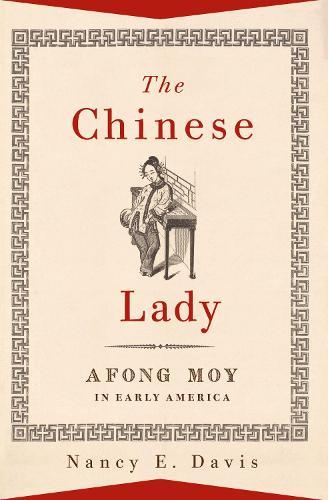
Full Product Details
Author: Nancy E. Davis (curator emeritus, curator emeritus, National Museum of American History, Smithsonian Institution)
Publisher: Oxford University Press Inc
Imprint: Oxford University Press Inc
Dimensions:
Width: 23.70cm
, Height: 2.00cm
, Length: 15.60cm
Weight: 0.508kg
ISBN: 9780197581988
ISBN 10: 0197581986
Pages: 344
Publication Date: 16 June 2022
Audience:
Professional and scholarly
,
Professional & Vocational
Format: Paperback
Publisher's Status: Active
Availability: To order

Stock availability from the supplier is unknown. We will order it for you and ship this item to you once it is received by us.
Reviews
Intriguing and authoritative, The Chinese Lady examines themes from the turbulent nineteenth century, including the rise of the middle class, the development of American nationalism and race theory, and the effects of unregulated banking and land speculation. These notions are masterfully reflected in the melancholy tale of an immigrant cast aside in the whirlwind.""- Foreword Reviews Richly textured with analysis of material, visual, and consumer culture, the story of Afong Moy in America demonstrates that the period known for Indian removal and chattel slavery was also a time when a Chinese woman could be accepted as a 'lady.'"" -Pacific Historical Review Davis's book is a form of redress for a familiar injustice: the lives of the exploited, no matter how remarkable, rarely get remembered, much less told. Davis expresses hope that others can find out more about Afong Moy, particularly from when history seemingly lost track of her, which would bring the ""Chinese Lady"" into greater relief. If this happens, it would cast open wider a window into the treatment of women and racial minorities at tumultuous times in American history"" - Asian Review of Books Ms. Davis strives mightily to tell Afong Moy's own story using the documents available, triangulating not only from what was said but also from the silences. That so much remains unknown in ""The Chinese Lady"" doesn't reflect poorly on Ms. Davis as a historian. Rather it confirms Ms. Davis's assertion that ""in mid-nineteenth-century America, the life of an Asian, and of a woman even when that woman lived an extraordinary life was destined to obscurity."" - The Wall Street Journal
Intriguing and authoritative, The Chinese Lady examines themes from the turbulent nineteenth century, including the rise of the middle class, the development of American nationalism and race theory, and the effects of unregulated banking and land speculation. These notions are masterfully reflected in the melancholy tale of an immigrant cast aside in the whirlwind. - Foreword Reviews Richly textured with analysis of material, visual, and consumer culture, the story of Afong Moy in America demonstrates that the period known for Indian removal and chattel slavery was also a time when a Chinese woman could be accepted as a 'lady.' -Pacific Historical Review Davis's book is a form of redress for a familiar injustice: the lives of the exploited, no matter how remarkable, rarely get remembered, much less told. Davis expresses hope that others can find out more about Afong Moy, particularly from when history seemingly lost track of her, which would bring the Chinese Lady into greater relief. If this happens, it would cast open wider a window into the treatment of women and racial minorities at tumultuous times in American history - Asian Review of Books Ms. Davis strives mightily to tell Afong Moy's own story using the documents available, triangulating not only from what was said but also from the silences. That so much remains unknown in The Chinese Lady doesn't reflect poorly on Ms. Davis as a historian. Rather it confirms Ms. Davis's assertion that in mid-nineteenth-century America, the life of an Asian, and of a woman even when that woman lived an extraordinary life was destined to obscurity. - The Wall Street Journal
"Intriguing and authoritative, The Chinese Lady examines themes from the turbulent nineteenth century, including the rise of the middle class, the development of American nationalism and race theory, and the effects of unregulated banking and land speculation. These notions are masterfully reflected in the melancholy tale of an immigrant cast aside in the whirlwind.""- Foreword Reviews Richly textured with analysis of material, visual, and consumer culture, the story of Afong Moy in America demonstrates that the period known for Indian removal and chattel slavery was also a time when a Chinese woman could be accepted as a 'lady.'"" -Pacific Historical Review Davis's book is a form of redress for a familiar injustice: the lives of the exploited, no matter how remarkable, rarely get remembered, much less told. Davis expresses hope that others can find out more about Afong Moy, particularly from when history seemingly lost track of her, which would bring the ""Chinese Lady"" into greater relief. If this happens, it would cast open wider a window into the treatment of women and racial minorities at tumultuous times in American history"" - Asian Review of Books Ms. Davis strives mightily to tell Afong Moy's own story using the documents available, triangulating not only from what was said but also from the silences. That so much remains unknown in ""The Chinese Lady"" doesn't reflect poorly on Ms. Davis as a historian. Rather it confirms Ms. Davis's assertion that ""in mid-nineteenth-century America, the life of an Asian, and of a woman even when that woman lived an extraordinary life was destined to obscurity."" - The Wall Street Journal"
Author Information
Nancy E. Davis is curator emeritus of Home and Community Life at the National Museum of American History, Smithsonian Institution. She has worked as a public historian in local, state, and national museums for more than forty years. Her research in museums and as a lecturer has frequently addressed aspects of Asian influence on American culture.