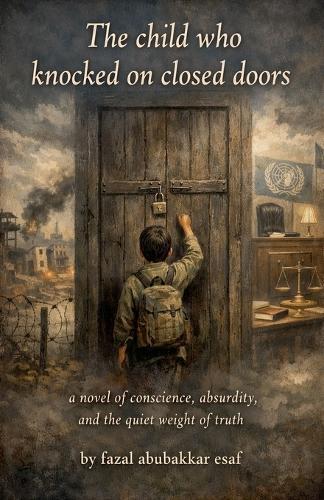
Overview
In every era, humanity constructs systems meant to uphold justice, protect the innocent, and preserve dignity. Governments, international bodies, religious institutions, and courts all claim, in language both solemn and ceremonial, to stand as guardians of morality. And yet, the question persists: Why does suffering continue in plain sight? The Child Who Knocked on Closed Doors begins with this question and refuses to let it go. Through the journey of Farid-a child whose moral clarity cuts through the fog of diplomacy, religion, and law-the reader enters a world that feels both real and unreal. A world of endless corridors, circular meetings, symbolic gestures, and hollow assurances. A world where responsibility is endlessly deferred, where language becomes a shield against action, and where compassion is acknowledged but rarely exercised. This is not simply a story about war. It is a story about the systems that allow war to continue. It is about: The bureaucratic machinery that converts urgency into procedure The political language that transforms accountability into abstraction The religious rituals that offer comfort without intervention The global institutions that speak of justice while negotiating power At its core, however, this novel is about the most uncomfortable terrain of all-the human conscience. Farid's journey forces each reader to confront an unsettling thought: If a child can see injustice clearly, what prevents adults from acting upon it? Is it fear? Is it self-interest? Or is it the slow normalization of moral distance? The narrative moves between realism and surrealism, between external events and internal reflection, between public declarations and private doubts. It draws from the psychological intensity of Dostoevsky, the bureaucratic absurdity of Kafka, and the existential question that has haunted humanity for centuries: What does it mean to be responsible for others? This book does not offer easy solutions. It offers something more difficult: It offers recognition. Recognition of complicity. Recognition of silence. Recognition of the quiet ways in which systems are sustained not only by those who design them-but by those who accept them. Farid's final realization is not about the world-it is about the self. That truth, honesty, and humanity do not begin in institutions, policies, or speeches. They begin within the individual. And from there, they either remain still... or they ripple outward.
Full Product Details
Author: Fazal Abubakkar Esaf
Publisher: Fazal Abubakkar Esaf
Imprint: Fazal Abubakkar Esaf
Dimensions:
Width: 14.00cm
, Height: 1.80cm
, Length: 21.60cm
Weight: 0.363kg
ISBN: 9798233613203
Pages: 314
Publication Date: 27 February 2026
Audience:
General/trade
,
General
Format: Paperback
Publisher's Status: Active
Availability: Available To Order

We have confirmation that this item is in stock with the supplier. It will be ordered in for you and dispatched immediately.