Overview
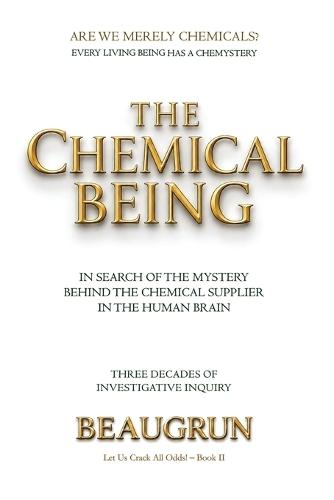
What kind of thing is a human creature? Dust into which a breath was placed, the oldest text said. Modern chemistry has accounted for the dust. The breath remains an open question. The Chemical Being reopens cases that modern science has tended to consider closed. Across fifteen chapters and a closing afterword, it calls to its courtroom an unusual range of witnesses - neuroscientists who reversed themselves late in life, jurists who could not locate a guilty mind, mothers whose grief reshaped their hearts, mystics whose chemistry was eventually measured, and the older traditions of every civilisation that observed the same human creature in different vocabularies. The book proceeds by what the author calls the reverse approach - not anti-science, not theological in the strict sense, but investigative interpretive inquiry. Each chapter walks slowly through a question the modern verdict has tended to close too soon. Among the witnesses called: Charles Whitman, whose tumour pressed against his amygdala Daniel M'Naghten, whose persecutory delusions made law in 1843 Phineas Gage, who was no longer Gage after the iron rod Helen Keller, whose soul awoke at a water pump in 1887 Henrietta Lacks, whose cells did not die when she did Andrea Yates, whose two juries reached opposite verdicts The slime mould that solved the Tokyo rail network The acacias of the Transvaal that warned one another through the air The questions reopened: Why the same molecule produces opposite outcomes in different bodies. What becomes of mens rea when the courts cannot locate the guilty mind. How words enter the body and reshape the chemistry they enter. Why coordination alone has never guaranteed wisdom. How the older traditions held chemistry and meaning together before modernity separated them. And what becomes of the breath when the body returns to dust. The book is written for the educated general reader. It does not require any prior background in chemistry, neuroscience, philosophy, or theology. It asks only one thing: the willingness to keep looking after the case has been declared closed. ""Facts rarely argue. Interpretations do."" - from the opening chapter Let Us Crack All Odds! is a continuing interdisciplinary series exploring spirituality, consciousness, thought, discernment, and the unseen dimensions of human experience. The Chemical Being is Book II.
Full Product Details
Author: Beaugrun School
Publisher: Independently Published
Imprint: Independently Published
Volume: 2
Dimensions:
Width: 15.20cm
, Height: 1.40cm
, Length: 22.90cm
Weight: 0.322kg
ISBN: 9798197719843
Pages: 238
Publication Date: 20 May 2026
Audience:
General/trade
,
General
Format: Paperback
Publisher's Status: Active
Availability: Available To Order

We have confirmation that this item is in stock with the supplier. It will be ordered in for you and dispatched immediately.