Overview
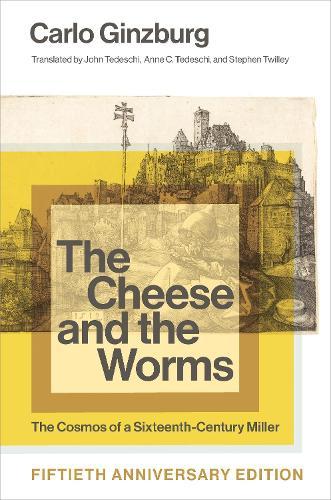
The fiftieth-anniversary edition of the classic tale of a sixteenth-century miller facing the Roman Inquisition. The Cheese and the Worms is an incisive study of popular culture in the sixteenth century as seen through the eyes of one man, the miller known as Menocchio, who was accused of heresy during the Inquisition and sentenced to death. In the fiftieth anniversary edition of this now-classic book, Carlo Ginzburg uses the trial records to illustrate the religious and social conflicts of the society Menocchio lived in. For a common miller, Menocchio was surprisingly literate. In his trial testimony, he made references to more than a dozen books, including the Bible, Boccaccio's Decameron, Mandeville's Travels, and a ""mysterious"" book that may have been the Koran. And what he read he recast in terms familiar to him, as in his own version of the creation: ""All was chaos, that is earth, air, water, and fire were mixed together; and of that bulk a mass formed—just as cheese is made out of milk—and worms appeared in it, and these were the angels."" Ginzburg's massively influential book has been widely regarded as an early example of the analytic, case-oriented approach known as microhistory. In the preface, Ginzburg offers his own corollary to Menocchio's story as he considers the discrepancy between the intentions of the writer and what gets written. The Italian miller's story and Ginzburg's work continue to resonate with modern readers because they focus on how oral and written culture are inextricably linked. Menocchio's 500-year-old challenge to authority remains evocative and vital today.
Full Product Details
Author: Carlo Ginzburg (Franklin D. Murphy Professor of Italian Renaissance Studies and Franklin D. Murphy Professor of Ital, UCLA) ,
John Tedeschi ,
Carlo Ginzburg (Franklin D. Murphy Professor of Italian Renaissance Studies and Franklin D. Murphy Professor of Ital, UCLA) ,
Anne C. Tedeschi
Publisher: Johns Hopkins University Press
Imprint: Johns Hopkins University Press
Edition: Fiftieth Anniversary Edition
Dimensions:
Width: 15.60cm
, Height: 1.50cm
, Length: 23.50cm
Weight: 0.340kg
ISBN: 9781421454634
ISBN 10: 1421454637
Pages: 224
Publication Date: 28 April 2026
Audience:
College/higher education
,
Tertiary & Higher Education
Format: Paperback
Publisher's Status: Forthcoming
Availability: Not yet available

This item is yet to be released. You can pre-order this item and we will dispatch it to you upon its release.
Language: Italian
Author Information
Carlo Ginzburg has taught at the University of Bologna, the University of California, Los Angeles, and the Scuola Normale Superiore di Pisa. He is the recipient of the 2010 International Balzan Prize and the author of Clues, Myths, and the Historical Method.