Overview
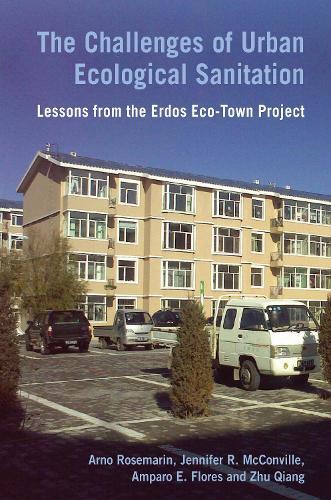
The need for improved sanitation around the world is becoming a crisis, and the situation is particularly critical in urban and peri-urban areas in developing countries. Here the population is growing rapidly, and where sanitation is provided, the means to treat and dispose of waste safely is neglected, with huge environmental and public health consequences. Sanitation solutions are needed that are safe for the user and interlinked with other urban services which can treat waste as a resource. This book describes an attempt to create modern, multi-storey urban dwellings that incorporate ecological sanitation into their design, resulting in a clean living space, and deriving safe agricultural inputs from human organic waste. The book highlights the experience of implementing the Erdos Eco-Town Project in Inner Mongolia, China. This remains the largest urban project of urine-diversion dry toilets in the world and describes the technical design, daily operation and maintenance, costs and benefits compared to conventional systems, as well as the challenges in achieving acceptability with users. Published in association with Stockholm Environment Institute.
Full Product Details
Author: Arno Rosemarin (Senior Research Fellow, SEI) ,
Jennifer McConville ,
Amparo Flores (University of Cambridge) ,
Zhu Qiang (Gansu Research Institute for Water Conservancy)
Publisher: Practical Action Publishing
Imprint: Practical Action Publishing
Dimensions:
Width: 15.60cm
, Height: 1.80cm
, Length: 23.40cm
Weight: 0.389kg
ISBN: 9781853397677
ISBN 10: 1853397679
Pages: 116
Publication Date: 15 July 2012
Audience:
Professional and scholarly
,
Professional & Vocational
Format: Hardback
Publisher's Status: Active
Availability: Available To Order

We have confirmation that this item is in stock with the supplier. It will be ordered in for you and dispatched immediately.
Reviews
People are filthy creatures, and any well-planned city should take this into account. The Challenges of Urban Ecological Sanitation discusses urban planning and the role that improving sanitation plays in achieving community harmony. Focusing on the projects of Erdos Eco-Town Project, a city in Inner Mongolia, China, the authors present an educated and insightful lesson on taking improvements and a better example for future projects. The Challenges of Urban Ecological Sanitation is a strongly recommended addition to urban planning and social issues collections.--James A. Cox, Editor-in-Chief, Library Bookwatch
"People are filthy creatures, and any well-planned city should take this into account. The Challenges of Urban Ecological Sanitation discusses urban planning and the role that improving sanitation plays in achieving community harmony. Focusing on the projects of Erdos Eco-Town Project, a city in Inner Mongolia, China, the authors present an educated and insightful lesson on taking improvements and a better example for future projects. ""The Challenges of Urban Ecological Sanitation"" is a strongly recommended addition to urban planning and social issues collections.--James A. Cox, Editor-in-Chief, Library Bookwatch"
Author Information
Arno Rosemarin is with the Stockholm Environment Institute. Jennifer McConville is with the Stockholm Environment Institute. Amparo Flores is with the Centre for Sustainable Development, Cambridge University. Zhu Qiang is Former Director and Chief Engineer and Research Professor of the Gansu Research Institute for Water Conservancy China.