|
|
|||
|
||||
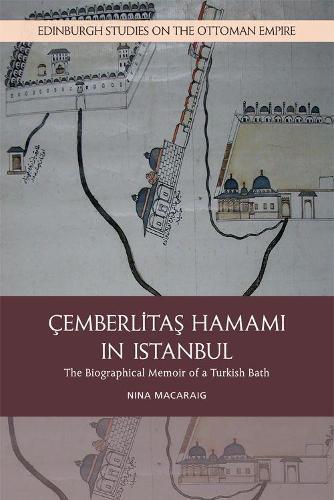
OverviewBathhouses (hamams) play a prominent role in Turkish culture, because of their architectural value and social function as places of hygiene, relaxation and interaction. Continuously shaped by social and historical change, the life story of Mimar Sinan's emberlita Hamam in Istanbul provides an important example: established in 1583/4, it was modernized during the Turkish Republic (since 1923) and is now a tourist attraction. As a social space shared by tourists and Turks, it is a critical site through which to investigate how global tourism affects local traditions and how places provide a nucleus of cultural belonging in a globalized world. This original study, taking a biographical approach to tell the story of a Turkish bathhouse, contributes to the fields of Islamic, Ottoman and modern Turkish cultural, architectural, social and economic history. Full Product DetailsAuthor: Nina Macaraig (Visiting Associate Professor, Koç University, Istanbul)Publisher: Edinburgh University Press Imprint: Edinburgh University Press Weight: 0.760kg ISBN: 9781474434102ISBN 10: 147443410 Pages: 392 Publication Date: 16 November 2018 Audience: Professional and scholarly , Professional & Vocational Format: Hardback Publisher's Status: Active Availability: Manufactured on demand We will order this item for you from a manufactured on demand supplier. Table of ContentsPreface Acknowledgments Note on Transliteration List of Illustrations List of Tables Introduction Chapter 1: Ancestry The Patroness: Nurbanu Sultan The Architect: Sinan Origins Chapter 2: Family The Atik Valide Vakfı The Atik Valide Mosque Complex The Endowed Hamams Chapter 3: From Birth to Breadwinner The Birth Getting Ready to Work The Hamam’s Employees The Hamam’s Customers Making Money Chapter 4: Impressions and Identities A Place for Ritual Cleansing A Place for Socialising A Place for Carnal Pleasure A Place for Healing Pride of the City Chapter 5: In Sickness and in Health Symptoms: Evidence for Renovations Causes: Fires, Earthquakes and Other Calamities Treatment: Repair and Renovation Work Chapter 6: Old Age Renegotiating of Economic Family Relations: Double-Rent Mutilation A New Identity I: Emblem of Ottoman Heritage in the Nineteenth Century A New Identity II: Emblem of Ottoman Heritage in the Early Republic Survival Chapter 7: Second Spring A New Identity III: Tourist Attraction A New Identity IV: Object of Ottomania A New Identity V: The Managers’ and Employee’s Perspectives A New Identity VI: The Digital Age Epilogue Appendix: Excerpts from the Endowment Deed of the Atik Valide Vakfı References IndexReviews"The bathhouse was at the center of Ottoman life, and consequently reflected the social transformations that occurred in the Ottoman Empire and Turkish Republic. The �embirlitaş Hamam in Istanbul was an impressive monument, designed by the great architect Sinan and endowed by the legendary Nurbanu, yet it was also a utilitarian building that served the needs of daily life. In a field dominated by studies of the Ottoman state and its extensive bureaucracy, this book--written with verve and style--uses the metaphor of biography to examine the bath as an institution, building type, waterwork, sensory experience, poetic subject, and social event. Rich in detail, it explores everything from property law to towels. An inscription at the �embirlitaş Hamam proclaims: ""This pleasurable hamam is a wonderful place"" - and Reader, this delightful study is a wonderful book.-- ""D. Fairchild Ruggles, University of Illinois""" Author InformationNina Macaraig is Visiting Associate Professor at Koç University, Istanbul. She is co-editor of Istanbul and Water (2015) and editor of Bathing Culture of Anatolian Civilizations: Architecture, History and Imagination (2011). Tab Content 6Author Website:Countries AvailableAll regions |
||||