Overview
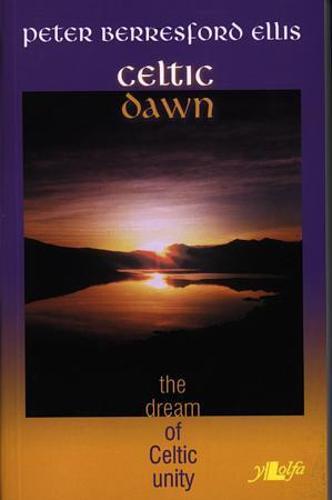
An informative account of the development of the Pan-Celtic movement, the principal organisations and leaders during the 20th century, and the progress of the Celts in Wales, Ireland, Scotland, Cornwall, Brittany and the Isle of Man towards political and cultural autonomy. 14 black-and-white illustrations. First published in 1993. -- Cyngor Llyfrau Cymru
Full Product Details
Author: Peter Berresford Ellis
Publisher: Y Lolfa
Imprint: Y Lolfa
Edition: 2nd Revised edition
Dimensions:
Width: 0.10cm
, Height: 11.60cm
, Length: 0.10cm
Weight: 0.227kg
ISBN: 9780862436438
ISBN 10: 0862436435
Pages: 256
Publication Date: 01 October 2002
Audience:
General/trade
,
General
Format: Paperback
Publisher's Status: Active
Availability: Available To Order

We have confirmation that this item is in stock with the supplier. It will be ordered in for you and dispatched immediately.
Reviews
A new edition of this authoritative study of the Celtic world for the new age in which we have a Scottish Parliament and a Welsh Assembly, a movement for a Cornish Assembly and the flickerings of a Northern Irish Government. No longer a story of survival, as much is now flourishing. And what of the Celtic League? The League was founded in 1961 but its roots are far older. This book 'is an entire series of proposals about the past, presented in cohesive form, to demonstrate the origins, growth and ideas of . . . Pan Celticism . . .' Further, it is 'an attempt to examine where Pan Celticism is heading'. This is a substantial book which covers basic questions such as 'What is a Celt?' and 'Why have a Celtic League?' On the way we examine such ideas as 'state', 'nation' and 'nationalism'. Later Ellis reviews the current problems and solutions, up to early 2002, in the Celtic nations. Where there are no simple answers, he does not insult the reader by suggesting that there are. The Celtic languages are given proper attention, Ellis being aware that a language carries so much of a culture that its loss is a diminution of that culture. The author chronicles the advances in the '70s and '80s as the Media especially radio and TV gave attention to the Celts. The image of the Celts was no longer restricted to ideas of 'esoteric religiousness, or people waiting for King Arthur to reawaken . . .' There was a new awareness of the needs of those speaking the Celtic languages. The review of the state of Pan Celticism in the new millennium gives grounds for optimism. The League's ideal of independent and culturally cohesive nations coming together as 'confederations of equals' is yet to be realised but the possibilities are there if people, especially the sixteen million people in Celtic countries, are prepared to commit themselves to the cause. To call Celtic Dawn a substantial and thorough study does not mean that it is difficult, 'boring' or 'dry as dust'. Here the issues are too alive, too relevant and too controversial as in Ellis's debates with Simon James to allow a yawn. It is not possible to do justice to such a spirited and wide-ranging study as Celtic Dawn in a short review. It is a richly rewarding book to read. -- John Spink @ www.gwales.com
A new edition of this authoritative study of the Celtic world for the new age in which we have a Scottish Parliament and a Welsh Assembly, a movement for a Cornish Assembly and the flickerings of a Northern Irish Government. No longer a story of survival, as much is now flourishing. And what of the Celtic League? The League was founded in 1961 but its roots are far older. This book 'is an entire series of proposals about the past, presented in cohesive form, to demonstrate the origins, growth and ideas of . . . Pan Celticism . . .' Further, it is 'an attempt to examine where Pan Celticism is heading'. This is a substantial book which covers basic questions such as 'What is a Celt?' and 'Why have a Celtic League?' On the way we examine such ideas as 'state', 'nation' and 'nationalism'. Later Ellis reviews the current problems and solutions, up to early 2002, in the Celtic nations. Where there are no simple answers, he does not insult the reader by suggesting that there are. The Celtic languages are given proper attention, Ellis being aware that a language carries so much of a culture that its loss is a diminution of that culture. The author chronicles the advances in the '70s and '80s as the Media especially radio and TV gave attention to the Celts. The image of the Celts was no longer restricted to ideas of 'esoteric religiousness, or people waiting for King Arthur to reawaken . . .' There was a new awareness of the needs of those speaking the Celtic languages. The review of the state of Pan Celticism in the new millennium gives grounds for optimism. The Leagues ideal of independent and culturally cohesive nations coming together as 'confederations of equals' is yet to be realised but the possibilities are there if people, especially the sixteen million people in Celtic countries, are prepared to commit themselves to the cause. To call Celtic Dawn a substantial and thorough study does not mean that it is difficult, 'boring' or 'dry as dust'. Here the issues are too alive, too relevant and too controversial as in Elliss debates with Simon James to allow a yawn. It is not possible to do justice to such a spirited and wide-ranging study as Celtic Dawn in a short review. It is a richly rewarding book to read. -- John Spink @ www.gwales.com
Author Information
Peter Beresford Ellis is the author of over 20 books, including the classic, The Celtic Revolution.