Overview
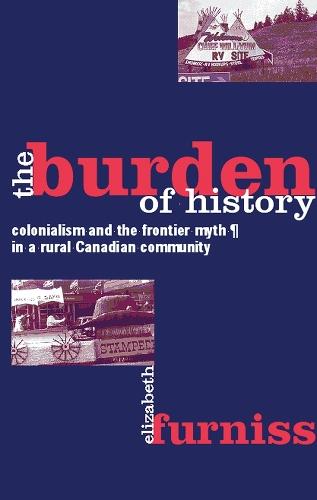
This book is an ethnography of the cultural politics of Native/non-Native relations in a small interior BC city -- Williams Lake -- at the height of land claims conflicts and tensions. Furniss analyses contemporary colonial relations in settler societies, arguing that 'ordinary' rural Euro- Canadians exercise power in maintaining the subordination of aboriginal people through 'common sense' assumptions and assertions about history, society, and identity, and that these cultural activities are forces in an ongoing, contemporary system of colonial domination. She traces the main features of the regional Euro-Canadian culture and shows how this cultural complex is thematically integrated through the idea of the frontier. Key facets of this frontier complex are expressed in diverse settings: casual conversations among Euro-Canadians; popular histories; museum displays; political discourse; public debates about aboriginal land claims; and ritual celebrations of the city's heritage. In each setting, Furniss shows how these cultural practices contribute to the marginalization of area Shuswap [Sepwecemc], Tsilhqot'in [Chilcotin], and Carrier peoples, and how area Native people are continually engaging in diverse and innovative modes of resistance to the dominant regional culture.
Full Product Details
Author: Elizabeth Furniss
Publisher: University of British Columbia Press
Imprint: University of British Columbia Press
Weight: 0.500kg
ISBN: 9780774807104
ISBN 10: 0774807105
Pages: 237
Publication Date: 05 May 1999
Audience:
College/higher education
,
Professional and scholarly
,
Undergraduate
,
Postgraduate, Research & Scholarly
Format: Hardback
Publisher's Status: Active
Availability: Temporarily unavailable

The supplier advises that this item is temporarily unavailable. It will be ordered for you and placed on backorder. Once it does come back in stock, we will ship it out to you.
Reviews
This book, a study of cultural politics in Williams Lake, British Columbia, is an admirable exponent of this reinvention of ethnography ... the book is a refreshing portrait of diversity both within and between the aboriginal and nonaboriginal communities, and the variety of views represented shows the complexity of the issues within their proper historical and cultural contexts. -- David Mardiros * CBRA 4210 * Provides a deep examination of Aboriginal and Euro-Canadian relations in the city of Williams Lake, British Columbia. I recommend this book to those concerned with British Columbia, the culture of the frontier in North America, or the relations between Aboriginal and non-Aboriginal peoples. -- Matthew Engel * Environment and Planning A 2000, Volume 32 *
Provides a deep examination of Aboriginal and Euro-Canadian relations in the city of Williams Lake, British Columbia. I recommend this book to those concerned with British Columbia, the culture of the frontier in North America, or the relations between Aboriginal and non-Aboriginal peoples. -- Matthew Engel Environment and Planning A 2000, Volume 32 This book, a study of cultural politics in Williams Lake, British Columbia, is an admirable exponent of this reinvention of ethnography ... the book is a refreshing portrait of diversity both within and between the aboriginal and nonaboriginal communities, and the variety of views represented shows the complexity of the issues within their proper historical and cultural contexts. -- David Mardiros CBRA 4210
Provides a deep examination of Aboriginal and Euro-Canadian relations in the city of Williams Lake, British Columbia. I recommend this book to those concerned with British Columbia, the culture of the frontier in North America, or the relations between Aboriginal and non-Aboriginal peoples. -- Matthew Engel * Environment and Planning A 2000, Volume 32 * This book, a study of cultural politics in Williams Lake, British Columbia, is an admirable exponent of this reinvention of ethnography ... the book is a refreshing portrait of diversity both within and between the aboriginal and nonaboriginal communities, and the variety of views represented shows the complexity of the issues within their proper historical and cultural contexts. -- David Mardiros * CBRA 4210 *
Author Information
Elizabeth Furniss is an assistant professor in the Department of Anthropology, University of Calgary.