Overview
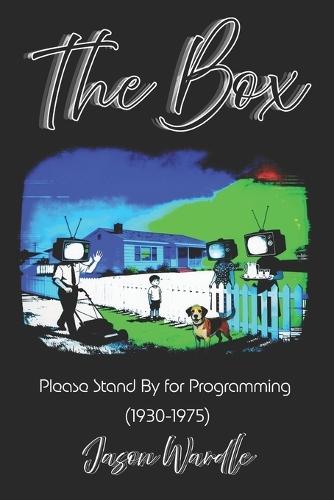
THE BOX: Please Stand By for Programming (1930-1975) The future arrived in the living room. The living room never recovered. In 1946, fewer than one percent of American households owned a television. By 1960, it was ninety percent. No technology in human history had colonised domestic space so completely, so quickly, so irreversibly. Families rearranged their furniture. They ate dinner facing the screen. They let the schedule tell them when to laugh, when to worry, when to go to bed. They called it progress, entertainment, family time. It was none of those things. It was capture. The Box tells the story of how television was built-not as a cultural phenomenon, but as an industrial system designed to solve specific problems for specific interests. Advertisers needed visual access to the domestic sanctuary that print and radio couldn't provide. Manufacturers needed a new consumer durable to absorb postwar factory capacity. The state needed ideological infrastructure that didn't look like propaganda. Television solved all three problems simultaneously. The American household paid the price. This is not a story about programmes. It's a story about class. Who owned the three networks? By 1960, three corporations answerable to shareholders and dependent on advertising revenue. Who profited from prime time? Sponsors who bought not just eyeballs but the texture of daily life-the commercial break as normal, the product placement as invisible, the consumption aspiration as common sense. Who paid? Households-in credit debt for the set, in evening hours surrendered, in conversations never had. Drawing on archives, trade journals, FCC records, ratings data and declassified files, The Box shows how the technology of connection became the infrastructure of isolation. The family gathered-but facing the same direction, not each other. The news arrived-but shaped by access economy and official sources. Entertainment relaxed-but trained attitudes toward authority, gender, race and consumption that served interests households never saw. The book tracks the state inside the box from the beginning. Operation Mockingbird placed CIA assets in newsrooms. COINTELPRO used television to discredit movements. The Pentagon learned that controlling what cameras saw was cheaper than controlling what soldiers did. And when Vietnam brought the war into living rooms, the system didn't break-it adapted. The credibility gap damaged government, not television. Trust shifted from the state to the screen. The lesson was learned: manage controversy, control access, frame the narrative. The Box examines what three-network hegemony actually meant: ninety percent of the audience watching three channels controlled by three companies operating under one logic. Not conspiracy-structure. Not censorship-selection. Not propaganda-genre. The cop show taught deference to authority. The sitcom contained contradiction in laughter. The news constructed reality within parameters so consistent they became invisible. By 1975, the structure had cracked but held. Vietnam and Watergate had wounded government credibility. Cable was creeping into fifteen percent of homes. HBO had just gone satellite. The VCR was arriving. The three-network hegemony that had seemed permanent was under pressure from technologies promising something television had never offered: choice. But the machine that built the box wasn't broken. It was adapting. The same interests that needed capture in 1950 still needed capture in 1975-they just needed a new form. Fragmentation was coming. It would be sold as liberation. The Box ends where that story begins. The family is still watching. The screen is still glowing. Somewhere, in boardrooms the living room will never see, the next phase is already being planned. The box taught America to watch. What came next would teach America to choose-and mistake the choosing for freedom.
Full Product Details
Author: Jason Wardle
Publisher: Independently Published
Imprint: Independently Published
Volume: 9
Dimensions:
Width: 15.20cm
, Height: 2.10cm
, Length: 22.90cm
Weight: 0.494kg
ISBN: 9798261768784
Pages: 370
Publication Date: 17 December 2025
Audience:
General/trade
,
General
Format: Paperback
Publisher's Status: Active
Availability: Available To Order

We have confirmation that this item is in stock with the supplier. It will be ordered in for you and dispatched immediately.