Overview
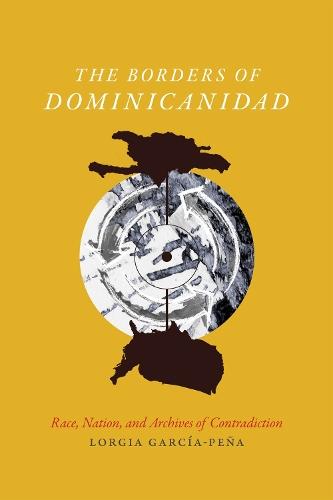
In The Borders of Dominicanidad Lorgia Garcia-Pena explores the ways official narratives and histories have been projected onto racialized Dominican bodies as a means of sustaining the nation's borders. Garcia-Pena constructs a genealogy of dominicanidad that highlights how Afro-Dominicans, ethnic Haitians, and Dominicans living abroad have contested these dominant narratives and their violent, silencing, and exclusionary effects. Centering the role of U.S. imperialism in drawing racial borders between Haiti, the Dominican Republic, and the United States, she analyzes musical, visual, artistic, and literary representations of foundational moments in the history of the Dominican Republic: the murder of three girls and their father in 1822; the criminalization of Afro-religious practice during the U.S. occupation between 1916 and 1924; the massacre of more than 20,000 people on the Dominican-Haitian border in 1937; and the 2010 earthquake in Haiti. Garcia-Pena also considers the contemporary emergence of a broader Dominican consciousness among artists and intellectuals that offers alternative perspectives to questions of identity as well as the means to make audible the voices of long-silenced Dominicans.
Full Product Details
Author: Lorgia García Peña ,
Lorgia Garcaia-Peana
Publisher: Duke University Press
Imprint: Duke University Press
Dimensions:
Width: 15.20cm
, Height: 1.50cm
, Length: 22.90cm
Weight: 0.408kg
ISBN: 9780822362623
ISBN 10: 0822362627
Pages: 288
Publication Date: 08 November 2016
Audience:
Professional and scholarly
,
Professional & Vocational
Format: Paperback
Publisher's Status: Active
Availability: In Print

This item will be ordered in for you from one of our suppliers. Upon receipt, we will promptly dispatch it out to you. For in store availability, please contact us.
Reviews
A historically grounded, meticulously researched, and thoughtful analysis. . . . Among the book's many strengths are its readable and jargon-free prose, its detailed analysis of events that have received little attention in Dominican history and literature, and its investigation of 'never-beforestudied evidence based documents found in historical archives in Santo Domingo, Port-au-Prince, and Washington D.C.' (15). . . . A brave and successful effort to unearth and honor the truths that get silenced by hegemonic narratives. -- Sobeira Latorre * The Latin Americanist * Rich and insightful. . . Pena's work is an interesting read and should provoke scholarly discussion and debate on the topic for a long time to come. -- Richard T. Middleton IV * Ethnic and Racial Studies * [A] valuable addition to the body of literature on the subjects of Haiti-Dominican Republic relations and Dominican anti-Haitianism. -- F. S. J. Ledgister * Hispanic American Historical Review *
In this groundbreaking and unique book Lorgia Garcia-Pena brings the oft-forgotten Caribbean to the center of analysis of both U.S. empire and subject formation. Instead of capitulating to the argument that Haiti bears the burden of signifying blackness in the Hispanic Caribbean, her case studies in violence as national history move us away from the gravity point of the Trujillo regime as the single most and only important period in the definition of Dominicadidad. The Borders of Dominicanidad will be the pivotal and necessary bridge between Dominican and Haitian studies. --Nicole Guidotti-Hernandez, author of Unspeakable Violence: Remapping U.S. and Mexican National Imaginaries
Author Information
Lorgia GarcÍa-PeÑa is Assistant Professor of Romance Languages and Literatures and of History and Literature at Harvard University.