Overview
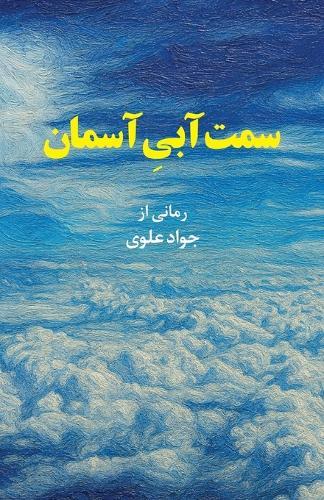
Revolutions do not end even after they are over. They continue to occupy the mind, memory, politics, and literature. This reference to revolution as a point of ""beginning"" is not only because society experiences itself in the revolution as the agent of history. It is also because a revolution replaces the real with the possible. Thus, the idea of the possibility of change survives even when a revolution fails. Writers who have lived through a revolution are familiar with its hidden energies and the horizons of rebellion it opens. The present novel is the second volume of a trilogy that explores the 1979 Revolution through the lens of dreams and the latent capacities of its human subjects. The first volume of this series, Lead to Evil, was published by Asmana Books in January 2025. The Blue Side of the Sky narrates the revolution this time from the vantage point of prison-apparently an inseparable part of revolutions-and through the relationship between a writer and his interrogator. But the specter of the revolution, in its period of exhaustion, reveals itself anew after the writer is released from prison and the war ends, in the form of fresh imaginings of the possible supplanting the real. This time, families become the arena of struggle for transformation, and the novel's multiple narrators express the diversity of this experience through their stories of the past and their dreams of the future. The novel that the imprisoned writer is composing, and the play of his that is being performed, at times merge with the events of the novel itself, drawing the reader into the drama of life amid the decline of a revolution. From its side alleys and its independent yet interconnected events, the book offers a portrait of the revolution's human face-a face lost in the explosive collision of politics and culture. The Blue Side of the Sky speaks of post-revolutionary generations who grapple with the revolution's aftermath, and for whom this experience has tempered and refined their idealism. Javad Alavi served as the editor of the Short Story series in Tehran from 1999 to 2006. This occasional publication featured short stories, introduced young writers, and included articles on literary research, analyzing the structural aspects of storytelling and narrative literature in Iran across historical, Constitutional, and contemporary periods. Alavi is recognized as a researcher of early fiction writers and young Afghan authors in Iran, examining the evolution and modernization of Afghan fiction. Before the revolution, he was also active in literary criticism. Between 1968 and 1971, he collaborated with Cyrus Tahbaz on the first two issues of Daftarhaye Zamaneh and with Kazem Reza on the literary anthology Loh: A Notebook on Stories (issues 1 to 4). In 1971, he joined the Research and Documentary Department of Iran's National Television, where, under the management of Fereydoun Rahnema, he authored a monograph on hunting and fishing in northern Iran. His other articles and writings have been published in Iranian magazines such as Karnameh, Goftogu, and Roudaki, as well as in Baran magazine in Stockholm, Sweden. Asemana Books has published his novel Lead to Evil in January 2025.
Full Product Details
Author: Javad Alavi
Publisher: Asemana Books
Imprint: Asemana Books
Dimensions:
Width: 14.00cm
, Height: 2.80cm
, Length: 21.60cm
Weight: 0.562kg
ISBN: 9781997503255
ISBN 10: 1997503255
Pages: 492
Publication Date: 19 January 2026
Audience:
General/trade
,
General
Format: Paperback
Publisher's Status: Active
Availability: In Print

This item will be ordered in for you from one of our suppliers. Upon receipt, we will promptly dispatch it out to you. For in store availability, please contact us.
Language: Persian